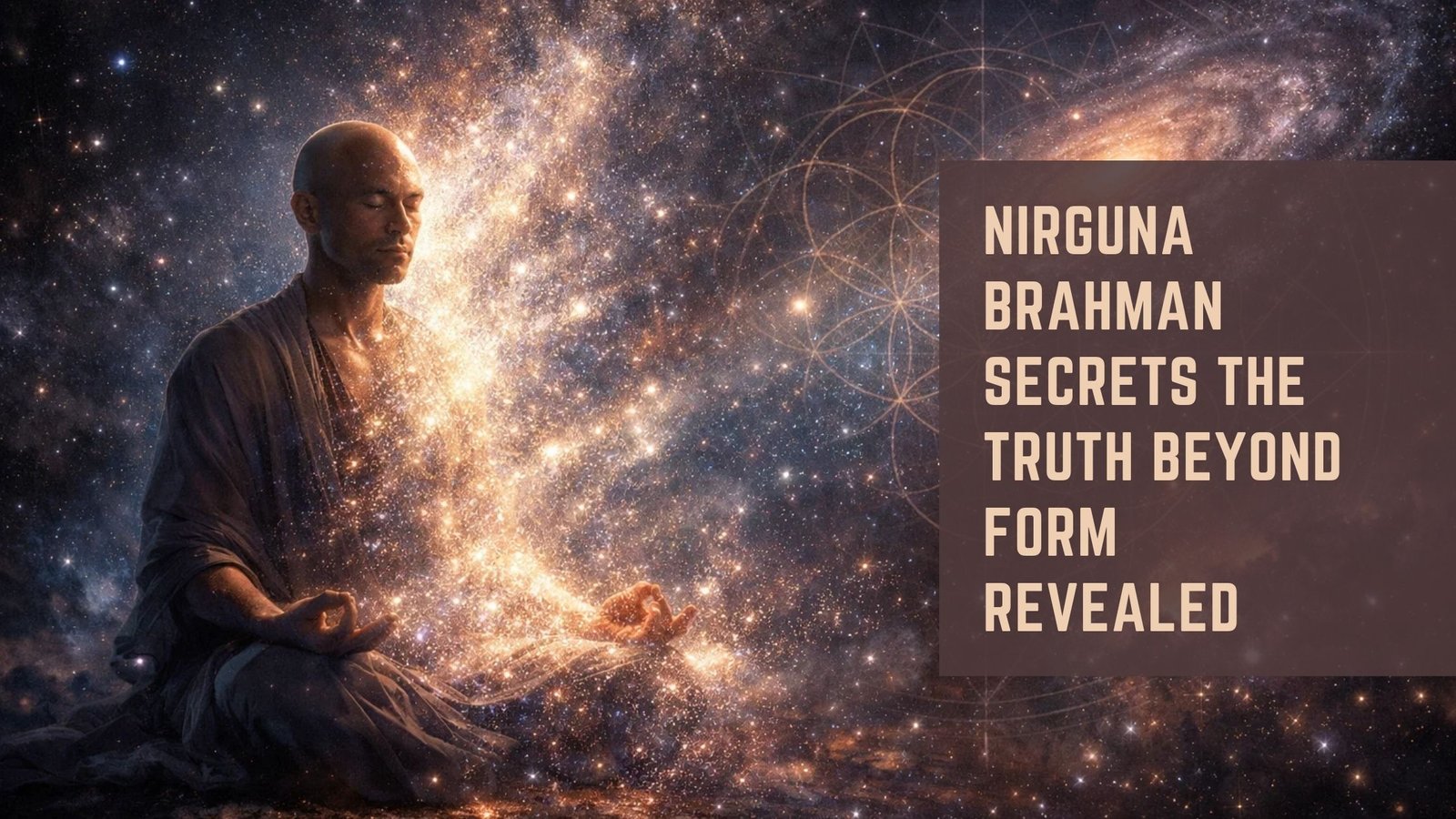
What if the ultimate truth of existence has no form, no qualities, no name and yet is everything?
This is the profound mystery of Nirguna Brahman, a concept that stands at the very heart of Indian philosophy, especially within Upanishads and Bhagavad Gita. Unlike the gods we visualize, worship, and describe, Nirguna Brahman cannot be seen, imagined, or even fully understood it can only be realized.
In a world obsessed with definitions, labels, and identities, Nirguna Brahman invites you to step into the unknown the infinite.
Table of Contents
Key Takeaways
- Nirguna Brahman means “without qualities” (Nir = without, Guna = attributes).
- It represents the ultimate, formless reality beyond time, space, and causation.
- Central to Advaita Vedanta, especially taught by Adi Shankaracharya.
- Cannot be perceived by senses, only realized through self-awareness and meditation.
- Contrasts with Saguna Brahman (God with form and attributes).
- Teaches that your true self (Atman) is identical to Brahman.
What is Nirguna Brahman?
Nirguna Brahman is the absolute, unchanging, infinite consciousness that exists beyond all dualities.
It is:
- Not male or female
- Not light or darkness
- Not existence or non-existence
It simply IS.
Core Definition
“That which cannot be seen, heard, or thought—but is the source of all seeing, hearing, and thinking.”
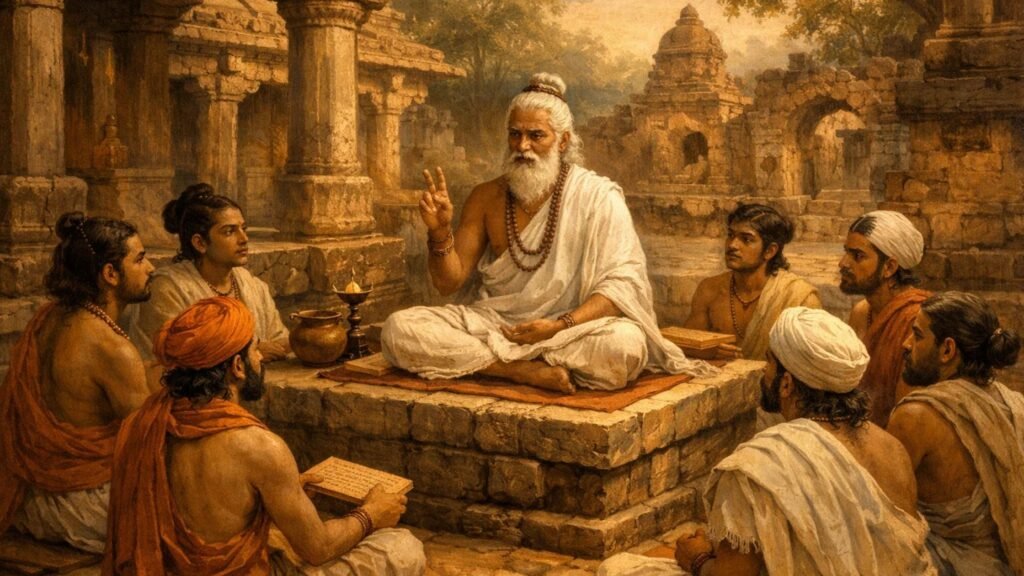
Nirguna Brahman vs Saguna Brahman
| Aspect | Nirguna Brahman | Saguna Brahman |
|---|---|---|
| Nature | Formless | With form |
| Attributes | None | Has qualities |
| Worship | Meditation & realization | Rituals & devotion |
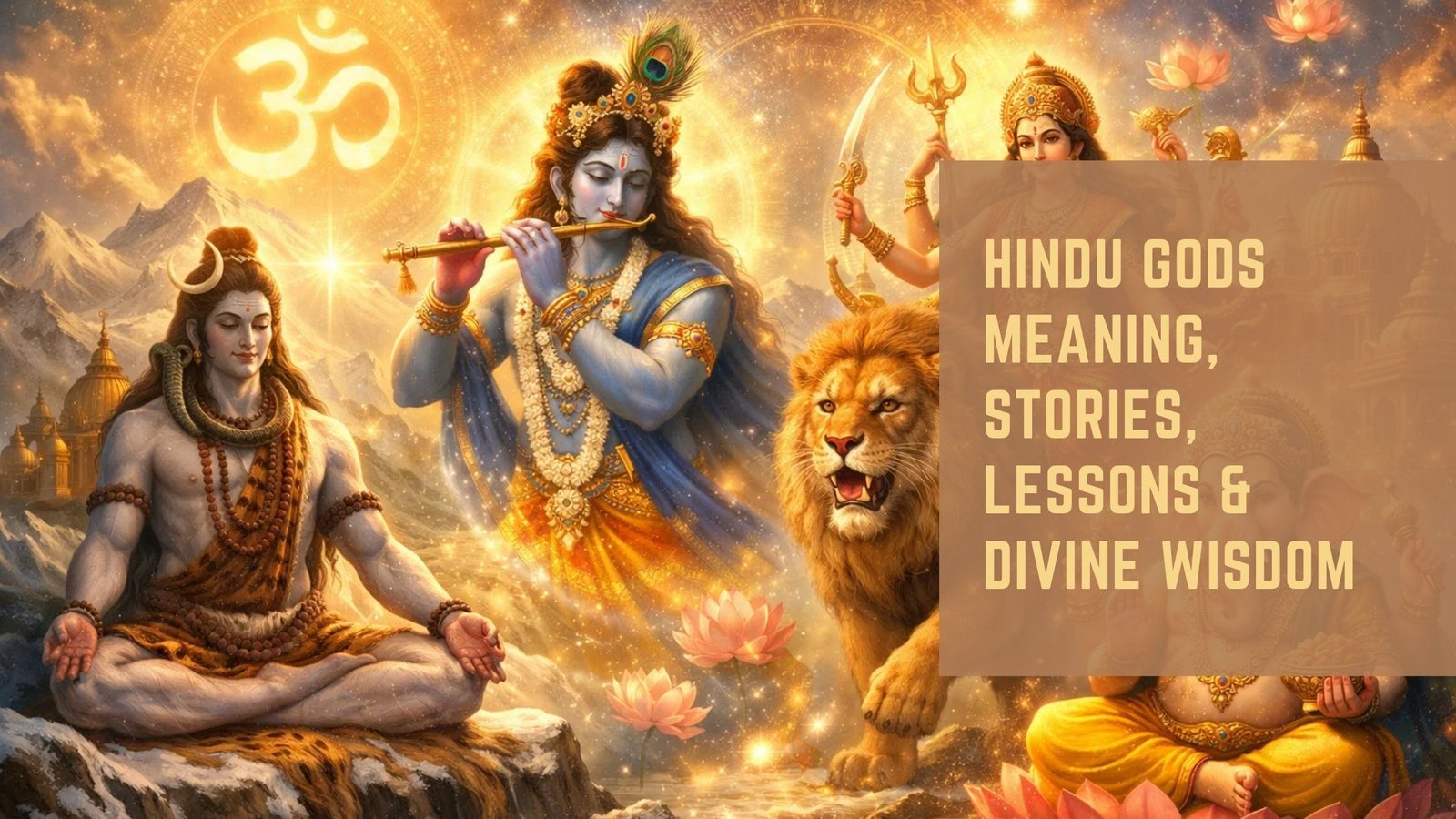
| Examples | Pure consciousness | Shiva, Vishnu, Krishna |
| Understanding | Philosophical | Emotional & devotional |
Both are not contradictory but represent different paths to the same truth.
Philosophical Foundations
1. Upanishadic Wisdom
The Upanishads describe Nirguna as:
“Neti Neti” (Not this, not this)
This means Brahman cannot be defined by anything in the universe.
2. Advaita Vedanta
Adi Shankaracharya emphasized:
- Reality is non-dual (Advaita)
- The world is Maya (illusion)
- Only Brahman is real
3. Identity of Atman and Brahman
“Tat Tvam Asi” — You are That
This is the essence of Nirguna:
You are not separate from the ultimate reality.
Deep Spiritual Meaning
Nirguna Brahman challenges your entire perception of life:
- You are not your body
- You are not your mind
- You are not your emotions
You are the observer behind all of these.
Powerful Quotes on Nirguna Brahman
Quote Table
| Language | Quote | Meaning |
|---|---|---|
| Sanskrit | “अहं ब्रह्मास्मि” | I am Brahman |
| Hindi | “जो निराकार है वही सच्चा है” | The formless is the truth |
| English | “The infinite cannot be limited by form.” | Truth is beyond shape |
| Punjabi | “ਰੱਬ ਦਾ ਕੋਈ ਰੂਪ ਨਹੀਂ” | God has no form |
Spiritual Lessons from Nirguna Brahman
1. Detachment from Illusion
The world is temporary—attachment leads to suffering.
2. Inner Awareness
True knowledge comes from within, not outside.
3. Ego Dissolution
When ego disappears, truth appears.
4. Universal Unity
All beings are expressions of the same reality.
How to Realize Nirguna Brahman
Practical Steps
- Meditation – Observe thoughts without attachment
- Self-Inquiry (Who am I?)
- Detach from ego and desires
- Study scriptures like the Upanishads
- Practice silence and awareness
Modern Relevance of Nirguna Brahman
Even in today’s fast-paced world, this concept is deeply relevant:
- Helps reduce anxiety and overthinking
- Promotes inner peace and clarity
- Breaks identity-based conflicts
- Encourages universal compassion
Common Misconceptions
Nirguna Brahman is nothingness
It is everything beyond perception
It rejects God
It transcends limited concepts of God
It is too abstract
It is the most direct truth of existence
Nirguna Brahman in the Bhagavad Gita
In the Bhagavad Gita, Lord Krishna explains:
“Those who worship the unmanifest reach Me as well.”
However, he also acknowledges that the path of Nirguna Brahman is more difficult, as it requires deep inner discipline.
Emotional & Psychological Impact
Understanding Nirguna Brahman can:
- Remove fear of death
- Reduce attachment
- Bring deep fulfillment
- Create a sense of timeless peace
The Silence Beyond Words
Nirguna Brahman is often described not through explanation, but through silence. The sages of the Upanishads repeatedly pointed out that ultimate reality cannot be captured by language. Words divide, label, and limit—while the truth they tried to express is beyond all divisions. This is why many teachings rely on negation rather than definition. By saying what it is not, they gently guide the seeker toward an experience rather than an idea. In this silence, one begins to sense a presence that is not an object, but the very ground of awareness itself.
The Role of Inner Experience
Understanding this concept intellectually is only the beginning. True insight arises when knowledge turns inward. Philosophers like Adi Shankaracharya emphasized direct realization over theoretical learning. When the mind becomes still, even for a moment, there is a glimpse of something constant beneath changing thoughts. This experience cannot be borrowed from books or teachers it must unfold within one’s own awareness. Over time, this inner recognition becomes more stable, shifting one’s perception of reality from external appearances to inner clarity.
Detachment Without Escape
A common misunderstanding is that such teachings encourage withdrawal from life. In reality, they promote a deeper engagement—free from unnecessary attachment. When a person no longer clings to outcomes, identities, or possessions, actions become more natural and less burdened. This does not mean abandoning responsibilities, but performing them with a sense of freedom. Life continues as before, yet the inner relationship with it transforms. There is participation without entanglement, effort without anxiety, and presence without resistance.
Unity Behind Diversity
Although the world appears full of differences people, cultures, beliefs there is an underlying unity that connects everything. This idea is echoed in texts like the Bhagavad Gita, where the same essence is said to exist in all beings. Recognizing this unity naturally leads to compassion and respect. When one sees others not as separate entities but as expressions of the same reality, conflict begins to dissolve. This shift is subtle but powerful, influencing how we think, speak, and act in everyday life.
Living With Awareness
The practical impact of these teachings is not found in abstract philosophy, but in daily living. Simple awareness of thoughts, emotions, and actions becomes a doorway to deeper understanding. Instead of reacting automatically, one begins to observe with clarity. This awareness creates space between stimulus and response, allowing more conscious choices. Over time, this way of living brings a sense of stability that is not dependent on external circumstances. It is a quiet confidence that remains even amidst uncertainty, rooted in something far more enduring than temporary experiences.
FAQs
Q1: Is Nirguna Brahman the same as God?
Yes and no. It is the ultimate reality, beyond the personal form of God.
Q2: Can Nirguna Brahman be worshipped?
Not in a traditional way it is realized through meditation and awareness.
Q3: Why is it difficult to understand?
Because the human mind seeks form and definition, while Nirguna Brahman is beyond both.
Q4: What is the difference between Atman and Brahman?
In Advaita, they are the same your true self is Brahman.
Q5: Which path is better Nirguna or Saguna?
It depends on the individual. Devotion suits some; inquiry suits others.
Conclusion
Nirguna Brahman is not just a philosophical concept—it is an invitation to experience reality beyond illusion.
It asks you to go beyond:
- Names
- Forms
- Beliefs
- Identities
And discover the truth that has always been within you.
“You are not in the universe. The universe is in you.”
When this realization dawns, life transforms—not outwardly, but at its very core.
Explore more deep spiritual wisdom, ancient insights, and life-changing teachings at TheGita.in your guide to truth, consciousness, and self-realization inspired by the Bhagavad Gita.