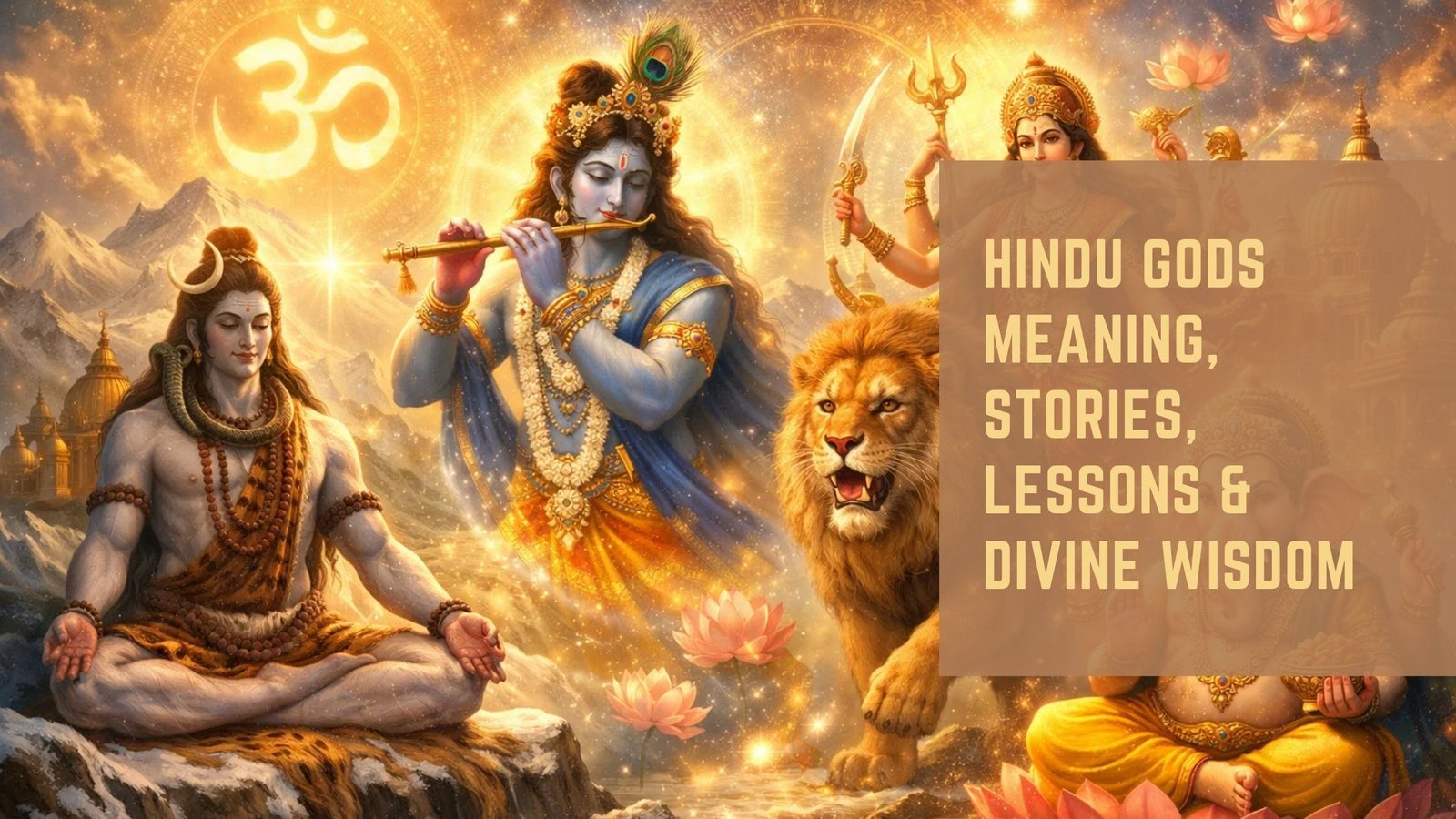
Hindu Gods are not just figures of worship—they are profound symbols of life, consciousness, and the unseen forces that guide the universe. In the ancient tradition of Hinduism, every deity represents a deeper truth about human nature, emotions, and spiritual evolution.
From the meditative stillness of Lord Shiva to the playful wisdom of Lord Krishna, and from the nurturing energy of Goddess Lakshmi to the fierce protection of Goddess Durga, Hindu Gods embody every aspect of existence. They are not distant beings—they are reflections of our inner strengths, fears, desires, and purpose.
What makes Hindu Gods unique is their ability to connect mythology with reality. Their stories are not just tales of the past; they are timeless lessons guiding us through modern challenges—teaching us how to act with Dharma, overcome obstacles, and discover inner peace.
As you dive deeper into this blog, you will realize that understanding Gods is not about religion alone—it is about understanding yourself, your journey, and your connection with the universe.
Table of Contents
Key Takeaways
- Hindu Gods symbolize universal energies and inner consciousness
- Each deity represents a specific life lesson or virtue
- Stories of gods are metaphors for human struggles and growth
- Worship is not just ritual—it is a path to self-realization
- Hinduism promotes unity in diversity through multiple deities
What Are Hindu Gods? Understanding the Divine Concept
Unlike rigid belief systems, Hinduism embraces infinite forms of the divine.
At its core lies Brahman—the ultimate reality. All gods are manifestations of this one truth.
- One truth → Many forms
- One energy → Multiple expressions
- One consciousness → Infinite names
This is why Hinduism is both polytheistic and monotheistic at the same time.
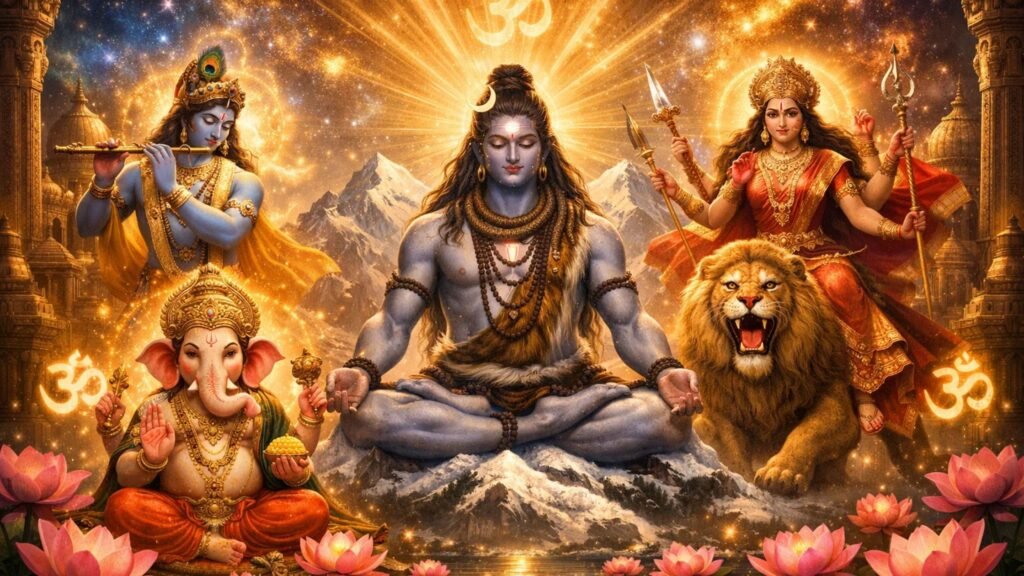
The Trinity Creation, Preservation, and Destruction
1. Lord Brahma The Creator
- Symbolizes creation and knowledge
- Teaches: Start with purpose and awareness
2. Lord Vishnu The Preserver
- Maintains balance in the universe
- Teaches: Protect righteousness (Dharma)
3. Lord Shiva The Destroyer
- Destroys ego and illusion
- Teaches: Endings are necessary for new beginnings
Major Hindu Gods and Their Life Lessons
Lord Ganesha The Remover of Obstacles
- Symbol: Elephant head (wisdom + intelligence)
- Lesson: Think before you act
- Teaches patience, planning, and humility
Quote:
“Remove obstacles not just from your path—but from your mind.”
Goddess Lakshmi The Goddess of Wealth
- Represents prosperity and abundance
- Teaches: Wealth must be earned with righteousness
Quote:
“True wealth is not money, but peace and values.”
Goddess Saraswati The Goddess of Knowledge
- Symbolizes wisdom, art, and learning
- Teaches: Knowledge liberates the soul
Quote:
“Education is not information—it is transformation.”
Goddess Durga The Warrior Goddess
- Represents power and protection
- Teaches: Fight inner demons—fear, anger, ego
Quote:
“You are stronger than your fears.”
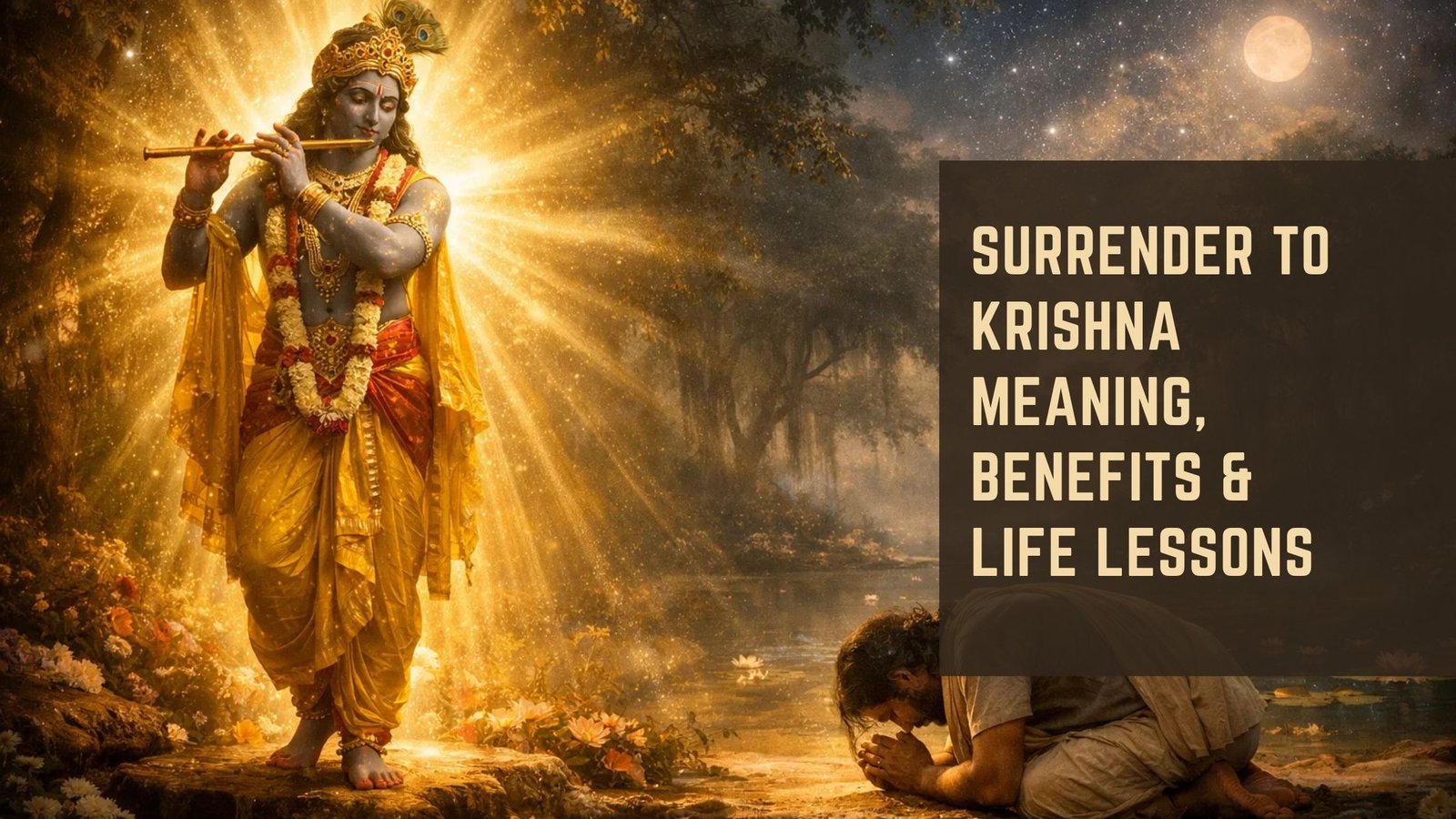
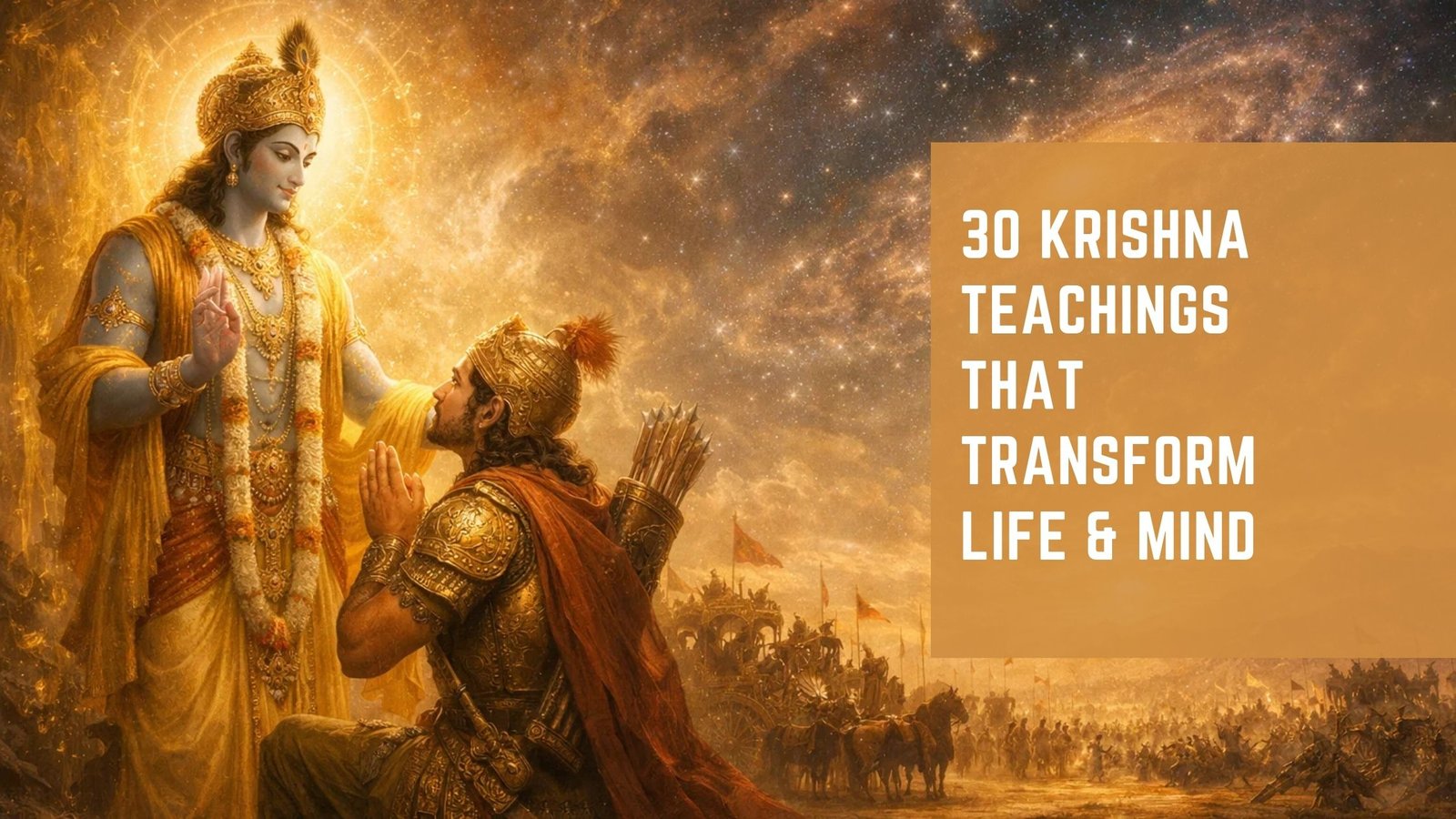
Lord Krishna The Divine Guide
- Central figure in Bhagavad Gita
- Teaches: Karma, devotion, and detachment
Quote (Bhagavad Gita):
“Do your duty without expecting results.”
Lord Rama The Ideal Human
- Symbol of truth and righteousness
- Teaches: Live with integrity, even in hardship
Quote:
“Character defines destiny.”
Symbolism Behind Hindu Gods
Gods are not random—they are deeply symbolic.
| Symbol | Meaning |
|---|---|
| Multiple Arms | Power and ability |
| Third Eye (Shiva) | Inner awareness |
| Lotus | Purity in chaos |
| Weapons | Protection from negativity |
| Vehicles (Vahana) | Control over instincts |
Why So Many Gods? The Deeper Philosophy
Many people ask: Why are there so many Hindu gods?
The answer is simple yet profound:
- Different minds need different paths
- Different people connect with different energies
- Truth is one—but expressions are many
This diversity makes Hinduism inclusive and universal.
Quotes Table Wisdom from Hindu Gods
| Language | Quote | Meaning |
|---|---|---|
| Sanskrit | “कर्मण्येवाधिकारस्ते” | Focus on action |
| Hindi | “सत्य ही ईश्वर है” | Truth is God |
| English | “You are what you believe.” | Mind shapes reality |
| Punjabi | “ਸੱਚ ਦੀ ਜਿੱਤ ਹੁੰਦੀ ਹੈ” | Truth always wins |
Life Lessons from Hindu Gods
1. Balance Your Life (Krishna)
Work, love, and spirituality must coexist.
2. Destroy Ego (Shiva)
Ego is the biggest illusion.
3. Stay Grounded (Rama)
Even kings must follow Dharma.
4. Seek Knowledge (Saraswati)
Learning is the highest form of wealth.
5. Face Fear (Durga)
Courage is divine.
Modern Relevance of Hindu Gods
Even today, Hindu Gods are not outdated—they are more relevant than ever.
- In stress → Remember Shiva (meditation)
- In confusion → Follow Krishna (clarity)
- In fear → Invoke Durga (strength)
- In ambition → Pray to Lakshmi (balance)
They are psychological, spiritual, and practical guides.
Spiritual Insight Gods as Inner States
Hindu philosophy says:
- Shiva = Consciousness
- Vishnu = Awareness
- Durga = Energy
- Krishna = Love
- Ganesha = Intelligence
This means:
You don’t just worship gods—you awaken them within.
The Spiritual Depth Behind Hindu Gods
Hindu Gods are deeply rooted in the philosophy of oneness and universal consciousness. In Hinduism, all deities are considered manifestations of one supreme reality—Brahman. This means that whether you worship Lord Vishnu, Lord Shiva, or Goddess Saraswati, you are ultimately connecting with the same divine source. This concept removes division and encourages unity, teaching that truth can be experienced through many paths.
Hindu Gods as Symbols of Inner Qualities
Each deity represents a powerful human trait that already exists within us. Lord Ganesha symbolizes wisdom and clarity, reminding us to think before we act. Goddess Durga reflects courage and strength, guiding us to overcome inner fears and negativity. Lord Krishna represents love, intelligence, and balance in action. By understanding Hindu Gods in this way, worship becomes a process of self-development rather than mere ritual.
The Role of Stories and Mythology
The stories of Hindu Gods, found in sacred texts like the Bhagavad Gita, are not just mythological tales—they are symbolic teachings. Every battle, every victory, and every challenge represents real-life struggles such as ego, attachment, fear, and duty. For example, Krishna’s guidance to Arjuna teaches us how to remain calm and focused even in the most difficult situations. These stories act as a mirror, helping us understand our own life journey more clearly.
Why Hindu Gods Still Matter Today
In today’s fast-paced and stressful world, the wisdom of Hindu Gods is more relevant than ever. When facing confusion, the teachings of Lord Krishna provide clarity. During times of fear or uncertainty, the शक्ति of Goddess Durga inspires courage. When seeking peace, the calm presence of Lord Shiva reminds us to turn inward. Hindu Gods are not limited to temples—they are timeless guides for living a balanced, meaningful, and spiritually awakened life.
FAQs
Are Hindu Gods real?
They are real as energies, archetypes, and spiritual truths.
Why do Hindus worship idols?
Idols are focus points for meditation, not the ultimate reality.
Who is the most powerful god?
All are manifestations of one supreme consciousness (Brahman).
Can we worship one god only?
Yes. Hinduism allows personal devotion (Ishta Devata).
What is the purpose of worship?
To connect with higher consciousness and inner peace.
Conclusion
Hindu Gods are not distant figures sitting in the sky—they are mirrors of your own potential.
When you understand them deeply:
- Ganesha teaches you to think
- Shiva teaches you to let go
- Krishna teaches you to act
- Durga teaches you to fight
- Rama teaches you to live with honor
The ultimate realization is this:
You are not separate from the divine—you are a part of it.
In every word of wisdom and every story of the divine, TheGita.in brings you closer to the true essence of Hindu Gods and timeless spiritual knowledge.