What if there existed a sacred text that not only guided spiritual enlightenment but also addressed health, prosperity, relationships, and protection from negativity? The Atharva Veda stands as a remarkable treasure of ancient wisdom that bridges the divine and the practical aspects of human life. Unlike other Vedas that focus primarily on rituals and hymns, it offers insights into healing, peace, and the mysteries of existence.
Revered as the fourth Veda of Hinduism, the Atharva Veda is a unique compilation of spiritual knowledge and practical guidance that continues to inspire seekers even in the modern world.
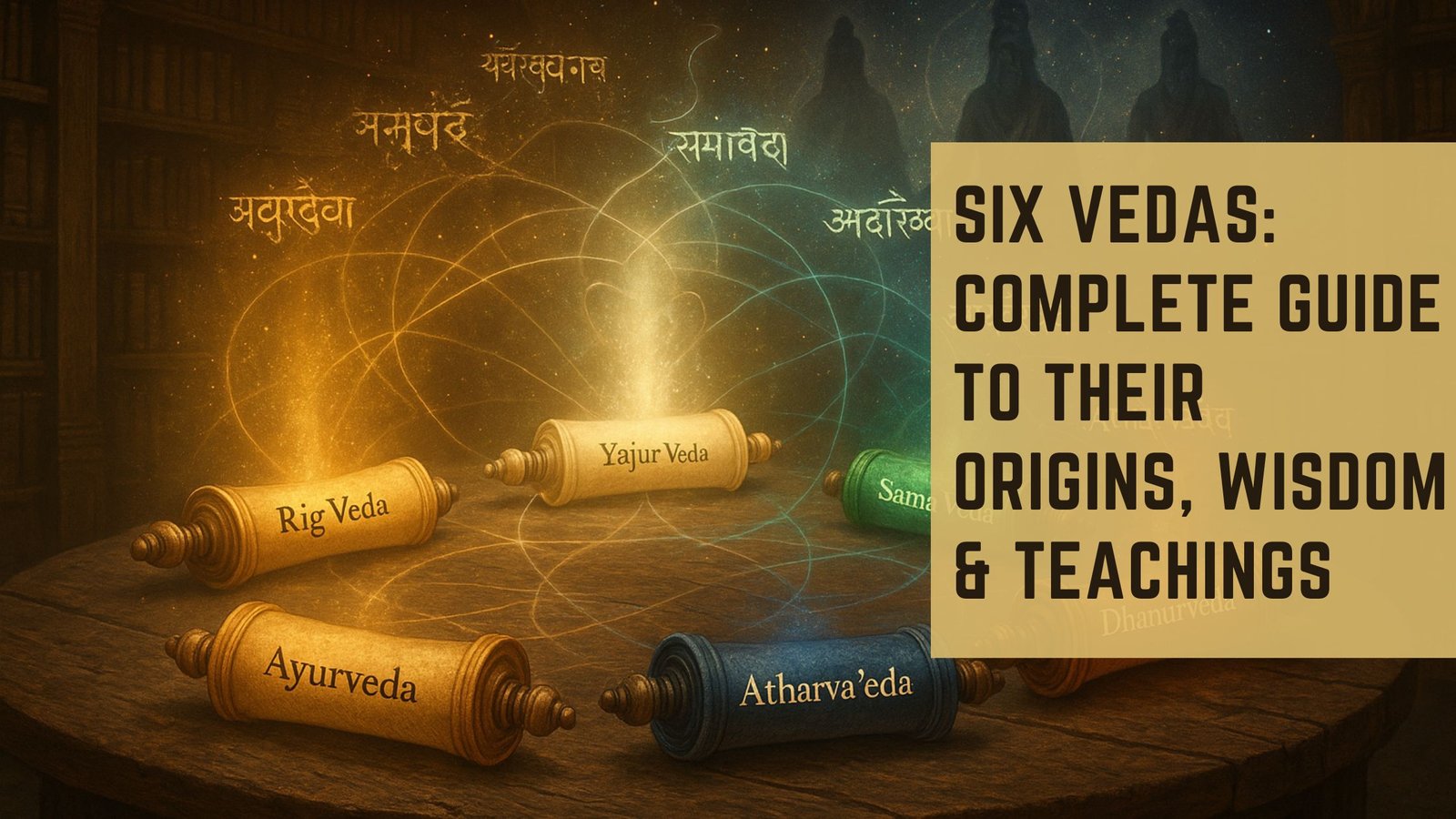
The Atharva Veda is one of the four sacred Vedas of Hinduism, alongside the Rig Veda, Sama Veda, and Yajur Veda. It is known as the “Veda of Knowledge of Everyday Life,” encompassing hymns, spells, prayers, and philosophical reflections that address both worldly and spiritual concerns.
Composed around 1200–900 BCE, this profound scripture reflects the holistic vision of ancient Indian sages who sought harmony between humanity, nature, and the divine. It offers timeless teachings on health, ethics, spirituality, and cosmic order.
Table of Contents
Key Takeaways
- The Atharva Veda is the fourth and most practical of the four Vedas.
- It contains hymns related to healing, protection, prosperity, and peace.
- It is closely associated with Ayurveda and ancient Indian medicine.
- It emphasizes harmony between mind, body, and soul.
- It provides philosophical insights that influenced the Upanishads.
- It addresses both spiritual enlightenment and daily life challenges.
- It reflects early Indian knowledge of science, psychology, and ethics.
- It promotes universal peace and well-being.
What is the Atharva Veda?
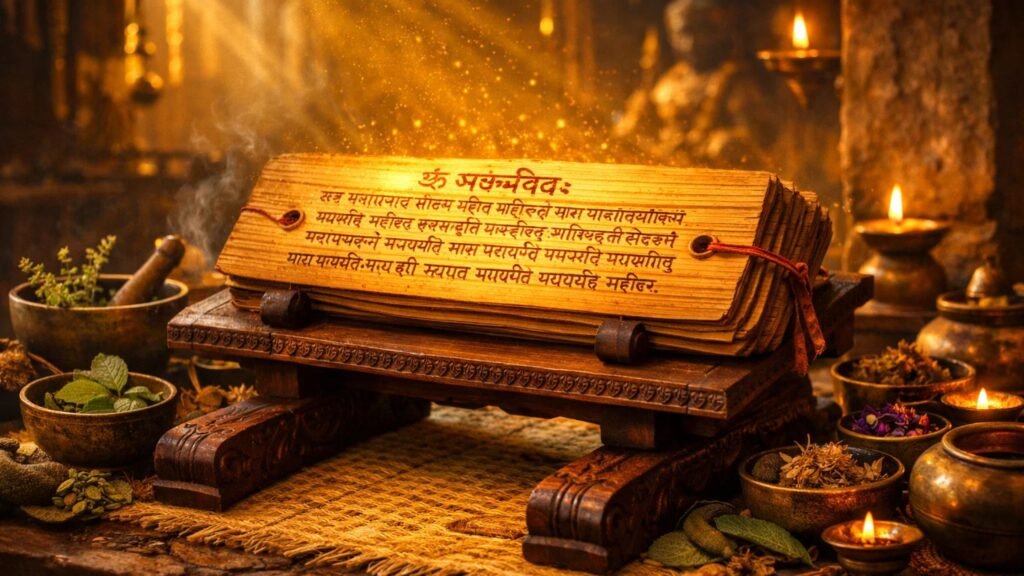
The Atharva Veda derives its name from the sages Atharvan and Angiras, who were believed to have compiled its hymns. It is often referred to as the “Veda of magical formulas,” though its deeper essence lies in spiritual wisdom and holistic well-being.
Key Characteristics
- Contains 20 books (Kandas)
- Comprises approximately 730 hymns
- Includes around 6,000 mantras
- Written primarily in Vedic Sanskrit
- Addresses both spiritual and material aspects of life
Unlike the ritualistic focus of other Vedas, the Atharva Veda highlights everyday human experiences such as illness, relationships, protection, prosperity, and inner peace.
Historical Background
Origins and Compilation
The Atharva Veda emerged during the later Vedic period and reflects a blend of philosophical insights and folk traditions. It was formally recognized as the fourth Veda after centuries of oral transmission.
Preservation Through Oral Tradition
Ancient sages preserved this sacred knowledge through rigorous memorization techniques known as Shruti, ensuring its authenticity and continuity across generations.
Major Recensions
- Shaunaka Samhita – The most widely preserved version.
- Paippalada Samhita – Discovered later and studied for historical insights.
Structure of the Atharva
The Atharva is systematically divided into 20 books known as Kandas.
Major Components
| Component | Description |
|---|---|
| Samhita | Collection of hymns and mantras |
| Brahmana | Ritual explanations and interpretations |
| Aranyaka | Philosophical reflections for forest dwellers |
| Upanishads | Spiritual teachings on ultimate reality |
Several important Upanishads, such as the Mundaka, Mandukya, and Prashna Upanishads, are associated with this Veda.
Core Themes of the Atharva
1. Healing and Medicine
The Atharva contains numerous hymns for curing diseases and promoting health. It forms the spiritual foundation of Ayurveda.
2. Protection from Negative Forces
Mantras were used to ward off evil influences and ensure safety and prosperity.
3. Peace and Harmony
It emphasizes universal peace and social well-being.
4. Spiritual Knowledge
The text explores profound metaphysical concepts such as Brahman and the nature of the soul.
5. Prosperity and Success
Hymns were recited to invite abundance and remove obstacles.
6. Ethical Living
It encourages truthfulness, compassion, and righteousness.
Significance of the Atharva
Spiritual Importance
The Atharva offers insights into the nature of existence and the path to liberation.
Scientific Relevance
It includes early knowledge of medicine, astronomy, and psychology.
Cultural Influence
Its teachings shaped Indian philosophy, rituals, and social traditions.
Modern Relevance
Its principles continue to inspire holistic wellness, meditation, and ethical living.
Sacred Quotes from the Atharva Veda
Inspirational Quote Table
| Quote | Meaning | Lesson |
|---|---|---|
| “May we live in harmony and unity.” | Promotes peace and cooperation | Unity strengthens society |
| “Peace be upon the earth, the sky, and all beings.” | Emphasizes universal harmony | Respect nature and life |
| “Let noble thoughts come to us from all directions.” | Encourages wisdom and openness | Embrace knowledge |
| “May we be free from disease and suffering.” | Reflects ancient healing practices | Value health and wellness |
| “Truth alone triumphs.” | Highlights righteousness | Follow truth |
Selected Atharva Veda Mantras
1. Prayer for Peace
“Sham no Devi Abhishtaya Apo Bhavantu Pitaye.”
May the divine waters bring us peace and nourishment.
2. Prayer for Unity
“Samani va akutih.”
May our intentions be united.
3. Prayer for Health
“Bhadram Karnebhih Shrunuyama Devah.”
May we hear what is auspicious.
Life Lessons from the Atharva Veda
1. Harmony is the Key to Happiness
The Veda teaches unity among individuals and nations.
2. Health is True Wealth
It emphasizes the importance of physical and mental well-being.
3. Knowledge Leads to Enlightenment
Wisdom is the foundation of spiritual growth.
4. Faith Brings Inner Strength
Trust in the divine fosters resilience.
5. Respect Nature
The Atharva Veda promotes ecological balance.
6. Positive Thinking Shapes Destiny
It encourages optimism and righteous action.
Philosophical Insights
Concept of Brahman
The Atharva Veda explores the ultimate reality that pervades the universe.
Nature of the Soul (Atman)
It emphasizes the immortality of the soul.
Law of Karma
It underscores the moral consequences of actions.
Pursuit of Moksha
It highlights liberation as the ultimate goal of life.
Atharva Veda and Ayurveda
The Atharva Veda is considered the spiritual precursor to Ayurveda.
Contributions to Ancient Medicine
- Herbal remedies and natural healing
- Psychological well-being
- Preventive healthcare
- Spiritual therapy and meditation
- Holistic healing approaches
Its teachings continue to influence modern wellness and alternative medicine.
Relevance of the Atharva Veda in Modern Times
In Personal Life
- Encourages mindfulness and inner peace.
- Promotes ethical living.
In Healthcare
- Inspires holistic healing practices.
In Environmental Awareness
- Advocates harmony with nature.
In Society
- Promotes unity and universal brotherhood.
In Spiritual Growth
- Guides seekers toward enlightenment.
Comparison with the Other Vedas
| Veda | Primary Focus |
|---|---|
| Rig Veda | Hymns and praises of deities |
| Sama Veda | Musical chants and melodies |
| Yajur Veda | Rituals and sacrifices |
| Atharva Veda | Healing, daily life, and spirituality |
Bullet-Point Summary of Teachings
- Embrace truth and righteousness.
- Seek knowledge and wisdom.
- Respect nature and all living beings.
- Practice compassion and unity.
- Cultivate inner peace through spirituality.
- Maintain physical and mental well-being.
- Strive for prosperity with ethical conduct.
- Pursue liberation through self-realization.
FAQs
What is the Atharva Veda known for?
It is known for its teachings on healing, spirituality, protection, and practical aspects of daily life.
Who composed the Atharva Veda?
It is attributed to the sages Atharvan and Angiras.
How many hymns are in the Atharva Veda?
It contains approximately 730 hymns and around 6,000 mantras.
Why is the Atharva Veda important?
It provides guidance on health, ethics, prosperity, and spiritual enlightenment.
How is it different from other Vedas?
Unlike other Vedas, it focuses on practical life and holistic well-being.
Conclusion
The Atharva Veda stands as a timeless repository of wisdom that harmonizes spirituality with everyday life. It addresses the physical, mental, and spiritual dimensions of human existence, offering guidance on healing, peace, prosperity, and enlightenment. Its teachings continue to resonate across centuries, reminding humanity of the profound connection between the divine and the earthly.
In an age marked by stress and uncertainty, the Atharva Veda offers a beacon of hope guiding individuals toward harmony, wisdom, and inner peace. Discover the eternal wisdom of the Vedas with TheGita.in.