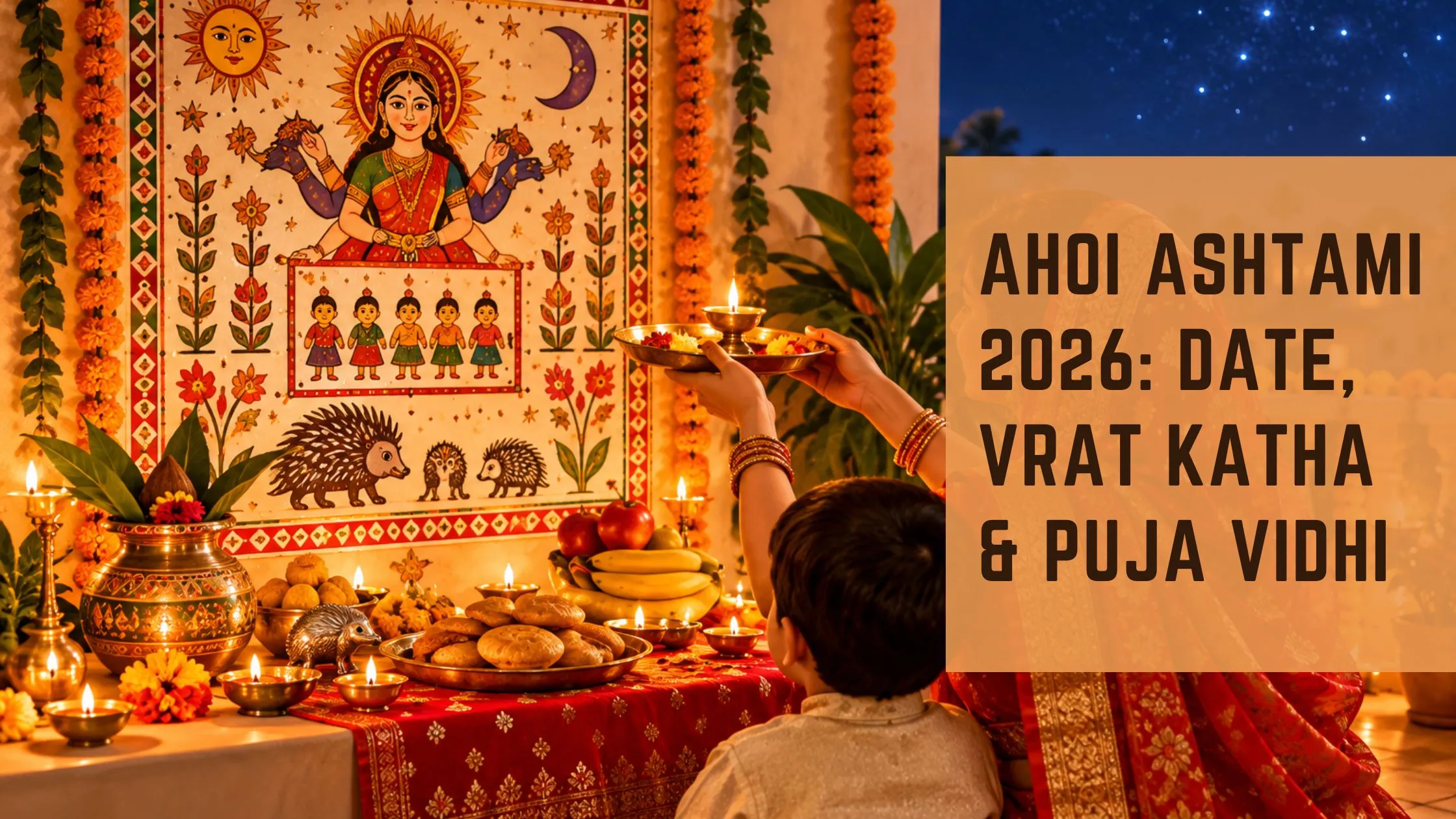
A mother's love is one of the purest forms of love in the world. It is filled with care, sacrifice, prayers and unconditional blessings. In Hindu tradition, Ahoi Ashtami is a beautiful festival that celebrates this sacred bond between a mother and her children.
Observed mainly by mothers in North India, Ahoi Ashtami is a special fasting day dedicated to Ahoi Mata. On this occasion, mothers observe a fast and pray for the long life, good health, happiness and prosperity of their children.
The festival is not just about fasting or following rituals. It represents a mother's endless love, faith in God and hope for her children's bright future.
But what is the story behind Ahoi Ashtami? Why is Ahoi Mata worshipped, and what makes this fast so spiritually meaningful? Let's explore its history, vrat katha, rituals and timeless life lessons.
Table of Contents
- Key Takeaways
- 1. Ahoi Ashtami 2026: Date, Tithi and Puja Muhurat
- 2. What Is the Significance of Ahoi Ashtami?
- 3. Ahoi Ashtami Vrat Katha: The Story of a Mother and Her Seven Sons
- 4. Ahoi Ashtami Puja Vidhi: Step-by-Step Rituals
- 5. Ahoi Ashtami Puja Samagri List
- 6. Ahoi Ashtami Vrat Rules and Fasting Traditions
- 7. Ahoi Ashtami Quotes and Spiritual Messages
- 8. Important Life Lessons from Ahoi Ashtami
- Frequently Asked Questions
- Conclusion
Key Takeaways
Ahoi Ashtami is a Hindu festival dedicated to Ahoi Mata.
It is mainly observed by mothers for the well-being and longevity of their children.
The festival falls on Krishna Paksha Ashtami in the Hindu month of Kartik.
Mothers traditionally observe a day-long fast.
Ahoi Mata is worshipped in the evening.
The Ahoi Ashtami Vrat Katha explains the importance of repentance, devotion and faith.
The fast is traditionally concluded after sighting the stars.
1. Ahoi Ashtami 2026: Date, Tithi and Puja Muhurat
Ahoi Ashtami is observed on the eighth day (Ashtami Tithi) of Krishna Paksha in the Hindu month of Kartik.
Sunday, 1 November 2026
Ahoi Ashtami 2026
| Religious observance | Timing |
|---|---|
| Festival date | 1 November 2026 |
| Ashtami Tithi begins | 2:51 PM, 1 November |
| Ashtami Tithi ends | 1:10 PM, 2 November |
| Puja Muhurat | 5:36 PM – 6:54 PM |
| Expected star sighting | Around 6:00 PM |
Timings are indicative for New Delhi. Actual puja and star-sighting timings may differ by location. Check your local Panchang before observing the fast.
2. What Is the Significance of Ahoi Ashtami?
Ahoi Ashtami holds a special place in Hindu culture, particularly in North India, including Punjab, Haryana, Rajasthan, Uttar Pradesh and Delhi.
The festival is dedicated to Ahoi Mata, who is worshipped as the divine protector of children. Mothers observe the fast to seek blessings for:
Long life and good health of their children.
Happiness, peace and prosperity in the family.
Protection from difficulties and negative influences.
Success and a bright future for their children.
Strength, wisdom and good fortune.
Traditionally, the fast was associated with the well-being of sons. Today, mothers observe it for the happiness and well-being of both sons and daughters.
Ahoi Ashtami is also known as Ahoi Aathe, referring to the eighth lunar day on which the fast is observed.
3. Ahoi Ashtami Vrat Katha: The Story of a Mother and Her Seven Sons
The Ahoi Ashtami Vrat Katha teaches the importance of repentance, compassion and sincere devotion.
According to a popular traditional folk story, there once lived a woman who had seven sons. A few days before Diwali, she went to a forest to collect soil for decorating and repairing her house.
While digging the ground, she accidentally struck and killed a baby porcupine (Syahu) with her digging tool.
The woman felt extremely sad about the incident. Although it was unintentional, she regretted harming an innocent living creature.
According to the legend, misfortune soon entered her family, and she lost all seven of her sons. Heartbroken and helpless, she shared her sorrow with the elderly women of her village.
They advised her to worship Ahoi Mata on the day of Kartik Krishna Ashtami, observe a fast and pray with a sincere heart.
Following their advice, the woman drew the image of Ahoi Mata and the baby porcupine on her wall. She observed the fast with complete devotion and sincerely repented for her mistake.
Pleased with her prayers and sincerity, Ahoi Mata blessed her, and her seven sons returned home.
From that day onwards, the tradition of observing Ahoi Ashtami became associated with prayers for children's well-being and long life.
Spiritual message of the story: Even an unintentional mistake teaches us to become more compassionate. True devotion is reflected not only in prayers but also in our actions towards other living beings.
Note: This is a traditional folk vrat katha, with variations across families and regions.
4. Ahoi Ashtami Puja Vidhi: Step-by-Step Rituals
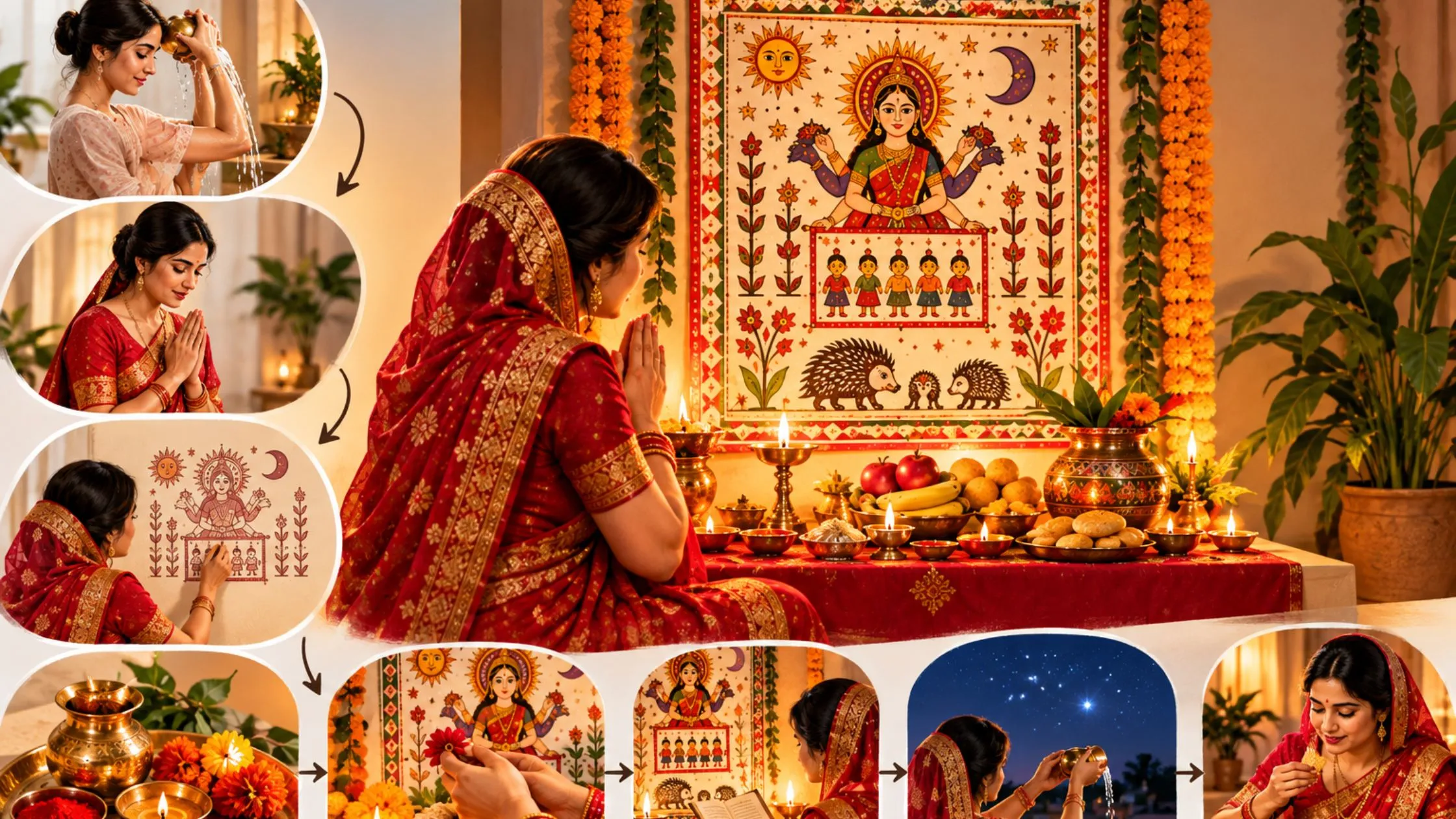
Mothers perform Ahoi Mata Puja in the evening, traditionally around sunset. Here is a simple explanation of the rituals.
Step 1: Wake Up Early and Take a Bath
Begin the day with an early morning bath and wear clean traditional clothes. Prepare yourself mentally and spiritually for the fast.
Step 2: Take a Vrat Sankalp
Offer prayers to Ahoi Mata and take a sincere vow to observe the fast for the happiness, health and long life of your children.
Step 3: Prepare the Puja Area
Clean the place of worship and decorate it with flowers. Draw or place a picture of Ahoi Mata on the wall or a clean surface.
The traditional image often includes Ahoi Mata, her children and the Syahu (porcupine).
Step 4: Arrange the Puja Thali
Keep the required puja materials ready. Light a diya and offer roli, rice, flowers and sweets to Ahoi Mata.
Step 5: Worship Ahoi Mata
Offer prayers with devotion and remember the divine blessings of the Goddess. Pray for your children's happiness, good health and success.
Step 6: Listen to the Ahoi Ashtami Vrat Katha
Gather with family members and read or listen to the traditional Ahoi Ashtami Vrat Katha. Some families also sing Ahoi Mata Aarti.
Step 7: Offer Arghya to the Stars
After evening prayers, look at the stars and offer water (arghya) according to family tradition. Pray for the well-being of your children.
Step 8: Break the Fast
Conclude the fast after the customary star-sighting ritual. Some families follow the tradition of breaking the fast after moonrise instead.
5. Ahoi Ashtami Puja Samagri List
Here is a list of commonly used items for Ahoi Ashtami Puja:
| Puja Material | Purpose |
|---|---|
| Ahoi Mata picture | Worship of the Goddess |
| Roli and kumkum | Tilak and puja |
| Akshat (rice) | Auspicious offering |
| Flowers | Devotional offering |
| Diya and cotton wicks | Lighting the lamp |
| Ghee or oil | For the diya |
| Kalash or karwa | Water offering |
| Milk and water | Traditional offerings |
| Fruits and sweets | Bhog |
| Halwa and puri | Traditional prasad |
| Puja thali | Arranging offerings |
| Silver Syahu | Used in some family traditions |
The exact list may vary according to regional customs and family traditions.
6. Ahoi Ashtami Vrat Rules and Fasting Traditions
Observing the fast with devotion and discipline is an important part of this festival.
Some commonly followed traditions include:
Many mothers begin fasting after their morning prayers.
Some observe a strict nirjala fast without food or water.
Others follow a fruit-based or water-permitted fast.
Avoid unnecessary arguments and negative thoughts.
Perform the evening puja with devotion.
Listen to the vrat katha before concluding the fast.
Break the fast according to your family tradition after star or moon sighting.
Important: A strict waterless fast is not suitable for everyone. Pregnant women, people with medical conditions, elderly devotees and those taking regular medication should seek medical advice and follow a safe form of observance. Devotion does not require risking your health.
7. Ahoi Ashtami Quotes and Spiritual Messages
Ahoi Ashtami reminds us that a mother's prayers are filled with unconditional love and hope.
Here are some meaningful quotes inspired by the festival:
| Theme | Quote |
|---|---|
| Mother's love | "A mother's love is the purest prayer offered to God." |
| Faith | "Where there is true faith, there is hope even in difficult times." |
| Devotion | "True devotion begins with a pure heart and kind actions." |
| Protection | "A mother's blessings are a beautiful gift that stays with us throughout life." |
| Compassion | "Every living being deserves kindness, care and compassion." |
Traditional Prayer to Ahoi Mata
हे अहोई माता, अपने आशीर्वाद से सभी बच्चों को स्वस्थ, सुखी और दीर्घायु बनाएं। हर परिवार में प्रेम, शांति और खुशहाली बनाए रखें।
8. Important Life Lessons from Ahoi Ashtami
Beyond its religious significance, Ahoi Ashtami teaches valuable lessons that can guide us in everyday life.
1. A Mother's Love Is Unconditional
A mother's prayers reflect her endless love, care and sacrifices for her children.
2. Compassion Towards All Living Beings
The vrat katha reminds us that even a small act of harm can have a deep impact. We should treat animals and nature with kindness.
3. The Power of Faith
Faith gives people strength during difficult times and encourages them to remain hopeful.
4. Accept Your Mistakes
The story teaches that accepting mistakes and showing genuine regret are important steps towards becoming a better person.
5. Family Is a Precious Blessing
A happy family is built through love, understanding, respect and emotional support.
"True devotion is not just about worshipping God; it is also about showing kindness to every living being."
Frequently Asked Questions
Q1. When is Ahoi Ashtami in 2026?
Ahoi Ashtami will be celebrated on Sunday, 1 November 2026.
Q2. Why is Ahoi Ashtami celebrated?
It is celebrated to seek the blessings of Ahoi Mata for the long life, good health, happiness and prosperity of children.
Q3. Who should observe the Ahoi Ashtami fast?
Traditionally, mothers observe this fast for their children. Women who wish for children may also observe it according to their family traditions.
Q4. Which Goddess is worshipped on Ahoi Ashtami?
Ahoi Mata is worshipped on this day and is traditionally regarded as a protector of children.
Q5. Can Ahoi Ashtami fast be observed without water?
Yes, some women observe a nirjala fast, while others consume water or fruits. The fasting method depends on personal health and family customs.
Q6. When should the Ahoi Ashtami fast be broken?
Traditionally, the fast is broken after evening prayers and sighting the stars. Some families follow moon-sighting traditions.
Q7. What is the importance of the Ahoi Ashtami Vrat Katha?
The vrat katha explains the importance of devotion, repentance, compassion and prayers for children's well-being.
Q8. Is Ahoi Ashtami celebrated for sons or daughters?
Today, mothers observe Ahoi Ashtami for the well-being of both sons and daughters.
Conclusion
Ahoi Ashtami is much more than a traditional Hindu fasting festival. It represents a mother's unconditional love, sacrifice, faith and prayers for her children.
The story of Ahoi Mata reminds us that devotion should go hand in hand with kindness, compassion and responsibility towards every living being.
As mothers observe this sacred fast, they express their deepest wishes for their children's happiness, health and bright future.
May Ahoi Mata bless every family with peace, prosperity, happiness and good health.
Happy Ahoi Ashtami 2026!
For more festival guides, vrat kathas, spiritual quotes, and life lessons, visit thegita.in and explore the timeless wisdom of Indian traditions.