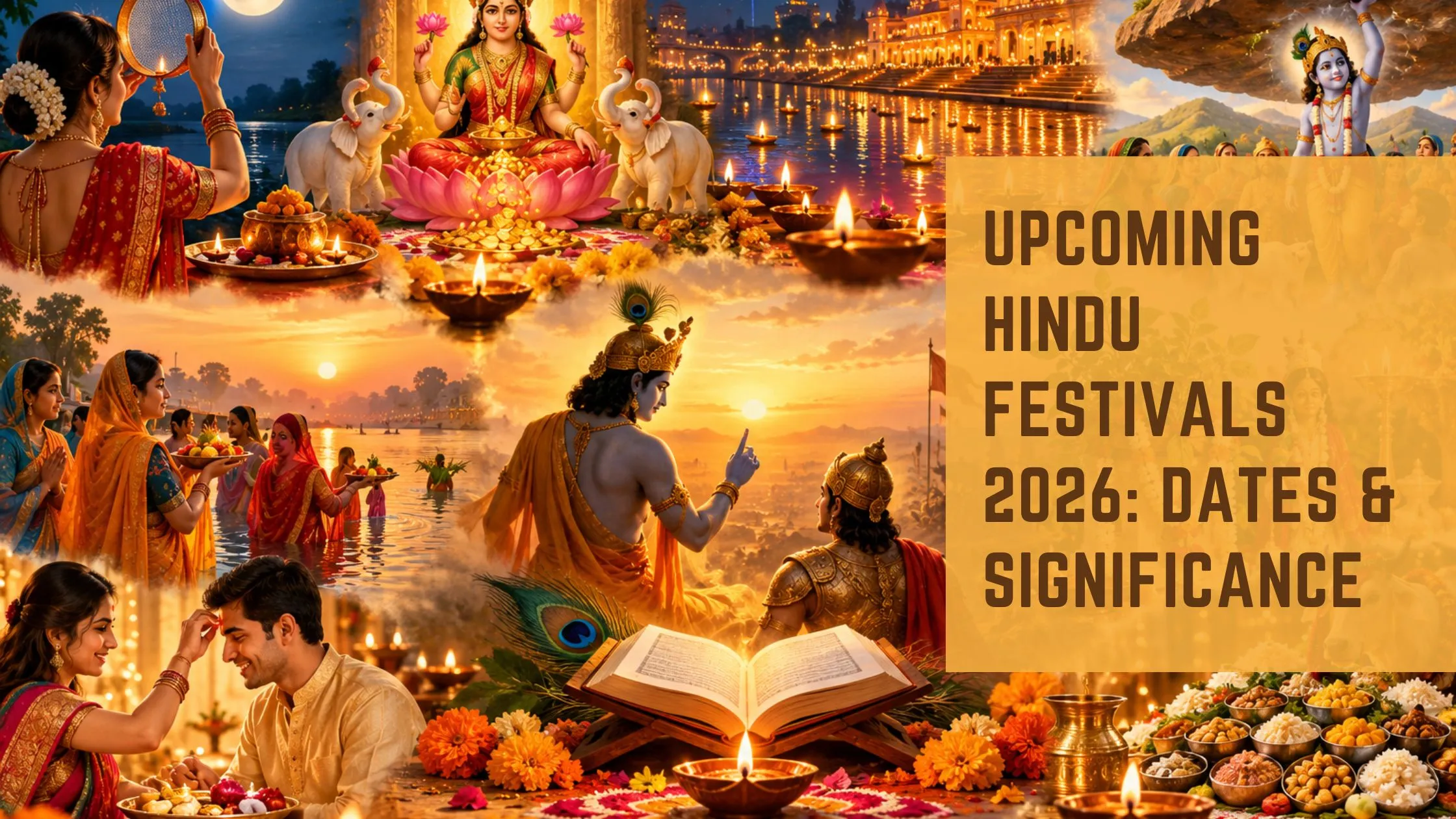
Have you ever wondered why Hindu festivals bring so much joy, devotion, and hope into our lives? Beyond colourful decorations, traditional food, prayers, and family gatherings, every festival carries a deeper message about faith, gratitude, righteousness, and the victory of good over evil.
The upcoming Hindu festivals in 2026 offer opportunities to reconnect with our traditions and understand the spiritual wisdom passed down through generations. From the lights of Diwali to the teachings of the Bhagavad Gita, these celebrations remind us that spirituality is not limited to rituals; it is also reflected in how we think, act, and treat others.
In this guide, discover the upcoming Hindu festival dates, their significance, traditional observances, stories, inspirational quotes, and valuable life lessons.
Table of Contents
- Key Takeaways
- Upcoming Hindu Festivals in 2026: Dates and Significance
- 1. Sharad Purnima: A Celebration of Devotion
- 2. Karwa Chauth and Ahoi Ashtami: Love, Prayer and Family
- 3. Dhanteras: The Meaning of True Prosperity
- 4. Diwali: The Victory of Light Over Darkness
- 5. Govardhan Puja: Krishna's Message of Gratitude
- 6. Bhai Dooj: Celebrating the Bond Between Siblings
- 7. Chhath Puja: Gratitude to the Sun
- 8. Tulsi Vivah and Dev Diwali: Faith and Renewal
- 9. Gita Jayanti: The Wisdom of the Bhagavad Gita
- 10. Vivah Panchami and Dattatreya Jayanti: Sacred Relationships and Wisdom
- How to Celebrate Hindu Festivals with Greater Meaning
- Frequently Asked Questions
- Conclusion
Key Takeaways
Discover the major upcoming Hindu festivals from October to December 2026.
Learn the religious significance and traditions associated with each festival.
Explore spiritual lessons about devotion, family, gratitude, and righteousness.
Find inspirational quotes to reflect on during the festive season.
Understand how Hindu festivals can inspire positive changes in everyday life.
Upcoming Hindu Festivals in 2026: Dates and Significance
The following table highlights major upcoming Hindu festivals according to commonly used North Indian calendars. Dates for certain observances may differ according to location and tradition.
| Festival | Date in 2026 | Significance |
|---|---|---|
| Sharad Purnima | October 25–26* | Devotion, prosperity, and the full moon |
| Karwa Chauth | October 29 | Marital devotion and prayers |
| Ahoi Ashtami | November 1 | Prayers for children's well-being |
| Dhanteras | November 6 | Prosperity and auspicious beginnings |
| Naraka Chaturdashi | November 8 | Victory over negativity |
| Diwali | November 8 | Light, hope, and righteousness |
| Govardhan Puja | November 10 | Krishna's protection and gratitude to nature |
| Bhai Dooj | November 10–11* | Love between siblings |
| Chhath Puja | November 15 | Gratitude to the Sun and nature |
| Devutthana Ekadashi | November 20 | Devotion and spiritual renewal |
| Tulsi Vivah | November 21 | Devotion and sacred tradition |
| Dev Diwali / Kartik Purnima | November 24 | Spiritual devotion and the celebration of light |
| Kalabhairav Jayanti | December 1 | Courage and protection |
| Vivah Panchami | December 14 | The sacred marriage of Rama and Sita |
| Gita Jayanti / Mokshada Ekadashi | December 20 | Wisdom from the Bhagavad Gita |
| Dattatreya Jayanti | December 23 | Spiritual knowledge and the guru tradition |
*Some calendars differ by one day for Sharad Purnima and Bhai Dooj. Confirm the observance date and puja timings with a reliable local Panchang.
1. Sharad Purnima: A Celebration of Devotion
Sharad Purnima marks the full moon during the Hindu month of Ashwin. It is associated with devotion, traditional observances, and, in some regions, the preparation of kheer under the moonlight.
Spiritual lesson: Make time for reflection, gratitude, and inner peace. A calm mind can help us recognise the blessings already present in our lives.
2. Karwa Chauth and Ahoi Ashtami: Love, Prayer and Family
Karwa Chauth is traditionally observed by many married Hindu women through fasting and prayers for their husbands' well-being. Ahoi Ashtami is associated with prayers for children's welfare and family happiness.
Practices differ among communities and families, and observance is a personal and cultural choice.
Life lesson: These festivals remind us to value family relationships, express appreciation, and support the people we love through care and understanding.
3. Dhanteras: The Meaning of True Prosperity
Dhanteras begins the major Diwali festive period. People traditionally clean and decorate their homes, worship Goddess Lakshmi and Lord Dhanvantari, and make auspicious purchases.
Although wealth is an important theme, prosperity can also mean good health, meaningful relationships, contentment, and responsible living.
Spiritual lesson: True prosperity is not measured by possessions alone. Gratitude, generosity, and wise decisions are equally valuable.
4. Diwali: The Victory of Light Over Darkness
Diwali, also called Deepavali, is one of the most widely celebrated Hindu festivals. Homes are decorated with diyas, rangoli, and lights, while families perform Lakshmi Puja and share festive meals.
The festival is associated with different stories across India, including Lord Rama's return to Ayodhya after defeating Ravana. Other regional traditions celebrate different forms of divine victory and devotion.
Spiritual lesson: Light a lamp in your home, but also work to remove anger, dishonesty, jealousy, and ignorance from your heart.
Inspirational quote: “Let the light of wisdom guide your actions, and let kindness brighten someone else's world.”
5. Govardhan Puja: Krishna's Message of Gratitude
Govardhan Puja celebrates the story of Lord Krishna lifting Govardhan Hill to protect the people of Vrindavan from torrential rain. The tradition is associated with Annakut offerings and gratitude for nature's gifts.
The story highlights Krishna's protection of his community and the importance of humility and devotion.
Spiritual lesson: Respect nature, appreciate the people who support you, and remember that genuine strength is often expressed through protecting others.
6. Bhai Dooj: Celebrating the Bond Between Siblings
Bhai Dooj celebrates the affection and bond between brothers and sisters. Families follow different traditions, often involving prayers, blessings, and sharing meals.
Spiritual lesson: Relationships grow stronger through trust, forgiveness, and consistent care. Do not wait for a festival to express your love.
7. Chhath Puja: Gratitude to the Sun
Chhath Puja is especially prominent in Bihar, Jharkhand, eastern Uttar Pradesh, and communities elsewhere. Devotees offer prayers to the setting and rising Sun, expressing gratitude for life, health, and nature.
The observance includes distinctive rituals, riverbank gatherings, and disciplined fasting for those who undertake it.
Spiritual lesson: Nature sustains life. Practising gratitude and caring for our environment are meaningful ways to honour its gifts.
8. Tulsi Vivah and Dev Diwali: Faith and Renewal
Tulsi Vivah symbolically celebrates the marriage of the sacred Tulsi plant with Lord Vishnu or his form, Shaligram, according to tradition. Dev Diwali, observed on Kartik Purnima, is particularly associated with Varanasi, where ghats are illuminated with lamps.
Both celebrations emphasise devotion, sacred traditions, and the beauty of collective worship.
Spiritual lesson: Faith becomes meaningful when it encourages humility, compassion, and positive actions.
9. Gita Jayanti: The Wisdom of the Bhagavad Gita
Gita Jayanti commemorates the traditional occasion associated with the teaching of the Bhagavad Gita by Lord Krishna to Arjuna. It is an especially meaningful celebration for readers seeking spiritual guidance and practical wisdom.
One of the Gita's best-known teachings appears in Chapter 2, Verse 47:
“You have a right to perform your prescribed duty, but you are not entitled to the fruits of your actions.”
This verse teaches us to focus on sincere effort without becoming excessively attached to outcomes.
The Bhagavad Gita offers guidance on duty, self-discipline, devotion, knowledge, and maintaining balance during difficult situations.
Spiritual lesson: Do your work honestly, make thoughtful decisions, and accept that not every outcome is within your control.
10. Vivah Panchami and Dattatreya Jayanti: Sacred Relationships and Wisdom
Vivah Panchami commemorates the divine marriage of Lord Rama and Goddess Sita. Their story is remembered in Hindu tradition for its connection with devotion, duty, and ideals of family life.
Dattatreya Jayanti celebrates Lord Dattatreya, who is associated with the combined divine forms of Brahma, Vishnu, and Shiva in Hindu tradition.
Spiritual lesson: Learn from sacred stories, respect the people who guide you, and keep growing through reflection and self-discipline.
How to Celebrate Hindu Festivals with Greater Meaning
You can make the festive season more spiritually meaningful through simple practices:
Begin with gratitude: Reflect on the people and experiences you appreciate.
Read a sacred text: Explore a verse from the Bhagavad Gita or another scripture.
Help someone in need: Share food, donate thoughtfully, or support a neighbour.
Respect nature: Avoid unnecessary waste and choose environmentally responsible decorations.
Spend time with family: Make room for conversations, forgiveness, and shared traditions.
Practise self-reflection: Consider one habit you would like to improve before the year ends.
Frequently Asked Questions
1. What are the upcoming Hindu festivals in 2026?
Major upcoming festivals include Sharad Purnima, Karwa Chauth, Dhanteras, Diwali, Govardhan Puja, Bhai Dooj, Chhath Puja, Tulsi Vivah, Dev Diwali, and Gita Jayanti.
2. When is Diwali in 2026?
Diwali is listed on November 8, 2026, in commonly used North Indian calendars. Check your local Panchang for the appropriate observance and Lakshmi Puja timings.
3. Why are Hindu festivals important?
Hindu festivals preserve cultural traditions, encourage devotion, bring families and communities together, and remind people of spiritual values such as compassion, gratitude, courage, and righteousness.
4. What is the spiritual message of Diwali?
Diwali symbolises the triumph of light over darkness and good over evil. It encourages people to cultivate wisdom, hope, generosity, and positive actions.
5. When is Gita Jayanti in 2026?
Gita Jayanti is commonly listed on December 20, 2026. It commemorates the traditional occasion associated with Krishna's teaching of the Bhagavad Gita to Arjuna.
6. How can I follow Hindu festivals if I have limited time?
You can observe festivals in ways that suit your circumstances, such as offering a prayer, reading a sacred verse, helping someone, or spending time with family. Specific rituals and fasting practices vary, and not every observance requires elaborate arrangements.
Conclusion
The upcoming Hindu festivals in 2026 offer more than opportunities for celebration. They invite us to reflect on the values that make life meaningful: devotion, courage, gratitude, compassion, and the pursuit of wisdom.
From the lamps of Diwali to the timeless teachings of the Bhagavad Gita, every celebration can remind us to become more thoughtful and kinder in our everyday lives.
As you celebrate these festivals, remember that the deepest expression of spirituality is not limited to a single day. It is reflected in your choices, your relationships, and the way you treat others.
Life lesson: Celebrate every festival with joy, but carry its wisdom into your life long after the celebrations end.
Explore more spiritual wisdom, life lessons, and Bhagavad Gita teachings at TheGita.in.