What makes love truly special the promises we make, the sacrifices we accept, or the prayers we offer for the happiness of someone we cherish? Karwa Chauth is a beautiful celebration that brings together love, faith, devotion, and the strength of marital relationships.
Celebrated primarily by married Hindu women in many parts of India, especially North India, Karwa Chauth is traditionally observed through a day-long fast, prayers, festive preparations, and the evening ritual of worshipping the moon. In many families, husbands and other loved ones also participate by offering support, gifts, and affection.
From preparing Sargi before sunrise to sighting the moon and completing the fast, every ritual carries a special meaning. Although traditions vary between regions and families, the festival offers an opportunity to celebrate togetherness, gratitude, and commitment.
In this guide, you will discover how to celebrate Karwa Chauth, understand its traditional rituals, prepare for the fast, learn about its spiritual significance, and make the occasion meaningful for your family.
Table of Contents
- Key Takeaways
- 1. What Is Karwa Chauth and Why Is It Celebrated?
- 2. How to Celebrate Karwa Chauth: Step-by-Step Rituals
- 3. Karwa Chauth Puja Samagri Checklist
- 4. Karwa Chauth Quotes About Love, Faith and Togetherness
- 5. Important Karwa Chauth Traditions at a Glance
- 6. How to Make Karwa Chauth More Meaningful Today
- 7. Life Lessons from Karwa Chauth
- 8. Frequently Asked Questions About Karwa Chauth
- Conclusion: Celebrate Karwa Chauth with Love, Faith and Understanding
Key Takeaways
Karwa Chauth is traditionally associated with marital love, devotion, and prayers for a spouse's well-being.
Sargi is generally eaten before sunrise, followed by a fast during the day.
Women commonly perform Karwa Chauth puja in the evening and listen to or read the traditional vrat katha.
The moonrise ritual usually involves offering water, prayers, and viewing the moon before breaking the fast.
Festive clothing, mehndi, family gatherings, and thoughtful gifts add to the celebration.
Traditions differ across communities, and health and personal circumstances should always be respected.
1. What Is Karwa Chauth and Why Is It Celebrated?
Karwa Chauth is a traditional Hindu festival observed on the Chaturthi tithi, or fourth lunar day, of Krishna Paksha in the Hindu month of Kartik, according to many North Indian calendars. The precise date varies each year because the festival follows the lunar calendar.
The word Karwa refers to an earthen pot traditionally used in rituals, while Chauth means the fourth day. The karwa is often associated with the water offered during worship.
Traditionally, married women observe a fast and pray for their husbands' long lives, health, and prosperity. In contemporary families, the occasion can also be an expression of mutual care, emotional connection, and shared responsibility.
The Spiritual Significance of Karwa Chauth
Beyond its outward rituals, Karwa Chauth reminds people of several important values:
Love and commitment: Nurturing a relationship through understanding and care.
Faith and devotion: Taking time for prayer and spiritual reflection.
Gratitude: Appreciating the people who bring meaning to our lives.
Togetherness: Strengthening family bonds through shared traditions.
Patience and discipline: Approaching a religious observance with sincerity and awareness.
The deeper meaning of the festival is not simply the act of fasting; it is also the love, intention, and gratitude that people bring to the occasion.

2. How to Celebrate Karwa Chauth: Step-by-Step Rituals
Step 1: Wake Up Early and Eat Sargi
Sargi is a pre-dawn meal traditionally prepared or arranged by a mother-in-law for her daughter-in-law. In many families, it includes nourishing foods such as fruits, nuts, sweets, roti, and other homemade dishes.
Sargi is generally eaten before sunrise, after which the traditional fast begins.
Tips for preparing Sargi:
Include a variety of nourishing foods and sufficient fluids before the fasting period.
Choose foods that suit your health needs and dietary preferences.
Avoid overloading the meal with foods that leave you feeling uncomfortable.
Follow your family's customary timings and local religious guidance.
The practice of sharing Sargi also symbolizes affection, blessings, and family connection.
Step 2: Dress Up and Prepare for the Festival
Karwa Chauth is also an occasion for festive dressing and personal expression. Many women wear red, maroon, pink, or other traditional colours, although there is no compulsory colour.
Popular preparations include:
Wearing a saree, lehenga, suit, or another festive outfit.
Applying mehndi to the hands.
Wearing bangles, earrings, and traditional jewellery.
Decorating the puja area with flowers, a diya, and other customary items.
Preparing the karwa, thali, and other puja materials.
Some families exchange gifts or gather together to enjoy the festive atmosphere.
Step 3: Observe the Karwa Chauth Fast
Traditionally, many women observe a nirjala vrat, meaning they abstain from both food and water from the beginning of the fast until the moonrise ritual.
However, fasting practices vary. Some people follow modified fasts according to family traditions, personal circumstances, or medical advice.
Important: Fasting without water may not be safe for everyone. Pregnant or breastfeeding people, individuals with diabetes or other medical conditions, and those taking medicines that require food or fluids should consult a healthcare professional before fasting. Health should take priority over ritual expectations.
Step 4: Perform Karwa Chauth Puja in the Evening
The evening puja is one of the central parts of the festival. Women may gather with relatives or neighbours to worship Goddess Parvati, Lord Shiva, Lord Ganesha, and other deities according to their family traditions.
Common puja preparations include:
A decorated puja thali.
A karwa filled with water.
A diya, flowers, kumkum, rice, and sweets.
An image or representation of the deities worshipped by the family.
The traditional Karwa Chauth vrat katha.
The exact materials and procedures vary by region and household.
During the puja, devotees pray for the well-being of their families and listen to or recite the vrat katha. Some communities also follow the custom of exchanging karwas or performing a ceremonial thali rotation.
Step 5: Listen to the Karwa Chauth Vrat Katha
The Karwa Chauth vrat katha is a traditional story associated with the festival. Different versions are recited in different communities.
One widely known story tells of Veeravati, a woman whose brothers create an illusion of moonrise because they cannot bear to see her suffering from hunger. She breaks her fast prematurely, and subsequent events teach her about faith, patience, and the importance of completing the observance according to tradition.
Other regional stories and interpretations also exist.
The vrat katha is more than a story told during a ritual. For many families, it is a way of passing down cultural memories, religious beliefs, and values from one generation to another.
Step 6: Wait for the Moonrise and Offer Prayers
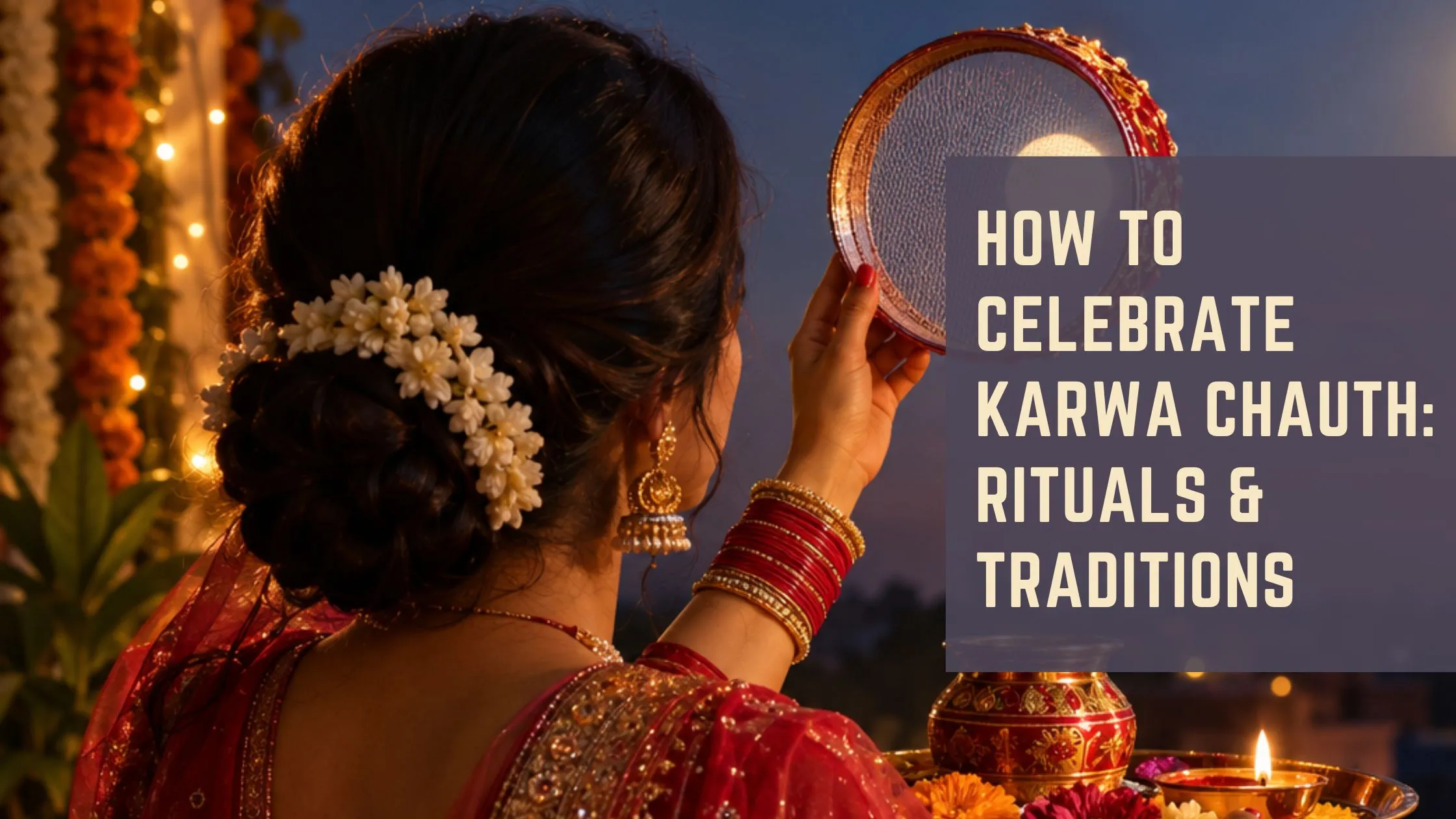
The moonrise ritual is often the most anticipated moment of Karwa Chauth.
Once the moon becomes visible, many women perform the following traditional steps:
Look at the moon through a sieve or channi, where this custom is followed.
Offer water to the moon, a ritual commonly called arghya.
Say a prayer for their spouse's well-being and the happiness of the family.
Look at their husband through the sieve in families that follow this custom.
Complete the traditional ritual before breaking the fast.
The exact sequence differs across communities. Moonrise timing also depends on the date and location, so it is helpful to check a reliable local panchang or astronomical timetable.
Step 7: Break the Fast and Share a Meal
After completing the moonrise rituals, women traditionally break their fast. In many households, the husband offers water or a first bite of food, although this is a custom rather than a universal requirement.
Families may then share a festive meal together.
Choose a balanced meal that is comfortable after a long period without food or fluids. If you have been fasting, avoid eating too much too quickly, and rehydrate gradually if you have been permitted to fast safely.
3. Karwa Chauth Puja Samagri Checklist
Prepare the puja items in advance to make the evening more relaxed.
| Puja Item | Traditional Purpose |
|---|---|
| Karwa or water pot | Used in customary water-offering rituals |
| Puja thali | Holds the ritual items |
| Diya and cotton wicks | Used for lighting a sacred lamp |
| Kumkum and rice | Used in customary worship |
| Flowers | Offered during puja |
| Fruits and sweets | Used as offerings in many families |
| Sieve or channi | Used in the traditional moon-viewing ritual |
| Water and spoon | Used for the customary offering |
| Image or idol of deities | Supports the family's chosen form of worship |
This is a general checklist. Your family or local tradition may require additional items.
4. Karwa Chauth Quotes About Love, Faith and Togetherness
These original lines can be used in greeting cards, social media captions, or personal messages.
Love and devotion
“True love is not measured by grand gestures, but by the care, patience, and understanding we offer each other every day.”
Faith and prayer
“A sincere prayer begins in the heart, where hope and gratitude meet.”
Marriage and companionship
“A beautiful marriage is built not only on promises, but on kindness, respect, and standing beside one another through every season of life.”
Tradition and family
“Traditions become precious when they bring generations together and keep the warmth of shared memories alive.”
Karwa Chauth greeting
“May this Karwa Chauth bring peace to your home, happiness to your heart, and a deeper bond of love and understanding between you and your partner.”
5. Important Karwa Chauth Traditions at a Glance
| Tradition | What It Represents |
|---|---|
| Sargi before sunrise | Blessings, preparation, and family affection |
| Applying mehndi | Festivity, beauty, and cultural tradition |
| Wearing traditional clothes | Celebration and cultural identity |
| Performing evening puja | Devotion and prayer |
| Listening to the vrat katha | Religious storytelling and cultural continuity |
| Moonrise rituals | Completion of the traditional observance |
| Sharing a meal | Togetherness, care, and celebration |
These meanings reflect common interpretations rather than fixed rules applicable to every community.
6. How to Make Karwa Chauth More Meaningful Today
Karwa Chauth traditions continue to evolve as families adapt them to modern life. You can preserve the festival's cultural meaning while making the day more inclusive and thoughtful.
Celebrate Mutual Love and Respect
Both partners can use the occasion to express appreciation, listen to one another, and acknowledge the work that goes into maintaining a relationship.
Spend Quality Time Together
Set aside time for a shared meal, a conversation without distractions, or a walk after the celebrations.
Give Thoughtful Gifts
A handwritten letter, flowers, a meaningful book, or a small personalised gift can make the day memorable without unnecessary expense.
Include Family Traditions
Invite relatives to share stories about how they celebrated Karwa Chauth in previous generations. These conversations can preserve family memories and deepen cultural understanding.
Keep Health and Consent in Mind
Fasting should be a personal and informed choice, not a source of pressure. Partners can celebrate the festival through prayers, shared rituals, or expressions of care even when fasting is not appropriate.
7. Life Lessons from Karwa Chauth
Karwa Chauth offers several reflections that can extend beyond the festival itself.
Love needs daily care: A strong relationship grows through consistent acts of kindness.
Faith can provide comfort: Prayer and reflection can help people connect with their values.
Traditions connect generations: Cultural practices create shared memories and a sense of belonging.
Respect matters more than appearances: A healthy marriage depends on trust, equality, and understanding.
Health is part of well-being: Spiritual observances should be approached responsibly and with compassion for individual needs.
Life lesson: The deepest expression of love is not sacrifice alone; it is mutual respect, thoughtful care, and a commitment to each other's well-being.
8. Frequently Asked Questions About Karwa Chauth
1. How is Karwa Chauth celebrated?
Karwa Chauth is traditionally celebrated through a pre-dawn Sargi meal, a daytime fast, festive preparations, evening puja, recitation of the vrat katha, and moonrise rituals before breaking the fast.
2. What should be eaten during Sargi?
Common Sargi foods include fruits, nuts, sweets, roti, and other nourishing dishes. The meal should suit individual dietary needs and provide adequate nourishment before the fasting period.
3. Can Karwa Chauth be celebrated without fasting?
Yes. People can participate through prayer, puja, family gatherings, gifts, and expressions of love without fasting. Those who cannot safely fast should prioritise their health.
4. What is the significance of the moon in Karwa Chauth?
The moon marks the completion of the traditional fast in many communities. Women offer prayers and water to the moon before completing the remaining rituals.
5. Why is a sieve used during Karwa Chauth?
In a widely followed custom, women look at the moon through a sieve and then look at their husbands through it. The practice is a symbolic part of the moonrise ritual, though it is not universal.
6. What is the Karwa Chauth vrat katha?
It is a traditional religious story recited during the festival. Several versions exist, including the well-known story of Veeravati, which is associated with devotion and the observance of the fast.
7. What should be included in a Karwa Chauth puja thali?
A typical thali may contain a diya, kumkum, rice, flowers, sweets, a small water vessel, and other items required by the family's tradition. A sieve may be kept separately for the moonrise ritual.
8. Is Karwa Chauth only for married women?
The festival is traditionally associated with married women praying for their husbands' well-being. However, customs vary, and some unmarried people also observe related fasts or participate in celebrations according to their personal beliefs and family practices.
9. How can husbands participate in Karwa Chauth?
Husbands can support preparations, join the puja where appropriate, offer thoughtful gifts, share household responsibilities, and express appreciation. Some couples also choose to fast together, provided it is safe for both.
10. How can I find the correct Karwa Chauth moonrise time?
Check a reliable local panchang or astronomical source for your city and the relevant date. Moonrise times vary by location, and visibility may be affected by weather.
Conclusion: Celebrate Karwa Chauth with Love, Faith and Understanding
Karwa Chauth is a festival filled with meaningful traditions, heartfelt prayers, festive clothing, family stories, and the anticipation of moonrise. From preparing Sargi to performing the evening puja and sharing a meal, each part of the celebration offers an opportunity to connect with cultural heritage and the people we love.
Yet the spirit of the festival extends beyond a single day. Love grows through everyday kindness, respect, patience, and support. Whether you observe every traditional ritual, adapt the celebration to your family's needs, or participate through prayer and togetherness, the occasion can be a reminder to nurture the relationships that matter most.
Celebrate Karwa Chauth not only with rituals, but also with gratitude, mutual respect, and a promise to care for one another throughout the year.
For more spiritual insights, festival guides, and meaningful life lessons, explore thegita.in.