Every year, as the towering effigies of Ravana, Kumbhakarna, and Meghnad catch fire, thousands of people gather to celebrate Dussehra. The sky fills with fireworks, families exchange greetings, and the atmosphere becomes full of joy. But have we ever stopped to ask ourselves why Dussehra is celebrated and what this ancient festival truly means for our lives?
Dussehra, also known as Vijayadashami, is one of the most significant Hindu festivals. It celebrates the victory of righteousness over wrongdoing, truth over falsehood, and courage over arrogance. In the Ramayana tradition, the festival commemorates Lord Rama's victory over Ravana. In another important tradition, it celebrates Goddess Durga's victory over the buffalo demon Mahishasura.
However, the deeper message of Dussehra goes beyond these legendary battles. It invites us to examine our own lives and recognise the anger, greed, pride, jealousy, and dishonesty that can prevent us from becoming better human beings.
The real question is not simply why Ravana is burned on Dussehra, but whether we are willing to overcome the negative qualities within ourselves.
Table of Contents
- Key Takeaways
- What Is Dussehra? Meaning and Significance
- Why Is Dussehra Celebrated? The Two Major Stories
- What Does Dussehra Teach Us About Life?
- Ten Heads of Ravana: A Symbolic Lesson for Modern Life
- Dussehra and the Bhagavad Gita: The Connection Between Dharma and Life
- How Is Dussehra Celebrated Across India?
- Why Is Ravana Burned on Dussehra?
- Inspiring Dussehra Quotes and Thoughts
- How Can You Celebrate Dussehra Meaningfully?
- Frequently Asked Questions About Dussehra
- 4. Why do we burn Ravana on Dussehra?
- 5. What is the connection between Navratri and Dussehra?
- 6. Is Dussehra celebrated only because Lord Rama defeated Ravana?
- 7. What are the main lessons of Dussehra?
- 8. When is Dussehra celebrated in 2026?
- Conclusion
Key Takeaways
Dussehra celebrates the victory of good over evil and dharma over adharma.
It commemorates Lord Rama's victory over Ravana in the Ramayana tradition.
It also marks Goddess Durga's victory over Mahishasura in Shakta traditions.
The festival is celebrated on the tenth day of the bright fortnight of Ashwin, following Navratri.
Ravan Dahan symbolises the destruction of arrogance, ego, and negative qualities.
Regional traditions include Ramlila, Durga Puja celebrations, Mysuru Dasara, and the distinctive Bastar Dussehra.
Its timeless lesson is to choose truth, compassion, courage, and righteousness in everyday life.
What Is Dussehra? Meaning and Significance
Dussehra is a major Hindu festival celebrated across India and by Hindu communities worldwide. It is also called Vijayadashami, a name commonly understood as “victory on the tenth day.”
The festival falls on Dashami, the tenth day of the bright lunar fortnight of the Hindu month of Ashwin, generally in September or October. It marks the culmination of Sharad Navratri and is associated with different religious traditions across the country.
The word Vijayadashami combines vijaya, meaning victory, and dashami, meaning the tenth lunar day.
The name Dussehra is also traditionally associated with the defeat of Ravana and the overcoming of evil. Together, these names express the central message of the festival: righteousness can prevail even when wrongdoing appears powerful.
Dussehra is not only a religious celebration but also an occasion for reflection, renewal, family gatherings, and the beginning of new ventures in several regional traditions.
Why Is Dussehra Celebrated? The Two Major Stories
1. Lord Rama's Victory Over Ravana
The most widely recognised explanation for Dussehra in North India comes from the Ramayana.
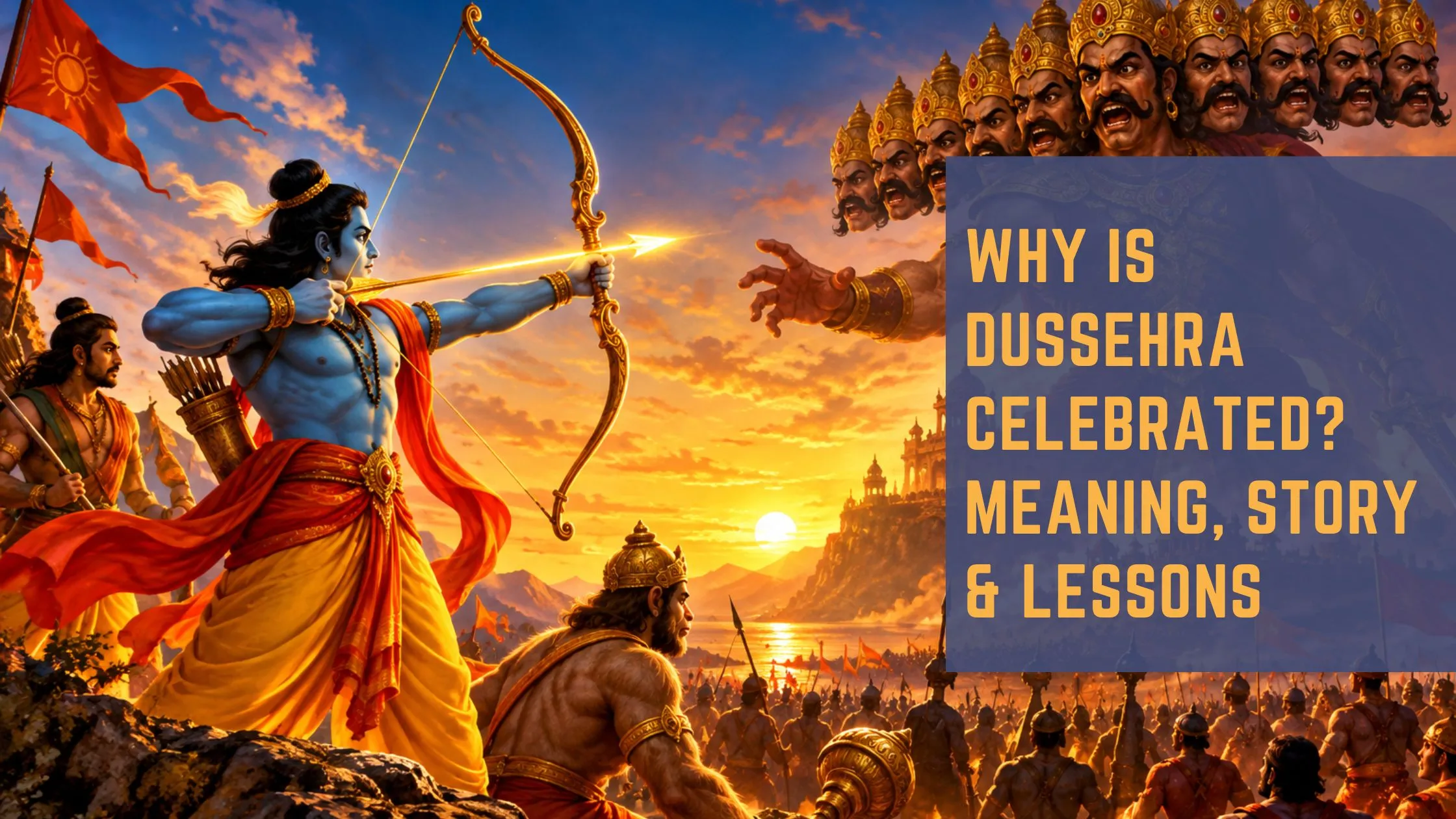
According to the epic tradition, Ravana, the powerful king of Lanka, abducted Goddess Sita, the wife of Lord Rama. Rama, accompanied by Lakshmana and supported by Hanuman and the vanara army, undertook a difficult journey to rescue her.
A great battle followed between Rama's forces and Ravana's army. Despite Ravana's strength, knowledge, and impressive kingdom, he ultimately fell in the battle against Rama.
Rama's victory is remembered as the triumph of dharma over adharma. Ravana's downfall demonstrates that power, intelligence, and wealth cannot justify injustice or arrogance.
This is why many communities organise Ramlila performances, dramatise important episodes from the Ramayana, and burn effigies of Ravana, Kumbhakarna, and Meghnad on Dussehra.
The story reminds us that even a person with extraordinary abilities can make destructive choices when pride and wrongdoing take control.
2. Goddess Durga's Victory Over Mahishasura
Dussehra also carries profound significance in traditions devoted to Goddess Durga.
According to the Devi Mahatmya tradition, Mahishasura was a powerful demon whose growing strength threatened the gods and the cosmic order. The divine powers united to manifest Goddess Durga, who fought Mahishasura and ultimately defeated him.
Her victory represents the power of divine Shakti, the restoration of balance, and the destruction of destructive forces.
This story is especially important in regions where Durga Puja is celebrated with great devotion. The culmination of the festival on Vijayadashami honours the Goddess's victory and marks the farewell to her worshipped image in communities that perform immersion rituals.
Both stories communicate a shared spiritual message: evil may appear powerful for a time, but righteousness and divine strength ultimately restore balance.
What Does Dussehra Teach Us About Life?
The deeper significance of Dussehra becomes clear when we apply its lessons to our everyday decisions.
1. Overcome Ego and Pride
Ravana possessed immense knowledge and power, yet his pride and choices contributed to his downfall. His story warns us that intelligence without humility can become destructive.
Life lesson: Stay confident in your abilities, but remain humble enough to accept your mistakes.
2. Always Stand for Truth
Lord Rama is remembered as an ideal of duty, integrity, and righteousness. His story encourages us to make ethical decisions even when the path is difficult.
Life lesson: Do what is right, not merely what is convenient.
3. Never Underestimate the Power of Courage
Righteous action often requires patience and courage. Rama's journey shows that difficult challenges can be faced through determination, discipline, and support from others.
Life lesson: Face your challenges with courage rather than allowing fear to make your decisions.
4. Control Anger and Negative Emotions
Anger, jealousy, hatred, and greed can damage relationships and cloud judgement. The symbolic destruction of evil during Dussehra encourages us to recognise these tendencies within ourselves.
Life lesson: Before trying to change others, begin by improving your own thoughts and actions.
5. Knowledge Must Be Guided by Wisdom
Ravana is often portrayed as highly learned, but his knowledge did not prevent his destructive decisions. The story reminds us that education alone is not enough; character matters too.
Life lesson: Use your knowledge to help others, resolve problems, and make responsible choices.
Ten Heads of Ravana: A Symbolic Lesson for Modern Life
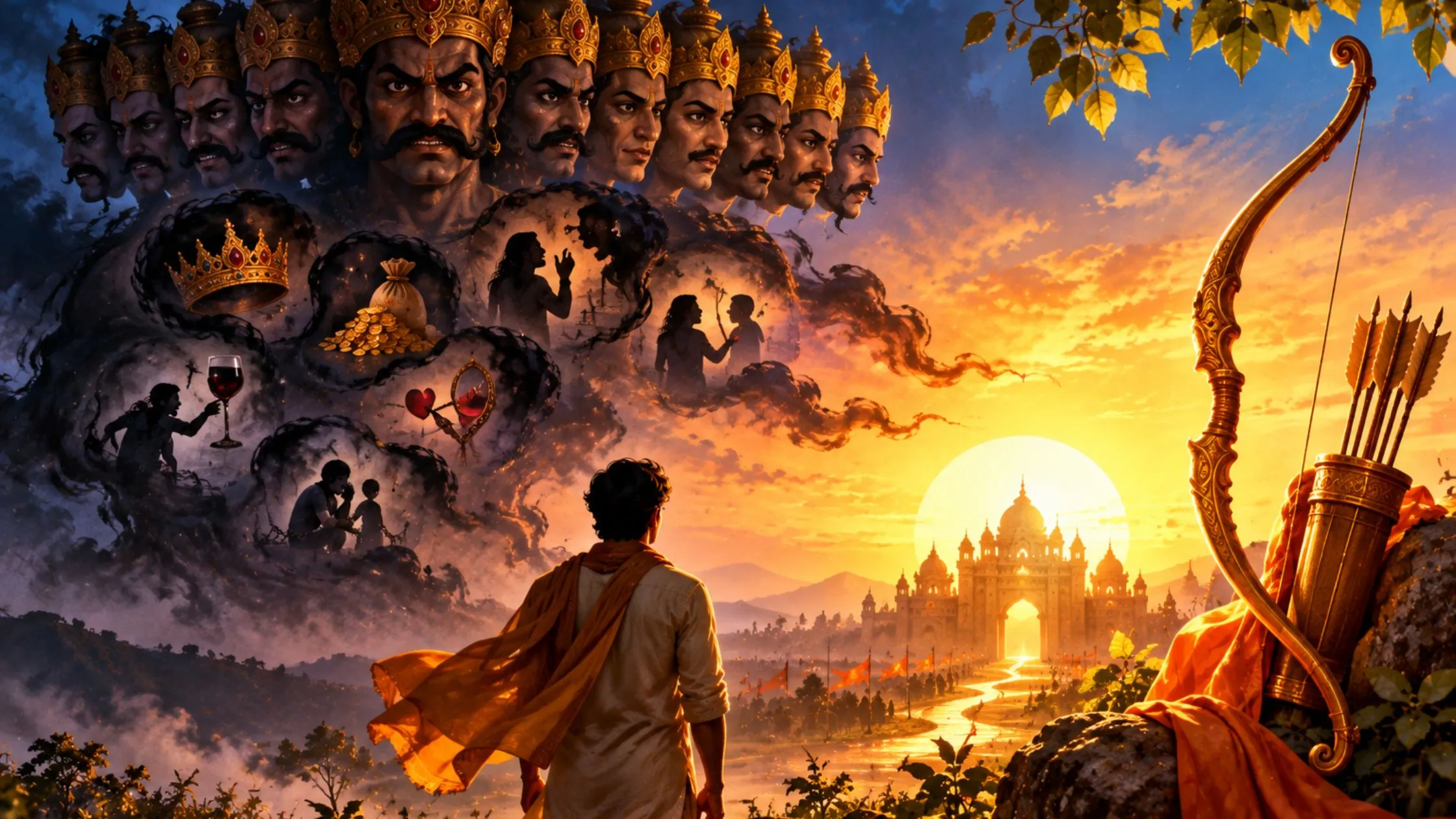
Ravana is traditionally depicted with ten heads. Popular spiritual interpretations use this imagery to reflect on the many negative tendencies that people must learn to control. Interpretations vary, so the following is a reflective framework rather than a single universally prescribed list.
| Negative tendency | Lesson for everyday life |
|---|---|
| Ego | Practise humility |
| Anger | Respond calmly |
| Greed | Learn contentment |
| Attachment | Maintain healthy balance |
| Jealousy | Celebrate others' success |
| Pride | Remain open to learning |
| Hatred | Choose compassion |
| Selfishness | Consider others' needs |
| Injustice | Stand for what is right |
| Uncontrolled desire | Develop self-discipline |
The symbolic message is simple: burning an effigy is a public reminder, but lasting transformation requires daily effort.
Dussehra and the Bhagavad Gita: The Connection Between Dharma and Life
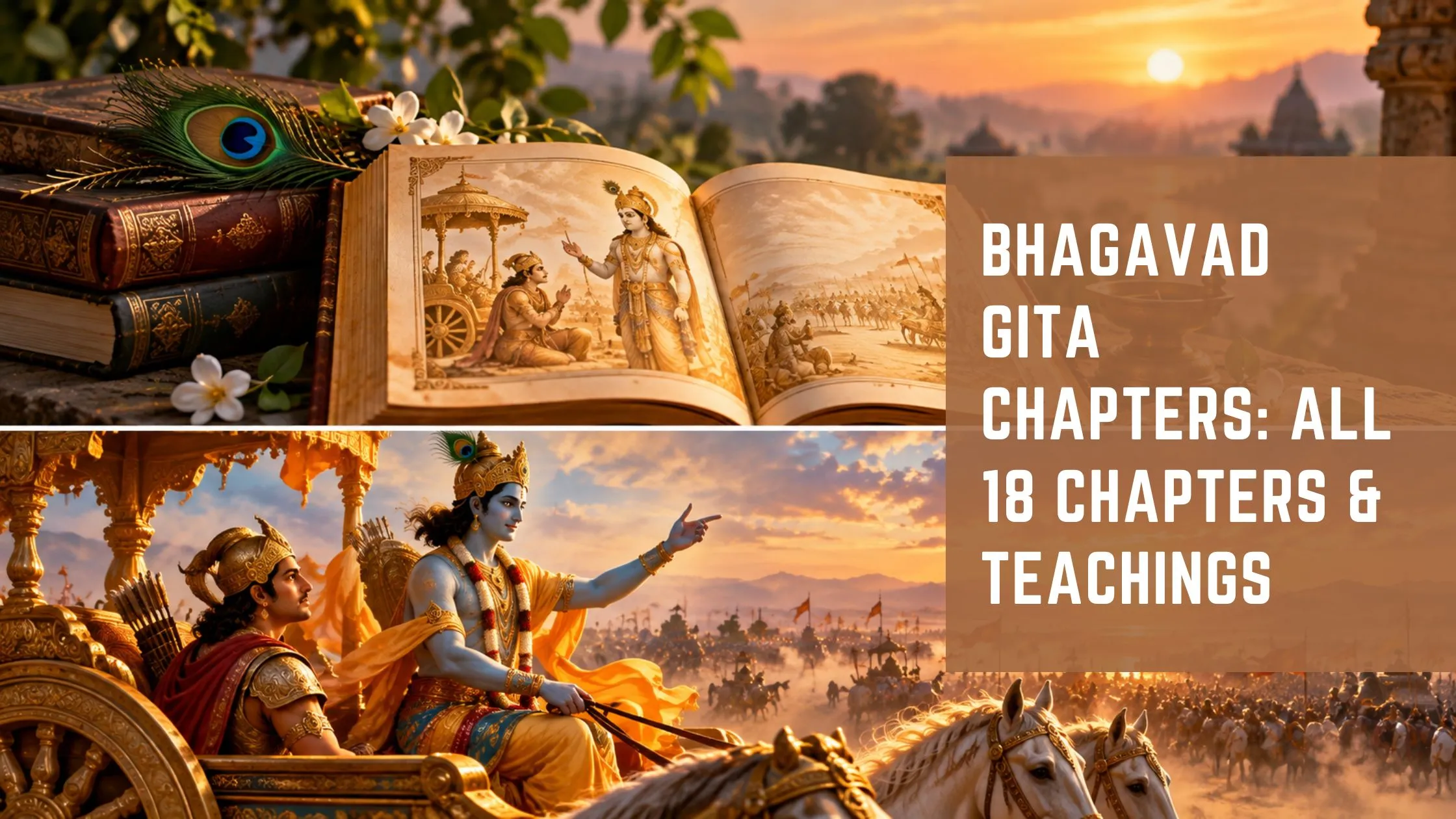
The Bhagavad Gita explores the importance of performing one's duty, mastering the mind, and choosing the path of righteousness. These teachings complement the spiritual message of Dussehra.
In the Gita, Lord Krishna explains the importance of acting according to dharma instead of allowing fear, attachment, or selfish desires to control our choices.
Bhagavad Gita 4.7–4.8 (meaning):
“Whenever righteousness declines and unrighteousness rises, I manifest Myself.”
These verses express Krishna's assurance that divine intervention restores dharma when it declines. They are especially relevant to the broader message of Dussehra, although they are not a direct account of the Rama–Ravana battle.
Dussehra encourages us to reflect on three practical questions:
Am I fulfilling my responsibilities honestly?
Am I allowing anger or ego to influence my decisions?
Am I using my strength and knowledge for a constructive purpose?
The connection between Dussehra and the Gita lies in the shared importance of dharma, self-discipline, and righteous action.
How Is Dussehra Celebrated Across India?
Dussehra reflects India's cultural diversity. Although the underlying message of victory is widely shared, the customs and stories differ by region.
| Region | Major tradition | Significance |
|---|---|---|
| North India | Ramlila and Ravan Dahan | Rama's victory over Ravana |
| West Bengal | Vijaya Dashami and Durga Puja rituals | Goddess Durga's victory over Mahishasura |
| Karnataka | Mysuru Dasara celebrations | Worship of Goddess Chamundeshwari and royal cultural traditions |
| Himachal Pradesh | Kullu Dussehra | Gathering of local deities and distinctive regional traditions |
| Maharashtra | Shami or Apta leaf customs and worship | Auspicious beginnings and prosperity |
| South India | Ayudha Puja and learning-related traditions in some communities | Respect for tools, work, education, and skill |
| Bastar, Chhattisgarh | Extended community and tribal festival | Worship of Maa Danteshwari and local traditions |
An important example of this diversity is Bastar Dussehra, which centres on local deities and tribal traditions rather than the burning of Ravana. This demonstrates that the festival cannot be reduced to one ritual or one regional story.
Why Is Ravana Burned on Dussehra?
Ravan Dahan is one of the most recognisable Dussehra traditions. Effigies of Ravana, and often Kumbhakarna and Meghnad, are burned during public celebrations.
The act symbolises the defeat of wrongdoing and the triumph of righteousness. It also provides an opportunity for communities to gather, watch Ramlila performances, and pass stories from the Ramayana to younger generations.
However, the symbolism becomes meaningful only when it inspires personal change. Burning an effigy of Ravana does not automatically remove dishonesty, cruelty, or arrogance from society.
A thought to remember: The greatest victory is not simply watching evil burn, but refusing to let it grow within ourselves.
Inspiring Dussehra Quotes and Thoughts
The following original reflections can be used for personal contemplation, festive greetings, or social media posts.
“Dussehra reminds us that truth may be tested, but righteousness is always worth defending.”
“Burn the Ravana of ego, anger, and greed within yourself.”
“Real victory begins when we conquer our own negative thoughts.”
“Let the light of dharma guide your choices, even when the path is difficult.”
“Knowledge makes us capable, but humility and compassion make us wise.”
“This Dussehra, choose courage over fear and kindness over hatred.”
“The end of evil begins with one honest decision.”
These are contemporary reflections inspired by the festival's message, not quotations from ancient scriptures.
How Can You Celebrate Dussehra Meaningfully?
Along with participating in traditional celebrations, consider making the festival an opportunity for personal growth.
Read or listen to an episode from the Ramayana.
Attend a Ramlila performance or participate in community prayers.
Reflect on one negative habit you would like to change.
Resolve a misunderstanding through honest and respectful communication.
Help someone who needs support.
Teach children the deeper meaning of dharma, courage, and responsibility.
Choose environmentally responsible celebrations and avoid unsafe fireworks.
A meaningful Dussehra does not depend on the size of a celebration. It begins with the intention to live with greater honesty, compassion, and self-control.
Frequently Asked Questions About Dussehra
1. Why is Dussehra celebrated?
Dussehra is celebrated to commemorate the victory of Lord Rama over Ravana and, in another major tradition, Goddess Durga over Mahishasura. It symbolises the triumph of good over evil and dharma over adharma.
2. What is the real meaning of Dussehra?
The deeper meaning of Dussehra is to overcome wrongdoing, arrogance, and destructive tendencies while choosing truth, courage, humility, and righteousness.
3. Why is Dussehra also called Vijayadashami?
Vijayadashami is commonly understood as “victory on the tenth day.” The name refers to the festival's place on the tenth lunar day and its association with divine victory.
4. Why do we burn Ravana on Dussehra?
Ravana's effigy is burned to symbolise the defeat of evil, pride, and injustice. The tradition recalls Rama's victory and encourages people to overcome negative qualities in their own lives.
5. What is the connection between Navratri and Dussehra?
Sharad Navratri honours Goddess Durga and her manifestations over nine nights. Dussehra, or Vijayadashami, follows as the culmination of these celebrations and is associated with the victory of good over evil.
6. Is Dussehra celebrated only because Lord Rama defeated Ravana?
No. Although Rama's victory is the best-known explanation in many regions, Dussehra also celebrates Goddess Durga's victory over Mahishasura and is observed through several distinctive regional traditions.
7. What are the main lessons of Dussehra?
The main lessons include humility, courage, truthfulness, self-discipline, compassion, respect for others, and the importance of fulfilling one's responsibilities.
8. When is Dussehra celebrated in 2026?
Dussehra falls on Tuesday, 20 October 2026, according to the published Hindu festival calendar. Local observance and ritual timings should be checked against a reliable regional Panchang.
Conclusion
Dussehra is much more than an annual festival, a dramatic Ravan Dahan, or a celebration of ancient victories. It is a reminder that the struggle between good and evil also takes place within the human mind.
The story of Lord Rama inspires us to uphold truth and fulfil our responsibilities. The victory of Goddess Durga reminds us of the power required to overcome destructive forces. The Bhagavad Gita further encourages us to follow dharma, practise self-discipline, and act with wisdom.
This Dussehra, instead of focusing only on the Ravana we see in the flames, let us recognise the pride, anger, greed, and dishonesty we can work to overcome in our own lives.
The most meaningful victory is the one that makes us better human beings.
May this Dussehra bring peace, wisdom, courage, and renewed faith in the power of righteousness. Happy Dussehra from TheGita.in!