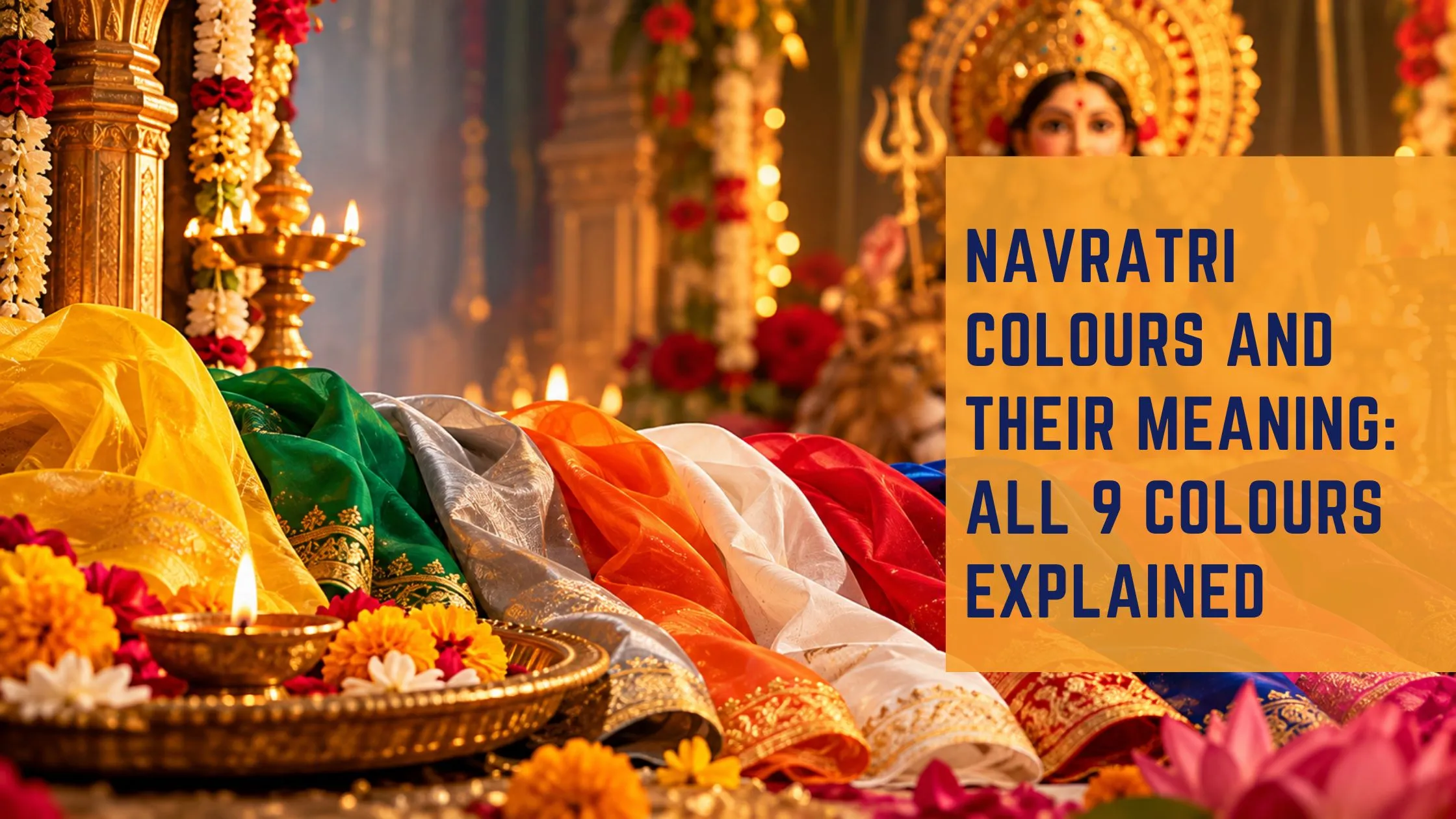
Have you ever wondered why devotees wear different colours during the nine days of Navratri? Is it simply a festive tradition, or does each colour carry a deeper spiritual message?
Navratri is much more than a celebration filled with devotion, fasting, music, and worship. It is a time to reconnect with the divine feminine energy, known as Shakti, and reflect on the qualities we want to develop within ourselves.
From the purity of white to the courage represented by red, the colours associated with Navratri offer meaningful reminders of faith, discipline, compassion, prosperity, and inner transformation.
Although the exact colour sequence may change each year according to the day of the week on which Navratri begins, the traditional symbolism of these colours remains a meaningful part of many celebrations.
In this guide, we will explore the meaning of all nine Navratri colours, their spiritual significance, the life lessons they offer, and how you can bring their messages into everyday life.
Table of Contents
- Key Takeaways
- What Is the Significance of Colours During Navratri?
- Navratri Colours and Their Meaning: All 9 Colours Explained
- What Can We Learn from the Nine Colours of Navratri?
- How to Celebrate Navratri with the Meaning of Each Colour
- Navratri and the Bhagavad Gita: A Shared Message of Inner Strength
- Frequently Asked Questions About Navratri Colours
- Conclusion: Let the Colours of Navratri Transform Your Life
Key Takeaways
Each Navratri colour represents qualities that devotees can reflect on during worship.
Red is commonly associated with energy, strength, and devotion.
White represents peace and purity, while yellow symbolizes happiness and learning.
Green is linked with growth, renewal, and prosperity.
The annual Navratri colour sequence can vary, so check the relevant year's calendar.
The deeper purpose of Navratri is inner transformation, not merely wearing a particular colour.
What Is the Significance of Colours During Navratri?
Navratri means “nine nights” and celebrates the divine feminine power of Goddess Durga and her various manifestations. During these days, devotees participate in prayers, fasting, devotional singing, and other religious traditions.
Colours add another layer of meaning to the celebration. In Hindu traditions, colours often communicate spiritual ideas and are used in clothing, flowers, decorations, and religious ceremonies.
For many devotees, wearing the colour associated with a particular day is an expression of faith and participation in the festival.
However, colour symbolism is not a universal rule. Interpretations can differ across communities, and the colours worn during Navratri should be understood as devotional traditions rather than guarantees of luck or success.
“The true colour of devotion is not found in our clothes, but in the purity of our hearts.”
Navratri Colours and Their Meaning: All 9 Colours Explained
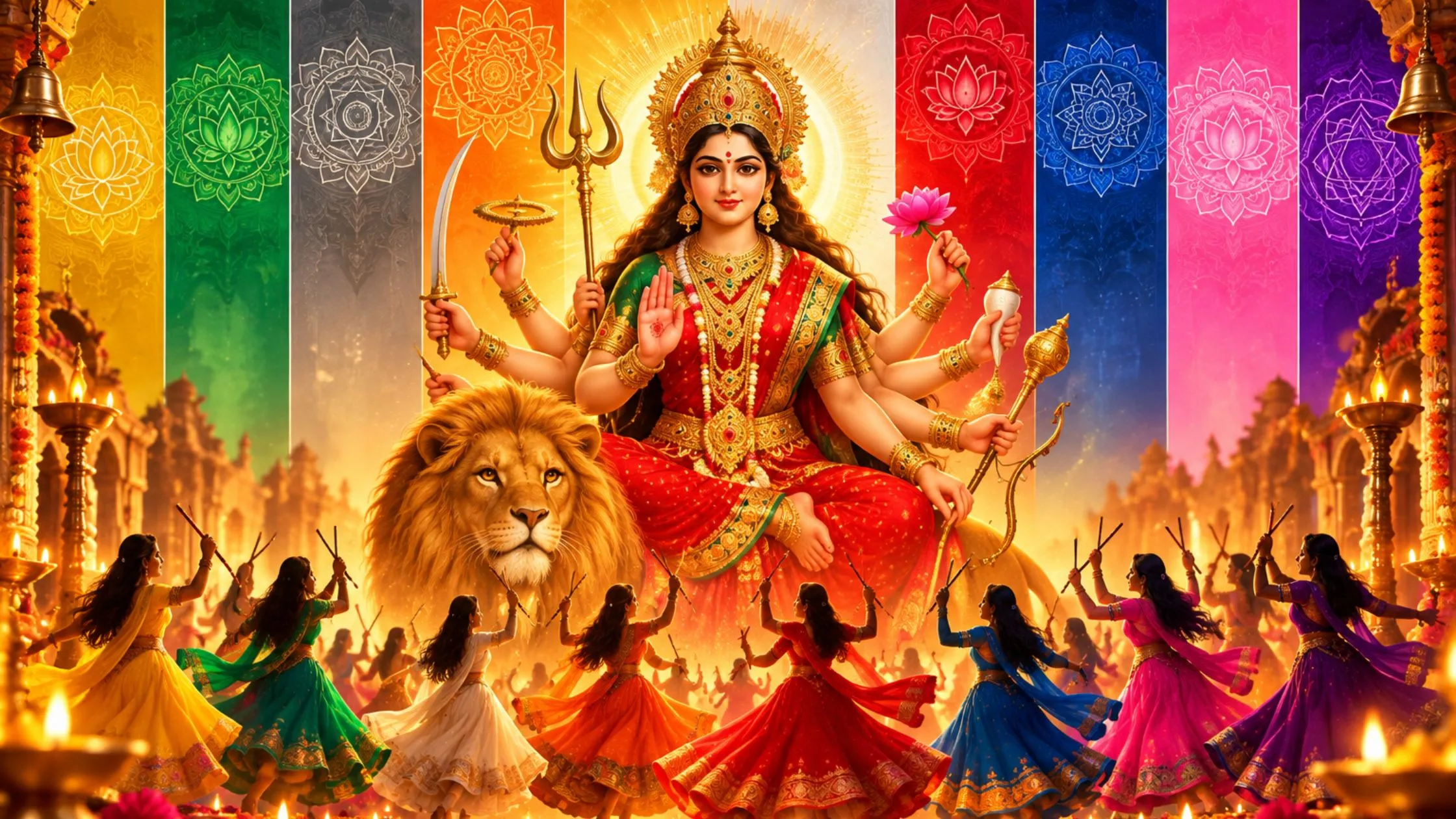
The following table presents commonly used spiritual interpretations of nine colours associated with Navratri. It is a symbolism guide, not a fixed annual calendar.
| Colour | Spiritual Meaning | Life Lesson |
|---|---|---|
| Yellow | Happiness, optimism, and knowledge | Approach life with hope |
| Green | Growth, renewal, and prosperity | Keep learning and growing |
| Grey | Balance, humility, and steadiness | Remain grounded during change |
| Orange | Energy, courage, and enthusiasm | Take action with confidence |
| White | Peace, purity, and serenity | Cultivate inner calm |
| Red | Strength, passion, and devotion | Stand firm in your values |
| Royal Blue | Stability, confidence, and dignity | Build strength through discipline |
| Pink | Love, compassion, and harmony | Treat others with kindness |
| Purple | Spiritual depth, dignity, and transformation | Make time for inner growth |
Important: The order of colours used in a particular year's Navratri celebration may differ. Check a trusted local or regional festival calendar before publishing a year-specific sequence.
1. Yellow: The Colour of Happiness and Knowledge
Yellow is associated with sunshine, optimism, wisdom, and joy. Its bright appearance reminds devotees to welcome each day with gratitude and a positive outlook.
Spiritually, yellow can encourage us to seek knowledge and approach challenges with an open mind. It is a reminder that wisdom grows when we remain curious and willing to learn.
Life lesson: Choose hope over constant negativity, and let every experience teach you something valuable.
Reflective quote: “Let your thoughts be as bright as the morning sun and your actions guided by wisdom.”
2. Green: The Colour of Growth and Renewal
Green represents nature, freshness, renewal, and growth. Just as plants grow with patience and care, our spiritual lives develop through consistent effort and good intentions.
During Navratri, green can remind devotees to nurture their relationships, practise gratitude, and make choices that support personal growth.
Life lesson: Growth is not always immediate. Be patient with yourself while continuing to improve.
Reflective quote: “Grow through what you go through, and let every challenge deepen your wisdom.”
3. Grey: The Colour of Balance and Steadiness
Grey may be associated with balance, humility, and composure. It can remind us that life includes uncertainty and that not every situation requires an immediate reaction.
A balanced mind helps us respond thoughtfully rather than allowing temporary emotions to control our decisions.
Life lesson: Stay calm when circumstances are uncertain, and make decisions with patience.
Reflective quote: “Inner strength is the ability to remain steady when life feels uncertain.”
4. Orange: The Colour of Energy and Courage
Orange is associated with enthusiasm, courage, sacrifice, and spiritual energy in various Indian traditions. Its warmth reminds us to act with determination and devote ourselves to meaningful goals.
Navratri provides an opportunity to examine whether our actions reflect our values. Courage is not simply about facing others; it is also about overcoming fear, laziness, and harmful habits.
Life lesson: Take purposeful action instead of allowing fear to decide your future.
Reflective quote: “True courage begins when you choose the right path, even when it is difficult.”
5. White: The Colour of Peace and Purity
White commonly symbolizes peace, purity, simplicity, and serenity. It encourages devotees to seek clarity in their thoughts and sincerity in their actions.
The spiritual message of white is especially meaningful in a busy world where distractions, anger, and constant comparison can disturb our peace.
Life lesson: Practise forgiveness, reduce unnecessary conflict, and create space for silence and reflection.
Reflective quote: “A peaceful mind is a beautiful offering to the Divine.”
6. Red: The Colour of Strength and Devotion
Red is strongly associated with Goddess Durga, divine power, energy, courage, and devotion. It is a prominent colour in many forms of Hindu worship and festive celebrations.
Red can remind us of the strength required to protect what is right, overcome difficulties, and remain committed to our responsibilities.
Its spiritual message is not aggression but purposeful strength guided by wisdom and compassion.
Life lesson: Be courageous without becoming cruel, and be powerful without losing humility.
Reflective quote: “Let your strength protect what is right, and let your devotion guide every action.”
7. Royal Blue: The Colour of Stability and Confidence
Royal blue can symbolize confidence, dignity, stability, and depth. Its rich appearance makes it a reminder of the importance of self-respect and emotional steadiness.
During Navratri, devotees can reflect on how to build confidence through discipline rather than seeking constant approval from others.
Life lesson: Trust your values, honour your responsibilities, and remain consistent in your efforts.
Reflective quote: “Real confidence comes from knowing your values and living by them.”
8. Pink: The Colour of Love and Compassion
Pink is commonly associated with affection, kindness, harmony, and care. It reminds us that spirituality is expressed not only through rituals but also through the way we treat people.
A compassionate heart can reduce unnecessary conflict, strengthen relationships, and make our homes and communities more peaceful.
Life lesson: Speak kindly, listen patiently, and offer help whenever you can.
Reflective quote: “Devotion becomes meaningful when it inspires kindness toward every living being.”
9. Purple: The Colour of Spiritual Depth and Transformation
Purple is often associated with dignity, spiritual reflection, mystery, and transformation. It can encourage devotees to look beyond external appearances and examine their inner world.
Navratri offers a valuable opportunity to recognise negative habits, renew intentions, and become more conscious of our thoughts and actions.
Life lesson: Make time for self-reflection and allow wisdom to transform the way you live.
Reflective quote: “The deepest transformation begins within the heart.”
What Can We Learn from the Nine Colours of Navratri?
The nine colours can serve as nine reminders for a more thoughtful and meaningful life.
Practise gratitude: Recognise the good in your life instead of focusing only on what is missing.
Keep growing: Learn from mistakes and remain open to new knowledge.
Maintain balance: Respond to challenges with patience and clarity.
Act courageously: Do what is right even when it requires effort.
Protect your peace: Avoid unnecessary anger and conflict.
Develop inner strength: Stay committed to your responsibilities.
Build self-confidence: Trust your principles rather than depending entirely on approval.
Show compassion: Treat people with respect and kindness.
Seek transformation: Replace harmful habits with better ones through consistent practice.
These lessons also connect with the broader spiritual message of the Bhagavad Gita: disciplined action, self-control, equanimity, and performing one's duties sincerely.
How to Celebrate Navratri with the Meaning of Each Colour
You do not need elaborate arrangements to connect with the spiritual meaning of Navratri. Simple, sincere practices can make the festival more reflective.
Wear a meaningful colour: Choose the colour traditionally associated with the day in your community, if you wish.
Begin with prayer: Spend a few quiet moments expressing gratitude and seeking guidance.
Reflect on one quality: Select a quality such as courage, compassion, or patience to practise that day.
Read spiritual teachings: Explore the Bhagavad Gita or devotional literature for guidance on self-discipline and righteous action.
Perform an act of kindness: Help a family member, support someone in need, or speak gently to another person.
End the day with reflection: Ask yourself what you learned and how you can improve tomorrow.
Remember that wearing a particular colour is optional. Sincere devotion, ethical conduct, and compassion matter more than following a colour tradition perfectly.
Navratri and the Bhagavad Gita: A Shared Message of Inner Strength
Navratri celebrates the divine feminine power associated with Goddess Durga, while the Bhagavad Gita offers guidance on duty, self-knowledge, disciplined action, and spiritual wisdom.
Although their contexts are different, both can inspire reflection on overcoming inner weaknesses and living with greater awareness.
Bhagavad Gita 6.5 teaches the importance of uplifting oneself through the mind rather than allowing the mind to become an obstacle. This teaching connects naturally with the personal transformation many devotees seek during Navratri.
The festival can therefore become more than an outward celebration. It can be a time to work on anger, pride, fear, impatience, and other habits that prevent us from living according to our values.
“The most meaningful victory is the victory of wisdom over ignorance and self-control over destructive habits.”
Frequently Asked Questions About Navratri Colours
1. What are the nine colours of Navratri?
Nine colours commonly associated with Navratri include yellow, green, grey, orange, white, red, royal blue, pink, and purple. The annual sequence can vary depending on the calendar and regional tradition.
2. What is the significance of Navratri colours?
Navratri colours express spiritual themes such as devotion, strength, purity, knowledge, peace, compassion, and personal growth. Devotees often use them as reminders of the qualities they wish to cultivate.
3. Why do people wear different colours during Navratri?
Many devotees wear different colours to honour the festival's daily traditions, participate in community celebrations, and express devotion to Goddess Durga. The practice is customary rather than compulsory.
4. Which colour represents Goddess Durga?
Red is widely associated with Goddess Durga and represents strength, energy, courage, and devotion. However, depictions of the Goddess can include many colours.
5. Do Navratri colours change every year?
Yes. The commonly followed colour sequence may change according to the weekday on which Navratri begins and the calendar tradition being followed. Local customs can also differ.
6. What is the spiritual meaning of white during Navratri?
White is commonly associated with purity, peace, serenity, and simplicity. It can remind devotees to cultivate calmness, sincerity, and clarity in their thoughts and actions.
7. Can I celebrate Navratri without wearing the prescribed colours?
Yes. Wearing specific colours is not compulsory. You can celebrate through prayer, devotion, acts of kindness, self-discipline, and respect for your family's or community's traditions.
8. What is the main spiritual lesson of Navratri?
A central lesson of Navratri is that divine strength, courage, and wisdom can inspire us to overcome negative tendencies and live with greater compassion, discipline, and awareness.
Conclusion: Let the Colours of Navratri Transform Your Life
The colours of Navratri are more than festive shades. They offer a beautiful way to reflect on the qualities that bring meaning to our lives: courage, peace, knowledge, compassion, discipline, and spiritual growth.
From the hopeful brightness of yellow to the inner depth of purple, each colour can become a reminder to live with greater awareness and sincerity. The nine-day celebration invites us to look beyond clothing and decorations and consider the changes we can make within ourselves.
As you celebrate Navratri, remember that the greatest offering is not simply the colour you wear but the goodness you bring into the world.
Life Lesson: Let every colour remind you of a virtue to practise, every prayer strengthen your faith, and every day become an opportunity to grow closer to your highest self.
May Maa Durga bless you with courage, wisdom, peace, and the strength to walk the path of truth.
Explore more spiritual wisdom and life lessons on TheGita.in.