Every year, millions of devotees gather in the holy city of Puri with one heartfelt desire—to witness Lord Jagannath, Lord Balabhadra, and Goddess Subhadra leave their temple and bless everyone without distinction. The magnificent Rath Yatra is not just a religious procession; it is a profound reminder that the Divine comes to the people, embracing all regardless of caste, status, or background.
The sight of enormous wooden chariots moving through the streets, accompanied by chants of "Jai Jagannath!", fills hearts with devotion and hope. For many, participating in Rath Yatra is believed to cleanse past karmas, inspire humility, and strengthen one's connection with God.
But why does Lord Jagannath step out of His temple only once a year? Why do millions consider pulling the sacred chariot a blessing? What spiritual message does this ancient tradition carry for our modern lives?
This guide explores the history, significance, rituals, symbolism, life lessons, Bhagavad Gita connections, and timeless wisdom of Rath Yatra 2026.
Table of Contents
Key Takeaways
- Rath Yatra 2026 falls on Thursday, July 16, 2026.
- The festival celebrates the annual journey of Lord Jagannath, Lord Balabhadra, and Goddess Subhadra.
- The grand procession takes place in Puri, Odisha, and is observed worldwide.
- Pulling the chariot symbolizes surrender, devotion, and collective service.
- Rath Yatra teaches equality, compassion, humility, and the importance of selfless action.
- The festival reflects the spiritual truth that God reaches out to every soul with unconditional love.
Rath Yatra 2026 Date and Tithi
Rath Yatra is celebrated on the Dwitiya Tithi (second day of the waxing moon) during the Hindu month of Ashadha.
| Event | Date |
|---|---|
| Rath Yatra 2026 | Thursday, July 16, 2026 |
| Hindu Month | Ashadha |
| Tithi | Shukla Paksha Dwitiya |
This sacred occasion marks the beginning of Lord Jagannath's annual journey from the Jagannath Temple to the Gundicha Temple, symbolizing a divine visit to His birthplace.
What Is Rath Yatra?
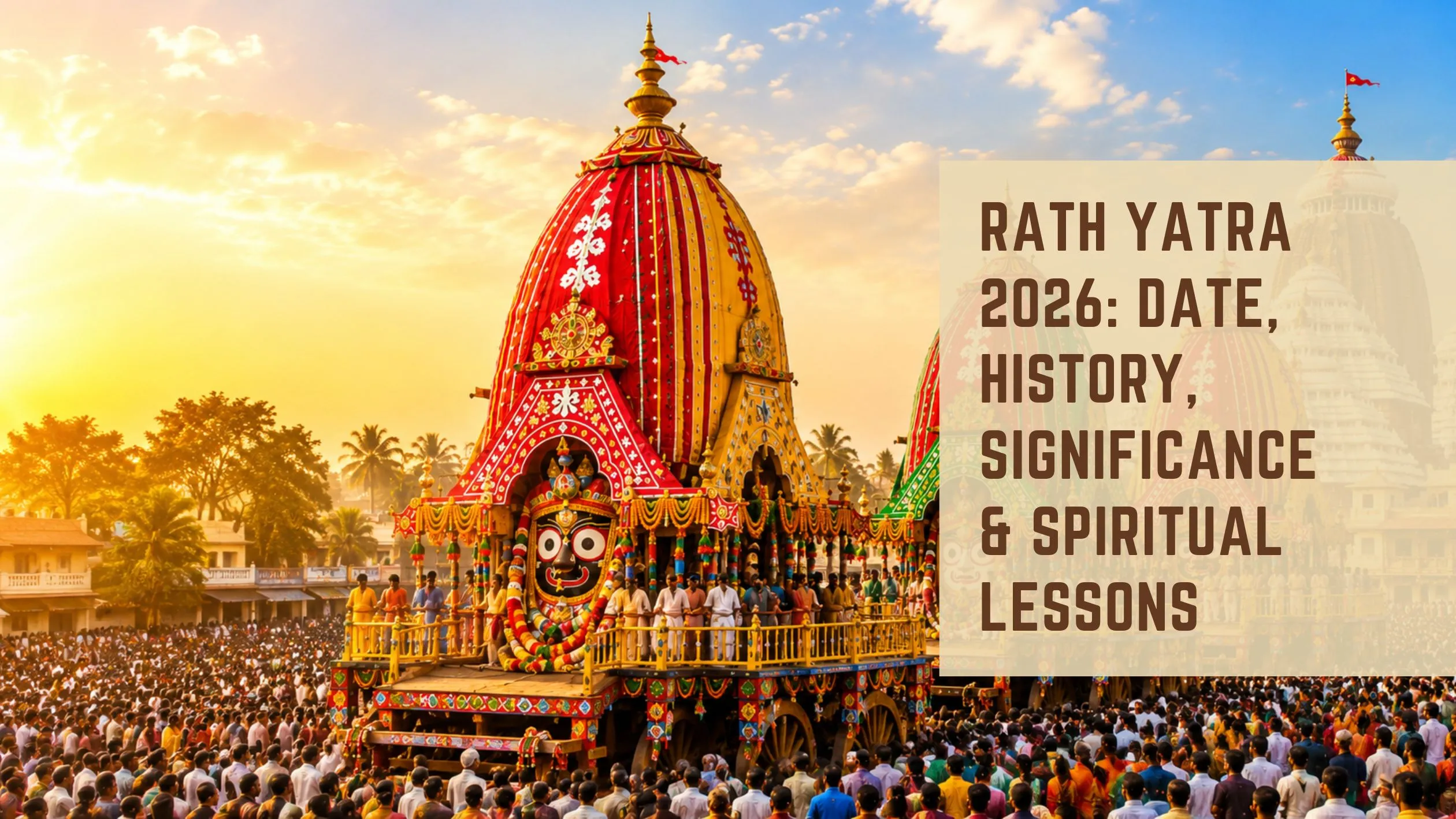
Rath Yatra, also known as the Festival of Chariots, is one of India's oldest and most revered Hindu festivals. During this event, beautifully decorated wooden chariots carry Lord Jagannath, Lord Balabhadra, and Goddess Subhadra through the streets of Puri.
Unlike most Hindu festivals, where devotees visit the temple, Rath Yatra represents the Divine coming out to bless everyone. This unique tradition emphasizes that God's grace is accessible to all, regardless of social or economic status.
The festival attracts millions of devotees and visitors from across the globe, making it one of the largest religious gatherings in the world.
The Fascinating History of Rath Yatra
The origins of Rath Yatra date back thousands of years and are deeply rooted in Hindu scriptures and temple traditions.
Historical records indicate that the Jagannath Temple in Puri became a major center of worship during the 12th century under King Anantavarman Chodaganga Deva. Over time, Rath Yatra evolved into a grand annual celebration that drew devotees from every corner of India.
Ancient texts such as the Skanda Purana, Brahma Purana, and Padma Purana mention Lord Jagannath and describe the significance of His divine procession.
For centuries, kings, saints, scholars, and ordinary devotees have participated in this festival, viewing it as an opportunity to receive the Lord's blessings directly.
The Story Behind Rath Yatra
Several beautiful legends explain the origin of Rath Yatra.
The Visit to Gundicha Temple
According to one popular tradition, Lord Jagannath travels every year with His brother Lord Balabhadra and sister Goddess Subhadra to the Gundicha Temple, believed to represent His aunt's home or His birthplace.
During this journey, devotees joyfully accompany the Lord, celebrating His compassion and accessibility.
The Krishna Connection
Another widely cherished belief connects Rath Yatra with Lord Krishna.
It is said that after hearing about the residents of Vrindavan and remembering His childhood, Lord Krishna was overwhelmed with emotion. His siblings, Balabhadra and Subhadra, shared these feelings, symbolizing the deep love between God and His devotees.
This emotional reunion is commemorated through Rath Yatra.
The Universal Message
Beyond mythology, Rath Yatra reminds humanity that God does not remain confined within temple walls. Instead, the Divine actively reaches out to every soul, inviting all to embark on a journey of faith, compassion, and self-realization.
Who Is Lord Jagannath?
Lord Jagannath is regarded as a form of Lord Krishna and an incarnation of Lord Vishnu.
The word Jagannath means "Lord of the Universe."
His unique wooden form, with large circular eyes and simplified features, symbolizes:
- Infinite compassion
- Universal vision
- Acceptance of all beings
- Eternal presence
- Boundless love
Unlike conventional idols, Lord Jagannath's appearance reminds devotees that the Divine transcends physical perfection and embraces everyone equally.
Why Is Rath Yatra Celebrated?
Rath Yatra is celebrated for several spiritual and cultural reasons.
1. To Celebrate Divine Compassion
The Lord comes out of the temple to bless everyone, including those who may never enter the sanctum.
2. To Promote Equality
People from every background participate together, demonstrating that all are equal before God.
3. To Encourage Devotion
Pulling the sacred chariot symbolizes offering one's ego, actions, and life to the Divine.
4. To Inspire Unity
The festival brings together millions of people, transcending barriers of caste, language, nationality, and social status.
The Spiritual Meaning of the Chariot
The chariot represents much more than a vehicle.
According to Hindu philosophy:
- The body is the chariot.
- The mind is the reins.
- The intellect is the charioteer.
- The soul is the traveler.
- God is the ultimate destination.
This symbolism encourages every individual to guide life with wisdom, discipline, and devotion.
A Timeless Quote
"When God steps out to meet humanity, every road becomes sacred and every heart becomes a temple."
Bhagavad Gita Connection
Rath Yatra beautifully reflects the teachings of the Bhagavad Gita.
"Whenever righteousness declines and unrighteousness rises, I manifest Myself."
— Bhagavad Gita 4.7
This verse reminds us that the Divine continuously guides humanity toward righteousness, just as Lord Jagannath comes among His devotees during Rath Yatra.
FAQs
1. When is Rath Yatra 2026?
Rath Yatra 2026 will be celebrated on Thursday, July 16, 2026. The festival falls on Dwitiya Tithi of Shukla Paksha in the Hindu month of Ashadha.
2. What is Rath Yatra?
Rath Yatra, also known as the Festival of Chariots, is an annual Hindu festival in which Lord Jagannath, Lord Balabhadra, and Goddess Subhadra are taken in grand wooden chariots from the Jagannath Temple to the Gundicha Temple in Puri, Odisha.
3. Why is Rath Yatra celebrated?
Rath Yatra celebrates Lord Jagannath's annual journey to the Gundicha Temple. Spiritually, it symbolizes God's love for humanity and His willingness to come out and bless everyone, regardless of caste, creed, or social status.
4. Where is the famous Rath Yatra celebrated?
The world's most famous Rath Yatra is celebrated in Puri, Odisha, at the sacred Jagannath Temple. Similar celebrations are also held across India and in many countries worldwide.
5. Who are the three deities in Rath Yatra?
The three main deities are:
- Lord Jagannath (a form of Lord Krishna)
- Lord Balabhadra (Lord Krishna's elder brother)
- Goddess Subhadra (their sister)
Conclusion
Rath Yatra 2026 is much more than a magnificent procession of beautifully decorated chariots—it is a celebration of faith, equality, devotion, and the eternal bond between God and humanity. Every year, Lord Jagannath, Lord Balabhadra, and Goddess Subhadra step out of the temple to remind us that divine grace is available to everyone, regardless of caste, status, or background.
The festival teaches timeless values of humility, selfless service, compassion, and surrender. Just as devotees unite to pull the sacred chariots together, Rath Yatra inspires us to work collectively, overcome our ego, and move forward on the path of righteousness. It also reflects the teachings of the Bhagavad Gita, encouraging us to perform our duties with devotion while placing our trust in the Divine.
At The Gita, we are dedicated to bringing the timeless wisdom of the Bhagavad Gita, Hindu scriptures, festivals, and spiritual traditions to modern readers.