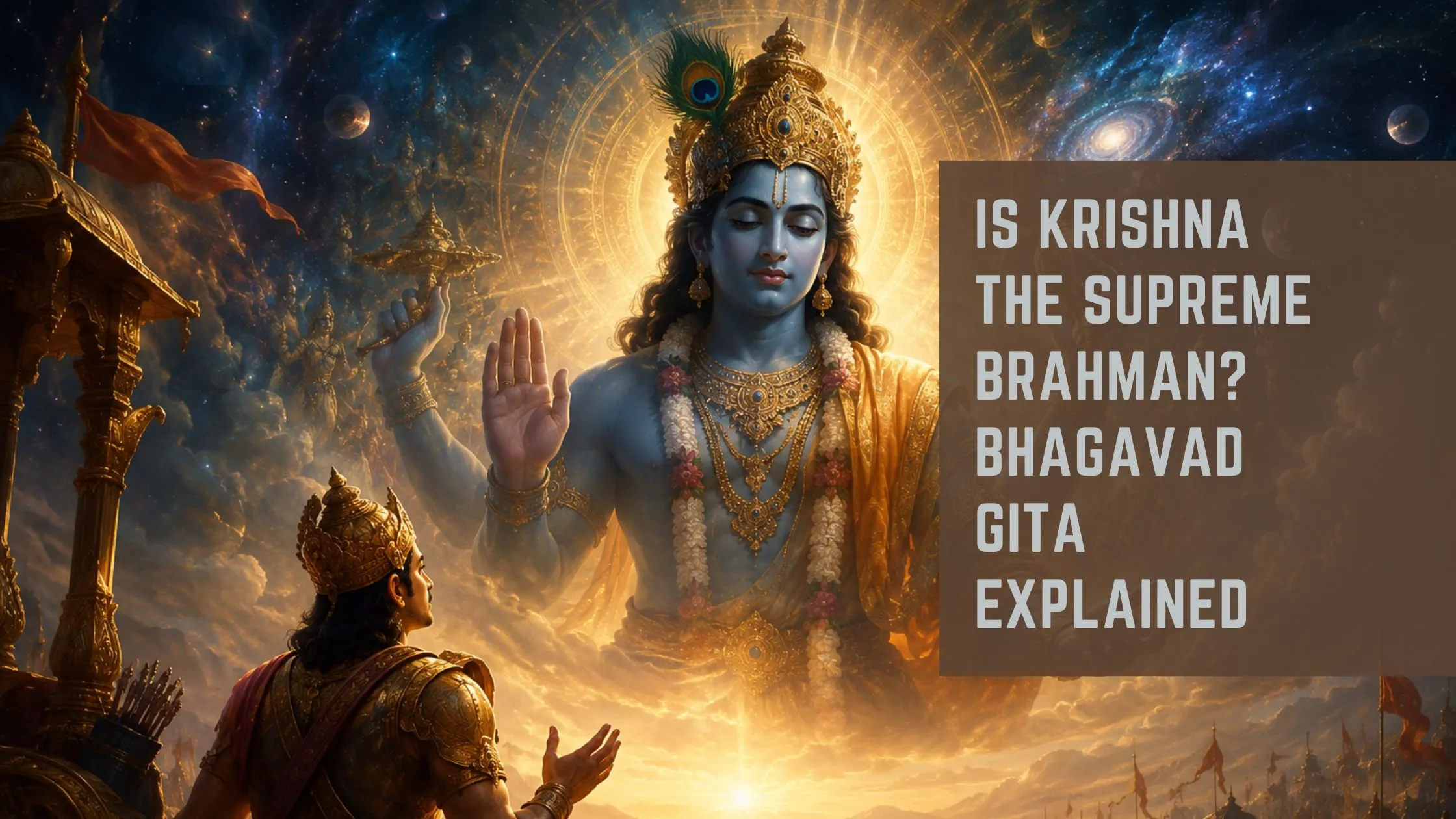
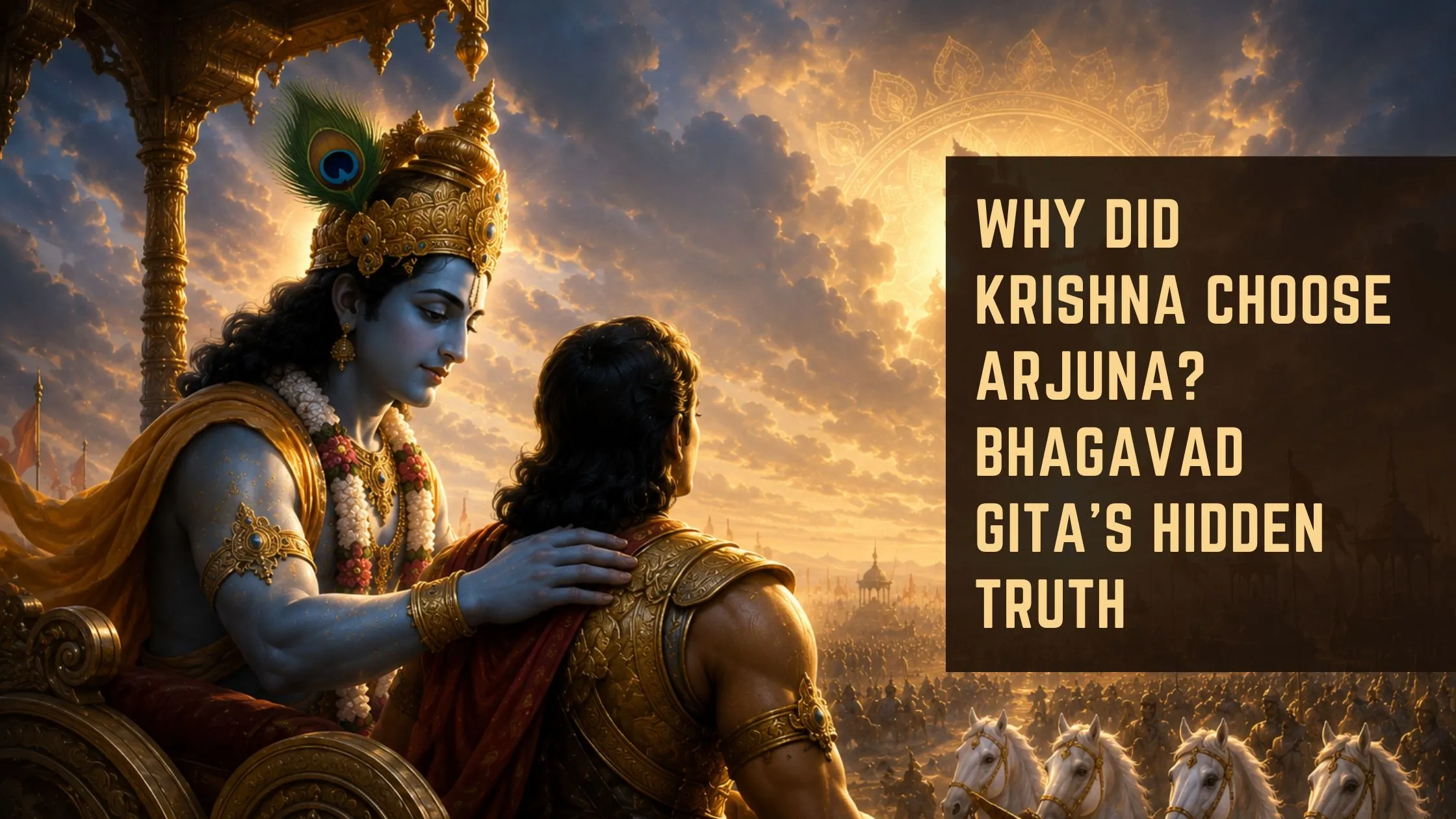
"Why did Lord Krishna reveal the eternal wisdom of the Bhagavad Gita to Arjuna? Why not Bhishma—the wisest warrior? Why not Karna the greatest archer? Was Arjuna truly special, or was there a deeper spiritual reason?"
This question has fascinated devotees, scholars, and spiritual seekers for centuries.
At first glance, Bhishma possessed unmatched wisdom and experience, while Karna was renowned for his generosity, courage, and extraordinary skills. Yet, when humanity needed the timeless message of the Bhagavad Gita, Krishna chose Arjuna.
The answer lies far beyond battlefield strength. Krishna's choice was based on Arjuna's character, humility, willingness to learn, and readiness to surrender to divine wisdom. Through Arjuna, Krishna delivered teachings that continue to guide millions toward purpose, peace, and self-realization.
In this article, we'll uncover the scriptural, philosophical, and spiritual reasons behind Krishna's choice and explore what this teaches us about our own lives.
Featured Snippet
Krishna chose Arjuna because he possessed humility, devotion, righteousness, and the willingness to seek guidance. Unlike Bhishma or Karna, Arjuna openly accepted his confusion and surrendered to Krishna as his spiritual teacher. His sincerity made him the ideal recipient of the Bhagavad Gita's timeless wisdom.
Key Takeaways
- Krishna chose Arjuna for his humility, not merely his strength.
- Arjuna willingly accepted Krishna as his Guru.
- The Bhagavad Gita was revealed through a disciple who questioned sincerely.
- Bhishma and Karna were great warriors but bound by different duties and circumstances.
- The Gita teaches that spiritual wisdom comes to those who are open to learning.
Why Was Arjuna Chosen?
Krishna's decision was never based on favoritism. Every major character in the Mahabharata had extraordinary qualities, yet Arjuna alone fulfilled every condition required to receive divine knowledge.
The Bhagavad Gita itself begins when Arjuna experiences an emotional and spiritual crisis. Rather than hiding his weakness, he honestly admits his confusion and seeks Krishna's guidance.
This willingness to learn becomes the foundation of the entire conversation.
Arjuna Accepted Krishna as His Guru
One of the most important moments occurs in Bhagavad Gita Chapter 2.
Bhagavad Gita 2.7
कार्पण्यदोषोपहतस्वभावः...
Translation
"I am Your disciple. Please instruct me, for I have surrendered unto You."
This verse changes everything.
Until this point, Krishna and Arjuna are friends.
After this moment, Krishna becomes the Guru, and Arjuna becomes the sincere student.
Without this surrender, the Bhagavad Gita would never have been spoken.
"Wisdom begins where ego ends."
Arjuna Had the Courage to Ask Questions
Many people think asking questions shows weakness.
The Bhagavad Gita proves the opposite.
Throughout the Gita, Arjuna asks dozens of questions:
- What is Dharma?
- What is Karma?
- What is Yoga?
- What is the Self?
- What is Brahman?
- What is Liberation?
- How should one meditate?
Instead of blindly accepting answers, Arjuna seeks understanding.
His curiosity makes him the perfect student.
Krishna and Arjuna Shared Complete Trust
The friendship between Krishna and Arjuna was built on love, faith, and mutual respect.
Arjuna trusted Krishna completely.
When Krishna asked him to fight, Arjuna eventually accepted—not because he was forced, but because he understood the truth.
This relationship demonstrates that divine guidance flourishes where trust exists.
Why Not Bhishma?
Bhishma was one of the wisest and most respected figures in the Mahabharata.
He possessed unmatched knowledge of dharma and lived a life of discipline.
So why wasn't he chosen?
Reasons
- Bhishma had already formed his convictions.
- He was bound by his lifelong vow to protect the Kuru throne.
- He did not experience the same inner confusion as Arjuna.
- The Gita was meant for a seeker, not someone who had already accepted his destiny.
Bhishma's greatness was unquestionable, but his role in the Mahabharata was different.
Why Not Karna?
Karna remains one of the most admired characters in Indian history.
His generosity, loyalty, and bravery are legendary.
However, several factors distinguished him from Arjuna.
Karna's Challenges
- Deep attachment to Duryodhana.
- Constant struggle with pride and resentment.
- Refusal to abandon adharma despite knowing the truth.
- Loyalty that sometimes overpowered righteousness.
Krishna even offered Karna the opportunity to join the Pandavas before the war.
Karna respectfully declined.
His decision reflected loyalty, but it also meant remaining on the side of injustice.
Comparison Table
| Quality | Arjuna | Bhishma | Karna |
|---|---|---|---|
| Accepted Krishna as Guru | ✔ | ✘ | ✘ |
| Asked Spiritual Questions | ✔ | Rarely | Rarely |
| Open to Guidance | ✔ | Limited | Limited |
| Willing to Surrender | ✔ | No | No |
| Chosen to Receive Bhagavad Gita | ✔ | ✘ | ✘ |
Krishna's Own Words
Bhagavad Gita 4.3
स एवायं मया तेऽद्य योगः प्रोक्तः पुरातनः।
Translation
"Today I am revealing this ancient yoga to you because you are My devotee and My friend."
This verse directly answers the question.
Krishna Himself explains why Arjuna was chosen.
Not because he was the strongest.
Not because he was the smartest.
But because he combined friendship with devotion.
What Made Arjuna Different?
Several qualities set Arjuna apart.
Humility
Despite being the greatest archer, Arjuna never claimed to know everything.
Devotion
His love for Krishna was unwavering.
Discipline
Years of dedication made him mentally prepared for higher wisdom.
Righteousness
Whenever confused, Arjuna genuinely wanted to know what was right.
Courage
He did not run away from difficult questions.
Spiritual Meaning Behind Krishna's Choice
Every character in the Mahabharata symbolizes an aspect of human nature.
- Bhishma represents duty.
- Karna represents loyalty mixed with attachment.
- Duryodhana represents ego.
- Arjuna represents the sincere seeker.
The Bhagavad Gita teaches that divine wisdom enters the heart of the seeker—not the proud, the stubborn, or the self-righteous.
"God does not seek the perfect disciple; He seeks the willing disciple."
Life Lessons We Can Learn
Krishna's choice offers timeless lessons for everyone.
1. Stay Humble
Knowledge flows into a humble mind.
2. Ask Questions
Spiritual growth begins with sincere inquiry.
3. Accept Guidance
Learning requires trust in a worthy teacher.
4. Choose Dharma
Doing what is right is often more difficult than doing what is easy.
5. Keep Faith During Confusion
Even moments of doubt can become the beginning of spiritual awakening.
Modern Relevance
Today's world is filled with uncertainty, stress, and difficult choices.
Like Arjuna, many people struggle with confusion about career, relationships, purpose, and morality.
Krishna's teachings remind us that clarity comes through:
- Self-reflection
- Wisdom
- Right action
- Detachment from results
- Faith in the Divine
The Bhagavad Gita remains a practical guide for modern life because it addresses timeless human struggles.
Frequently Asked Questions
Why did Krishna choose Arjuna?
Krishna chose Arjuna because he was humble, devoted, sincere, and willing to accept spiritual guidance.
Why didn't Krishna teach Bhishma?
Bhishma already understood his role and was firmly committed to his vows. The Gita was intended for a seeker facing moral confusion.
Why didn't Krishna choose Karna?
Although Karna was noble and courageous, he remained loyal to Duryodhana despite recognizing the difference between righteousness and unrighteousness.
Was Arjuna Krishna's favorite?
The Bhagavad Gita describes Arjuna as both Krishna's friend and devotee. Their unique relationship made Arjuna the ideal recipient of divine wisdom.
What is the biggest lesson from Krishna choosing Arjuna?
God values humility, sincerity, and the desire to learn more than talent, power, or status.
Conclusion
The question "Why did Krishna choose Arjuna?" reveals one of the deepest spiritual truths in the Bhagavad Gita.
Krishna did not select Arjuna because he was the strongest warrior or the most accomplished prince. He chose him because Arjuna possessed the qualities of a true disciple—humility, devotion, honesty, and the courage to seek truth.
Bhishma embodied unwavering duty. Karna exemplified loyalty and generosity. Yet Arjuna represented something every spiritual seeker must cultivate: the willingness to admit uncertainty and surrender to divine wisdom.
The Bhagavad Gita reminds us that God's greatest teachings are not reserved for the most powerful or the most knowledgeable. They are revealed to hearts that are open, sincere, and ready to transform.
As we face our own life's battles, Krishna's choice of Arjuna encourages us to replace pride with humility, confusion with inquiry, and fear with faith. When we become seekers like Arjuna, we too become ready to receive the timeless wisdom that leads to inner peace and purposeful living.
"Krishna chose Arjuna not because he had all the answers but because he was willing to seek them."
Continue your spiritual journey with TheGita.in where the timeless wisdom of the Bhagavad Gita inspires modern life, one verse at a time.