What if the greatest victory in life is not defeating another person but conquering the fear, anger, and negativity within yourself?
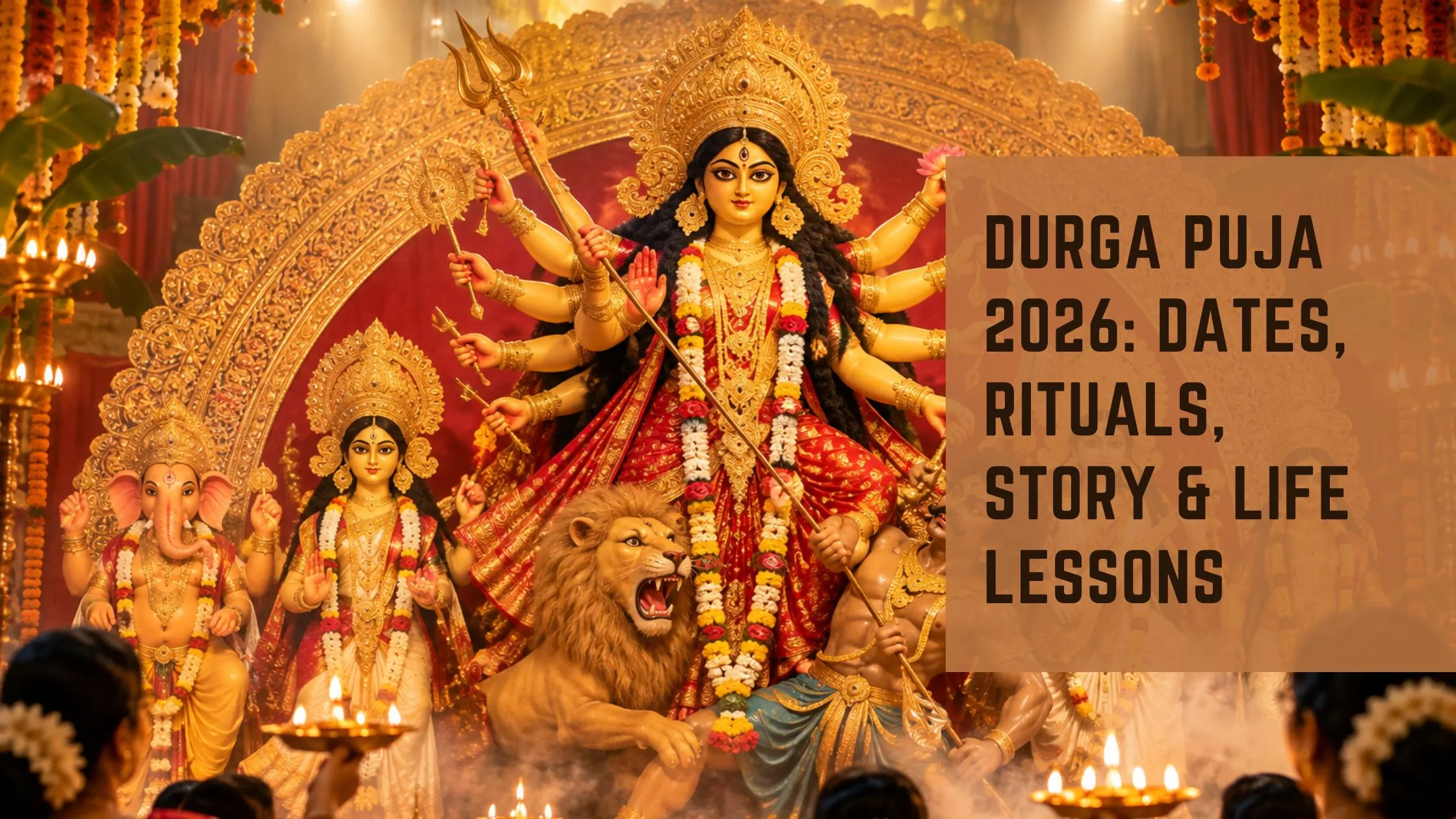
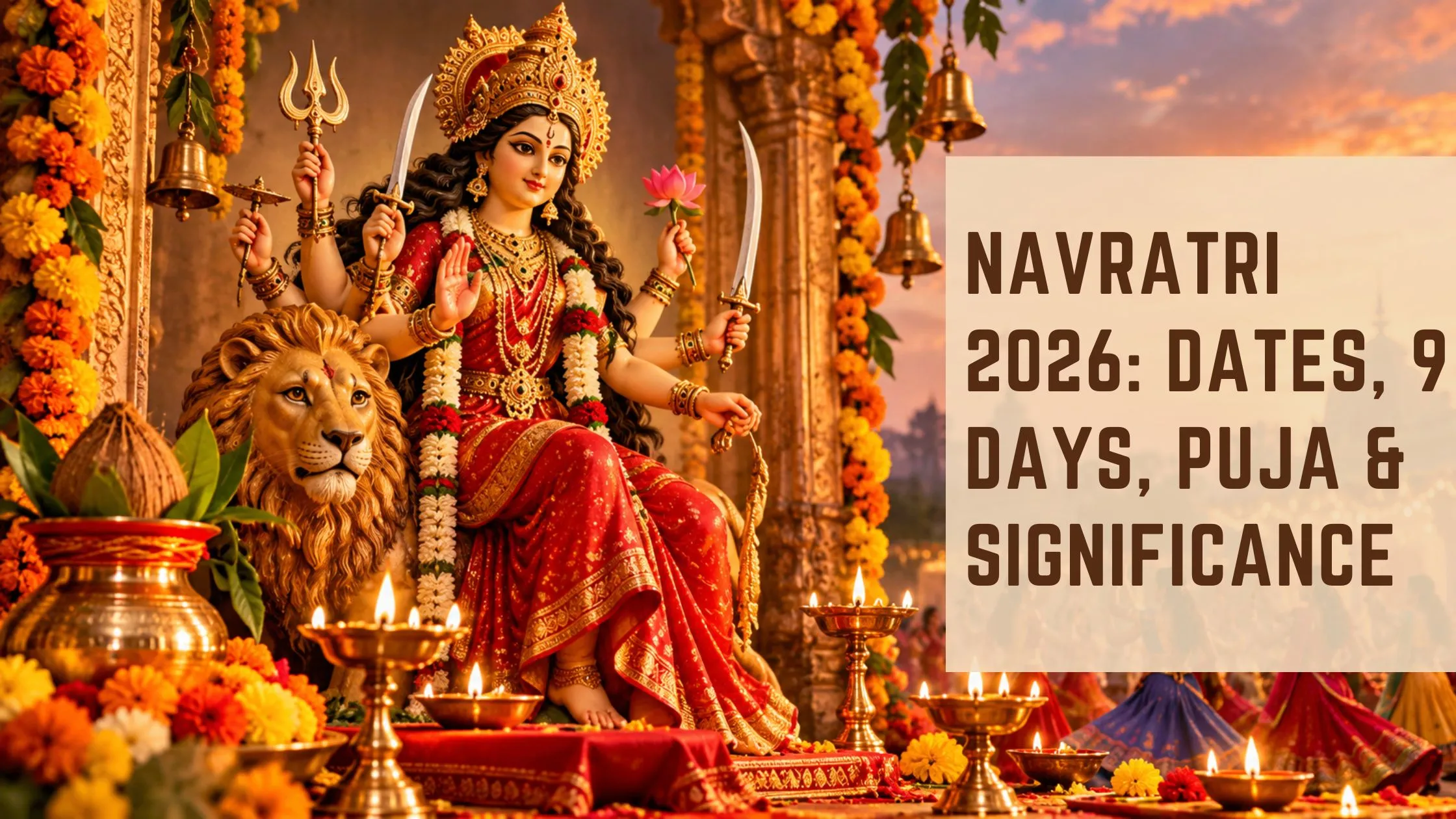
Durga Ashtami reminds devotees of this powerful truth. Dedicated to Goddess Durga, the festival celebrates divine feminine energy, courage, purity, compassion, and the victory of good over evil. It is one of the most spiritually significant days of Sharad Navratri, when devotees pray for strength, peace, wisdom, and protection.
On this sacred occasion, families perform Durga Puja, observe fasts, chant mantras, and worship young girls through the tradition of Kanya Pujan. Every ritual carries a deeper message: true devotion is expressed not only through prayers but also through kindness, self-discipline, and respect for others.
If you want to understand the meaning of Durga Ashtami, how to celebrate it, which rituals to perform, and what lessons it offers for everyday life, this complete guide to Durga Ashtami 2026 will help you.
Table of Contents
- Key Takeaways
- Durga Ashtami 2026: Date and Important Timings
- What Is Durga Ashtami and Why Is It Celebrated?
- Which Goddess Is Worshipped on Durga Ashtami 2026?
- Durga Ashtami Puja Vidhi: Step-by-Step Guide
- Kanya Pujan on Durga Ashtami 2026
- Durga Ashtami Mantras for Peace and Strength
- Durga Ashtami Fasting Rules and Food Traditions
- Sandhi Puja: The Sacred Transition Between Ashtami and Navami
- Durga Ashtami Quotes to Inspire Devotion and Courage
- Five Life Lessons from Durga Ashtami
- How Is Durga Ashtami Celebrated Across India?
- Frequently Asked Questions
- Conclusion
Key Takeaways
Durga Ashtami 2026: Maha Ashtami falls on Monday, October 19, 2026, according to the commonly followed North Indian calendar.
Goddess worshipped: Maa Mahagauri, the eighth form of Navdurga.
Important rituals: Durga Puja, mantra chanting, fasting, Kanya Pujan, and Sandhi Puja in traditions that observe it.
Spiritual meaning: Purity, courage, inner strength, and the triumph of good over evil.
Life lesson: Faith becomes meaningful when it inspires positive action and compassion.
Durga Ashtami 2026: Date and Important Timings
Durga Ashtami, also known as Maha Ashtami or Maha Durgashtami, is observed on the eighth lunar day, or Ashtami Tithi, of the bright fortnight of Ashwin during Sharad Navratri.
In 2026, the festival calendar presents a timing overlap between Ashtami and Navami, so devotees should check their local Panchang before performing time-sensitive rituals.
| Event | Date and details |
|---|---|
| Durga Ashtami 2026 | Monday, October 19 |
| Ashtami Tithi begins | October 18 at approximately 8:27 AM |
| Ashtami Tithi ends | October 19 at approximately 10:51 AM |
| Goddess worshipped | Maa Mahagauri |
| Important rituals | Durga Puja, Kanya Pujan, Sandhi Puja |
| Navami | October 19–20, depending on the ritual tradition |
| Vijayadashami | October 20 in the commonly followed festival calendar |
Timings are based on published Indian Panchang information and may vary by location. Confirm the exact muhurat for your city before performing the rituals.
What Is Durga Ashtami and Why Is It Celebrated?
Durga Ashtami is dedicated to Goddess Durga, the divine embodiment of Shakti, or cosmic feminine power. The festival represents the strength required to overcome evil, ignorance, injustice, and destructive tendencies.
According to Hindu tradition, Goddess Durga fought the buffalo demon Mahishasura, symbolising the triumph of divine righteousness over arrogance and evil. Her victory is celebrated during Navratri and Durga Puja.
Durga Ashtami holds special importance because devotees seek the Goddess's blessings for courage, prosperity, family well-being, and spiritual growth.
The festival also encourages people to reflect on their own lives. Are we acting with honesty? Are we controlling our anger? Do we respect others? These questions make the celebration meaningful beyond its rituals.
Which Goddess Is Worshipped on Durga Ashtami 2026?
On the eighth day of Navratri, devotees worship Maa Mahagauri, the eighth form of Navdurga.
Maa Mahagauri is traditionally depicted wearing white garments and riding a bull. Her name is associated with purity, serenity, and radiance. She represents the removal of negativity and the awakening of inner peace.
Spiritual significance of Maa Mahagauri
Purity: Encourages a clean heart and honest intentions.
Peace: Inspires calmness during difficult situations.
Forgiveness: Reminds devotees to release resentment.
Renewal: Symbolises the possibility of positive transformation.
Devotion: Encourages faith, discipline, and spiritual awareness.
Worshipping Maa Mahagauri is an opportunity to pray for peace of mind and the strength to improve oneself.
Durga Ashtami Puja Vidhi: Step-by-Step Guide
Devotees can perform Durga Ashtami Puja at home with devotion and a clean, peaceful environment.
1. Clean the Puja Area
Clean your home and prepare the place where the Goddess will be worshipped. Place an image or idol of Maa Durga or Maa Mahagauri on a clean altar.
2. Take a Bath and Wear Clean Clothes
Begin the day with personal cleanliness. Many devotees wear red, white, or other auspicious colours according to family tradition.
3. Light a Diya
Light a ghee or oil lamp and offer incense if desired. Begin the puja with a prayer for wisdom, peace, and the well-being of your family.
4. Offer Flowers and Bhog
Offer fresh flowers, fruits, sweets, and other customary offerings to the Goddess. Coconut, halwa, puri, and chana are commonly associated with Navratri worship and Kanya Pujan.
5. Chant Durga Mantras
Recite a Durga mantra or the prayers traditionally followed by your family. You may also read passages from the Durga Saptashati if familiar with the text.
6. Perform Aarti
Conclude the main worship with Maa Durga's aarti and a heartfelt prayer. Offer gratitude rather than focusing only on personal wishes.
7. Perform Kanya Pujan
Families who follow this tradition invite young girls, honour them as manifestations of the Divine Mother, offer food, and give gifts according to their means.
8. Complete the Fast According to Tradition
If you are observing a fast, follow your family's customary rules and the guidance of your tradition. The timing of the concluding ritual may depend on whether you observe Ashtami or Navami.
Kanya Pujan on Durga Ashtami 2026
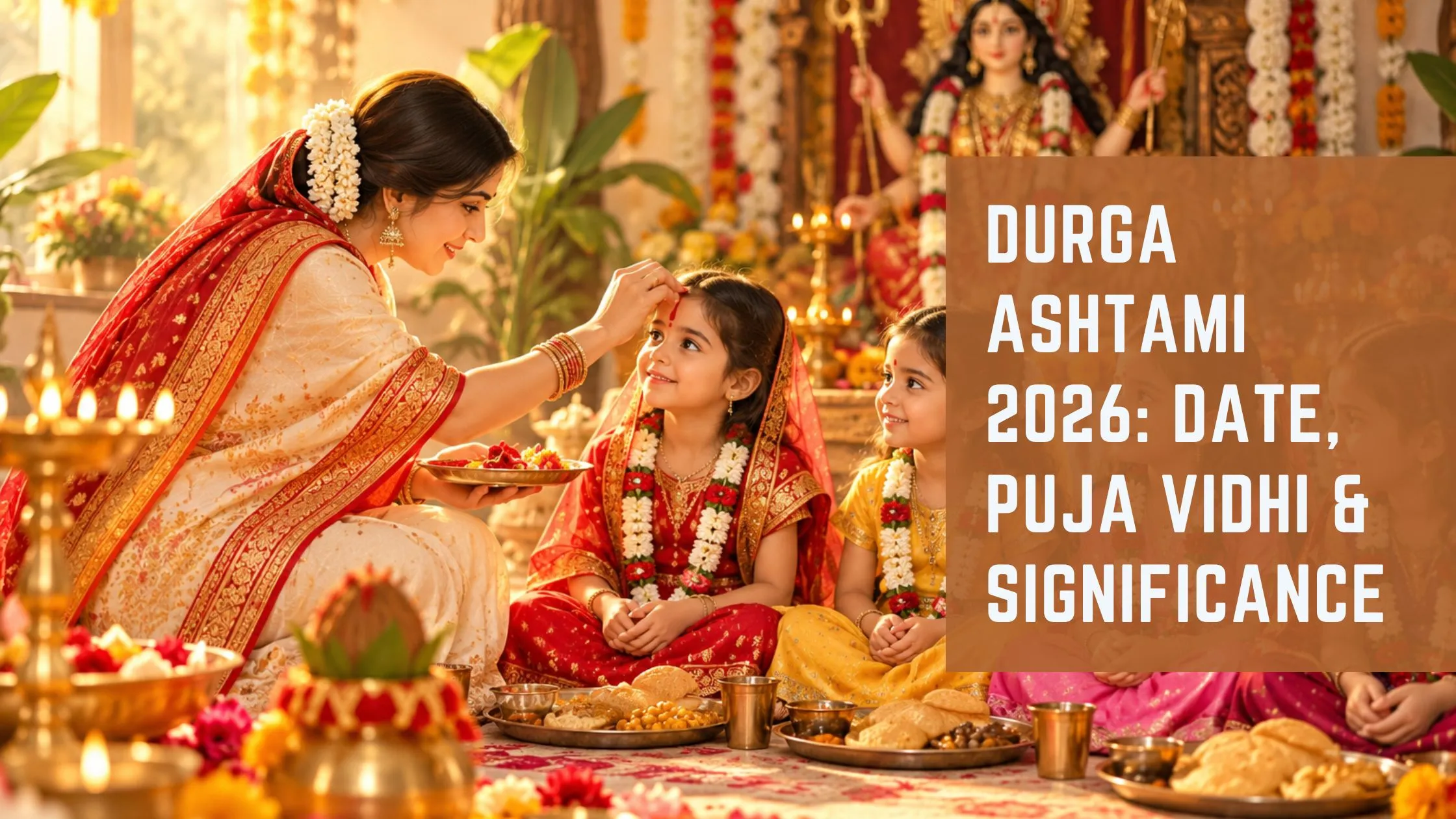
Kanya Pujan, also known as Kanjak Puja or Kumari Puja, is among the most beloved traditions of Durga Ashtami.
Young girls are honoured as manifestations of the Goddess. In many North Indian households, devotees invite nine girls, symbolically associated with the nine forms of Durga, and sometimes a young boy representing Bhairav.
How is Kanya Pujan performed?
Welcome the girls respectfully and provide a clean place to sit.
Wash their feet if this is part of your family tradition and the children are comfortable with it.
Offer a tilak and flowers.
Serve a meal commonly consisting of puri, kala chana, and halwa.
Offer gifts, fruits, stationery, or money according to your means.
Seek their blessings respectfully and thank them for participating.
The most important aspect of Kanya Pujan is respect. Children should never be pressured into rituals, and their comfort, dignity, and consent should always be prioritised.
The deeper message is to honour girls and women not just during a festival but every day through equality, education, safety, and kindness.
Durga Ashtami Mantras for Peace and Strength
Mantra chanting helps many devotees focus their minds and express their devotion.
1. Durga Beej Mantra
ॐ दुं दुर्गायै नमः॥
Om Dum Durgayai Namah.
Meaning: I bow to Goddess Durga and seek her divine protection and strength.
2. Mahagauri Mantra
ॐ देवी महागौर्यै नमः॥
Om Devi Mahagauryai Namah.
Meaning: I bow to Goddess Mahagauri, the embodiment of purity and peace.
3. Universal Prayer to the Divine Mother
या देवी सर्वभूतेषु शक्तिरूपेण संस्थिता।
नमस्तस्यै नमस्तस्यै नमस्तस्यै नमो नमः॥
Ya Devi Sarvabhuteshu Shakti Rupena Samsthita,
Namastasyai Namastasyai Namastasyai Namo Namah.
Meaning: Salutations again and again to the Goddess who resides in all beings in the form of power.
Chant these mantras with attention and sincerity. There is no need to feel discouraged if you cannot recite every prayer perfectly.
Durga Ashtami Fasting Rules and Food Traditions
Many devotees observe a fast during Navratri or specifically on Ashtami. Fasting practices differ between families and regions.
Common practices include:
Eating fruits, milk, or permitted fasting foods.
Avoiding grains, onion, garlic, or other foods restricted by one's tradition.
Maintaining cleanliness and prayerful discipline.
Avoiding anger, dishonesty, and hurtful speech.
Completing the fast according to the family's religious practice.
Some devotees perform Kanya Pujan before concluding their fast, while others follow Navami traditions.
Fasting should be adapted to individual needs. Children, pregnant people, older adults, and anyone with a medical condition should prioritise health and seek appropriate medical advice rather than undertaking restrictive fasting.
Sandhi Puja: The Sacred Transition Between Ashtami and Navami
Sandhi Puja is an important ritual in many Durga Puja traditions, particularly in Bengal.
It is performed at the transition between Ashtami and Navami. Traditionally, Sandhi Kaal refers to the final 24 minutes of Ashtami and the first 24 minutes of Navami, making a total period of 48 minutes.
The ritual is associated with Goddess Chamunda and the victory over the forces of evil. Devotees may light lamps, offer flowers, and perform special prayers according to their tradition.
Because the timing depends on the local lunar calendar, devotees should consult a reliable city-specific Panchang before planning Sandhi Puja.
Durga Ashtami Quotes to Inspire Devotion and Courage
The following are original devotional reflections inspired by the spiritual themes of the festival.
“The true blessing of Maa Durga is the courage to stand for what is right, even when the path is difficult.”
“Where faith gives strength and compassion guides action, the light of the Divine Mother shines.”
“Victory begins within when courage defeats fear and wisdom overcomes anger.”
“Honour the Goddess in your prayers, and honour her creation through your actions.”
“A pure heart, a fearless mind, and a compassionate soul are among the greatest offerings to the Divine Mother.”
Five Life Lessons from Durga Ashtami
Durga Ashtami is not only about worship; it also offers lessons for daily life.
1. Courage Is Stronger Than Fear
Challenges are part of life. The Goddess's symbolism reminds us to face difficulties with determination rather than surrendering to fear.
2. Goodness Requires Action
Praying for justice is meaningful, but acting honestly and standing against wrongdoing are equally important.
3. Inner Purity Matters
Maa Mahagauri represents purity. In everyday life, this can mean truthful communication, sincere intentions, and letting go of harmful habits.
4. Respect Is a Form of Worship
Kanya Pujan reminds us to respect girls and women. True devotion should be reflected in the way we treat people.
5. Strength and Compassion Belong Together
Strength does not require cruelty. A truly strong person can set boundaries, defend what is right, and remain compassionate.
Life Lesson: The most meaningful victory is the one in which you overcome your inner weaknesses without losing your kindness.
How Is Durga Ashtami Celebrated Across India?
Durga Ashtami is celebrated in different ways across the country.
North India: Many families perform Durga Puja, observe fasts, and conduct Kanya Pujan.
West Bengal: Maha Ashtami is marked by elaborate Durga Puja rituals, devotional gatherings, and Pushpanjali, or flower offerings.
Assam: Devotees participate in Durga Puja celebrations, prayers, and community festivities.
Maharashtra and Gujarat: Navratri worship may be accompanied by devotional gatherings, traditional music, and Garba or Dandiya celebrations.
Kerala: Ashtami is associated in many communities with Saraswati Puja traditions, including the ceremonial placement of books and learning materials for worship.
Although customs vary, devotion, the celebration of Shakti, and the victory of good over evil remain central themes.
Frequently Asked Questions
1. When is Durga Ashtami in 2026?
Maha Ashtami is observed on Monday, October 19, 2026, according to the commonly followed Indian festival calendar. Local traditions may differ in how they determine the observance.
2. Which Goddess is worshipped on Durga Ashtami?
Maa Mahagauri, the eighth form of Navdurga, is worshipped on this day.
3. Why is Kanya Pujan performed on Durga Ashtami?
Kanya Pujan honours young girls as manifestations of the Divine Mother. It expresses respect for feminine energy, purity, and the dignity of girls.
4. What food is offered during Kanya Pujan?
Halwa, puri, and kala chana are traditional offerings in many North Indian households. Other foods may be offered according to family customs.
5. Can Durga Ashtami Puja be performed at home?
Yes. Devotees can worship Maa Durga or Maa Mahagauri at home by preparing a clean altar, offering flowers and food, chanting mantras, and performing aarti.
6. Is fasting compulsory on Durga Ashtami?
No. Fasting is a devotional practice, not a requirement for every devotee. People may worship according to their health, circumstances, and family tradition.
7. What is the difference between Durga Ashtami and Maha Navami?
Durga Ashtami is associated with the eighth lunar tithi and the worship of Maa Mahagauri. Maha Navami is associated with the ninth tithi and Maa Siddhidatri. Their observed dates can overlap or vary according to the calendar and regional customs.
8. What is the main message of Durga Ashtami?
Its central message is that courage, righteousness, purity, and compassion help overcome negativity and guide us towards a better life.
Conclusion
Durga Ashtami 2026 is an opportunity to reconnect with faith, honour the Divine Mother, and reflect on the strength we carry within ourselves.
Through the worship of Maa Mahagauri, the tradition of Kanya Pujan, the chanting of mantras, and the observance of family rituals, devotees celebrate purity, courage, and spiritual renewal.
But the true spirit of the festival extends beyond a single day. It lives in every act of kindness, every moment of courage, every effort to stand for justice, and every decision to treat others with dignity.
May Maa Durga bless you and your family with peace, wisdom, strength, and happiness.
Remember: Do not let your devotion end when the diya is extinguished. Let it continue through your actions, your words, and the kindness you bring into the world.
For more spiritual wisdom, festival guides, and life lessons inspired by the Bhagavad Gita, visit thegita.in.