Imagine a home illuminated with beautiful diyas, the fragrance of incense filling the air, families preparing sweets, and people welcoming prosperity with prayers and devotion. This beautiful atmosphere marks the beginning of one of India's most cherished celebrations: Dhanteras.
But have you ever wondered why people purchase gold, silver, utensils and other valuable items on this day? Why do Hindus worship Goddess Lakshmi and Lord Dhanvantari? And what is the deeper spiritual meaning behind celebrating wealth?
Dhanteras is much more than a day for shopping or purchasing precious metals. It represents prosperity, good health, gratitude, purity and the importance of living a balanced life.
Celebrated two days before Diwali, Dhanteras marks the beginning of the five-day Diwali festival. It reminds us that true wealth is not measured only by the money we possess but also by our health, happiness, relationships, wisdom and spiritual growth.
Let's explore the fascinating story, religious importance, traditions and timeless lessons behind Dhanteras.
Table of Contents
- Key Takeaways
- 1. What Is Dhanteras and Why Is It Celebrated?
- 2. The Fascinating Story Behind Dhanteras
- 3. Religious and Spiritual Significance of Dhanteras
- 4. Why Do People Buy Gold, Silver and Utensils on Dhanteras?
- 5. How Is Dhanteras Celebrated? Important Rituals and Traditions
- 6. Dhanteras and Its Connection with Diwali
- 7. Bhagavad Gita's Message About Wealth and Prosperity
- 8. Life Lessons We Can Learn from Dhanteras
- 9. Frequently Asked Questions
- Conclusion
Key Takeaways
Dhanteras marks the beginning of the five-day Diwali celebration.
It is also known as Dhantrayodashi or Dhanvantari Trayodashi.
Lord Dhanvantari is worshipped as the divine physician and associated with Ayurveda.
Goddess Lakshmi is worshipped for wealth, prosperity and good fortune.
Buying gold, silver and utensils is a popular Dhanteras tradition.
The festival teaches us that health, wisdom and contentment are also forms of wealth.
Lighting a diya and offering prayers express hope, gratitude and positivity.

1. What Is Dhanteras and Why Is It Celebrated?
Dhanteras, also known as Dhantrayodashi, is an important Hindu festival celebrated on the thirteenth lunar day (Trayodashi) of Krishna Paksha in the month of Kartik.
The word Dhanteras comes from two Sanskrit-derived words:
Dhan: Wealth, prosperity and riches.
Teras: The thirteenth lunar day.
Together, Dhanteras represents the celebration of wealth, prosperity and well-being.
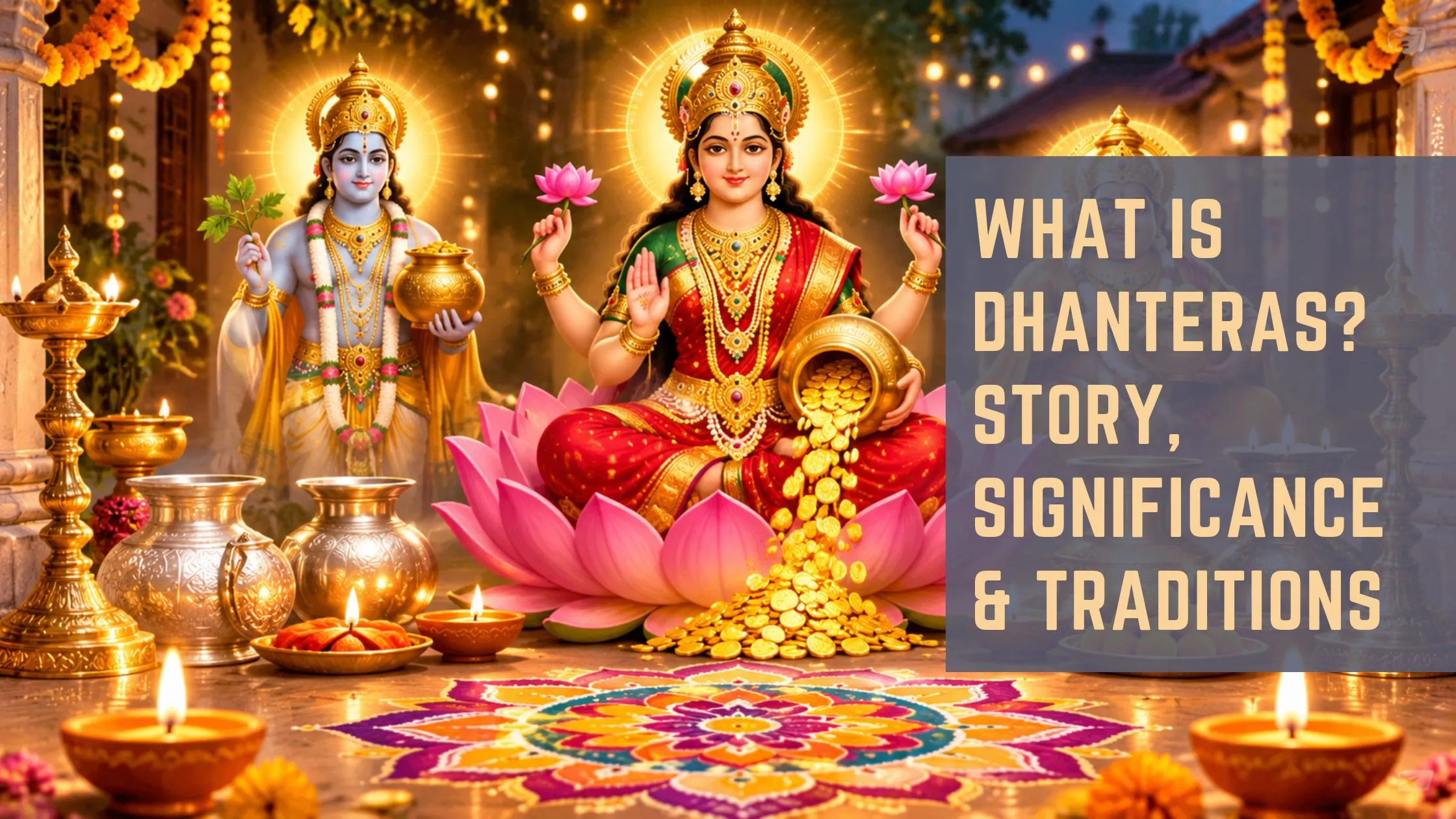
On this auspicious occasion, people worship Goddess Lakshmi, Lord Kubera and Lord Dhanvantari. Families clean their homes, decorate entrances with rangoli, light traditional oil lamps and purchase gold, silver, utensils or other valuable items.
However, the festival has a much deeper meaning. It reminds us that wealth should bring happiness, security and peace rather than greed and attachment.
2. The Fascinating Story Behind Dhanteras
There are several traditional stories associated with Dhanteras. Two particularly popular legends explain its connection with health, prosperity and protection from untimely death.
Story 1: The Birth of Lord Dhanvantari During Samudra Manthan
One of the most significant stories of Dhanteras comes from the Samudra Manthan, or the churning of the cosmic ocean.
According to Hindu mythology, the Devas (gods) and Asuras (demons) joined together to churn the ocean of milk in search of Amrit, the divine nectar of immortality.
They used Mount Mandara as the churning rod and Vasuki, the serpent king, as the rope. During this extraordinary event, several divine treasures emerged from the ocean.
Among them appeared Lord Dhanvantari, carrying a pot of Amrit in his hands.
Lord Dhanvantari is regarded as the divine physician and is associated with Ayurveda, the traditional Indian system of medicine.
His appearance symbolises the importance of health, healing and longevity in human life.
This is why Dhanteras is also celebrated as Dhanvantari Jayanti. People worship Lord Dhanvantari and pray for good health, freedom from illness and a long, healthy life.
The deeper lesson: Before seeking material wealth, we must recognise the value of our health. Without good health, even the greatest riches may lose their happiness.
Story 2: The Legend of King Hima's Son and the Lamp of Protection
Another popular legend associated with Dhanteras tells the story of a young prince, the son of King Hima.
According to the traditional tale, astrologers predicted that the prince would die from a snakebite on the fourth day of his marriage.
When his wife learned about this prediction, she decided to protect her husband.
On the predicted night, she gathered gold and silver ornaments, coins and other shining objects and placed them in a heap near the entrance of their room. She also lit numerous lamps throughout the palace.
She kept her husband awake by singing songs and telling stories.
When Yama, the god of death, arrived in the form of a serpent, the bright lamps and shining ornaments dazzled him. Unable to enter the room, he sat outside listening to the songs and eventually left without taking the prince's life.
This story is traditionally connected with the practice of lighting a lamp for Yama, known as Yama Deepam or Yamadeepdaan.
The legend teaches the importance of love, courage, devotion and the power of determination.
3. Religious and Spiritual Significance of Dhanteras
Dhanteras is not simply a celebration of financial success. It represents a broader understanding of prosperity in Hindu philosophy.
Three important deities are associated with its celebrations.
Goddess Lakshmi – Goddess of Wealth
Goddess Lakshmi represents wealth, abundance, fortune and prosperity. Devotees worship her to seek financial stability, happiness and blessings for their households.
Lord Dhanvantari – Divine Physician
Lord Dhanvantari represents health, healing and Ayurveda. His worship reminds us that physical and mental well-being are essential forms of wealth.
Lord Kubera – Guardian of Wealth
Lord Kubera is traditionally regarded as the treasurer of the gods. Devotees worship him for financial stability, prosperity and responsible management of wealth.
What Does Wealth Really Mean in Hindu Philosophy?
Hindu traditions often understand prosperity as something much greater than money.
| Type of wealth | Meaning |
|---|---|
| Dhana | Money and material prosperity |
| Arogya | Good health |
| Vidya | Knowledge and education |
| Dhairya | Courage and patience |
| Santosha | Contentment and satisfaction |
| Dharma | Righteousness and good conduct |
Dhanteras encourages us to seek a balanced life where material success and spiritual values exist together.
True prosperity is not just having more wealth; it is having the wisdom to use what we have.
4. Why Do People Buy Gold, Silver and Utensils on Dhanteras?
One of the most recognised traditions of Dhanteras is purchasing gold, silver, coins and new household utensils.
But why do people consider buying these things auspicious?
Gold: Symbolises prosperity, stability and long-term value.
Silver: Traditionally associated with purity, good fortune and abundance.
Utensils: Represent nourishment, household well-being and the beginning of something new.
Dhanteras coins: Often carry images of Goddess Lakshmi and Lord Ganesha and are used for worship.
The tradition expresses hope for prosperity and abundance in the coming year.
However, buying expensive items is not compulsory. People can celebrate Dhanteras meaningfully according to their financial capacity.
The real purpose is devotion, gratitude and welcoming positive beginnings.
5. How Is Dhanteras Celebrated? Important Rituals and Traditions
Dhanteras is celebrated with devotion, traditional rituals and family gatherings. Some of the most common practices include:
1. Cleaning and Decorating Homes
People clean their homes, decorate entrances with colourful rangoli and place flowers and diyas to welcome prosperity and positivity.
2. Lakshmi and Kubera Puja
Families worship Goddess Lakshmi and Lord Kubera. They offer flowers, sweets, fruits, incense and prayers for prosperity and happiness.
3. Dhanvantari Puja
Devotees offer prayers to Lord Dhanvantari and seek blessings for good health, healing and longevity.
4. Buying New Things
People traditionally purchase gold, silver, utensils or other useful household items as a symbol of good fortune.
5. Lighting Yama Deepam
A traditional diya is lit in honour of Yama, seeking protection for family members from untimely death. The exact customs and placement of the lamp may vary by region.
6. Preparing Traditional Food
Families prepare sweets and festive dishes and share them with relatives, friends and neighbours.
6. Dhanteras and Its Connection with Diwali
Dhanteras marks the beginning of the traditional five-day Diwali festival. Each day has its own religious and cultural importance.
| Festival | Significance |
|---|---|
| Dhanteras | Wealth, health and prosperity |
| Naraka Chaturdashi | Victory over evil and negativity |
| Diwali | Celebration of light, hope and righteousness |
| Govardhan Puja | Gratitude towards nature and divine protection |
| Bhai Dooj | Love and affection between siblings |
Together, these celebrations highlight the values of family, devotion, gratitude and the victory of good over evil.
7. Bhagavad Gita's Message About Wealth and Prosperity
Although the Bhagavad Gita does not prescribe Dhanteras rituals, its teachings offer a meaningful way to understand the festival.
Lord Krishna teaches that people should not become controlled by greed, selfishness or attachment to material possessions.
In Chapter 17, Verse 20, the Bhagavad Gita explains the importance of giving charity with a sense of duty, at the proper time and place, without expecting anything in return.
Bhagavad Gita 17.20
दातव्यमिति यद्दानं दीयतेऽनुपकारिणे।
देशे काले च पात्रे च तद्दानं सात्त्विकं स्मृतम्॥
Meaning: Charity given as a duty, without expecting anything in return, at the right time and place, to a deserving person, is considered sattvic charity.
This teaching connects beautifully with the deeper meaning of Dhanteras.
Wealth becomes meaningful when it is earned honestly, used responsibly and shared with those who need support.
8. Life Lessons We Can Learn from Dhanteras
Beyond rituals and celebrations, Dhanteras offers several valuable lessons that can guide our everyday lives.
1. Health Is the Greatest Wealth
Lord Dhanvantari's story reminds us that good health is more valuable than material possessions. We should take care of our physical and mental well-being.
2. Wealth Should Be Earned Honestly
Prosperity has real value when it comes through honesty, hard work and righteous actions.
3. Gratitude Brings Happiness
Instead of constantly comparing our possessions with others, we should appreciate what we already have.
4. Share Your Prosperity
Helping the poor, feeding the hungry and supporting people in need make wealth more meaningful.
5. Light Overcomes Darkness
The tradition of lighting diyas symbolises hope, positivity and the removal of ignorance from our lives.
A truly wealthy person is not the one who owns everything, but the one who knows the value of what they have.
9. Frequently Asked Questions
1. What is Dhanteras and why is it celebrated?
Dhanteras is a Hindu festival celebrated on the thirteenth lunar day of Krishna Paksha in Kartik. It honours wealth, health and prosperity and marks the beginning of Diwali celebrations.
2. Which gods are worshipped on Dhanteras?
Goddess Lakshmi, Lord Kubera and Lord Dhanvantari are traditionally worshipped on Dhanteras for prosperity, wealth, health and well-being.
3. What is the story behind Dhanteras?
Two popular legends are associated with Dhanteras. One describes the appearance of Lord Dhanvantari during Samudra Manthan, while another tells how a devoted wife saved her husband from death through lamps and shining ornaments.
4. Why do people buy gold on Dhanteras?
Buying gold and silver is considered an auspicious tradition symbolising prosperity, good fortune and abundance. However, expensive purchases are not compulsory.
5. What is the significance of Lord Dhanvantari on Dhanteras?
Lord Dhanvantari is regarded as the divine physician and is associated with Ayurveda. His worship highlights the importance of health and healing.
6. What is Yama Deepam on Dhanteras?
Yama Deepam is a traditional lamp lit in honour of Yama, the god of death. It symbolises prayers for protection and the long life of family members.
7. Is Dhanteras the first day of Diwali?
Yes. Dhanteras traditionally marks the beginning of the five-day Diwali festival.
8. When is Dhanteras celebrated in 2026?
Dhanteras will be celebrated on Friday, 6 November 2026, in India. The exact puja timings depend on the location and local Panchang.
Conclusion
Dhanteras is a beautiful reminder that prosperity is not limited to gold, silver or financial success. It is also found in good health, peaceful relationships, knowledge, kindness and contentment.
The story of Lord Dhanvantari teaches us to value our health, while the worship of Goddess Lakshmi reminds us to welcome prosperity with gratitude and responsibility.
As we light diyas and celebrate this auspicious occasion, let us also try to remove the darkness of greed, negativity and ignorance from our hearts.
May this Dhanteras bring health to every home, happiness to every family and wisdom to every heart.
Because the greatest wealth in life is not what we accumulate, but the peace, love and goodness we share.
Explore more spiritual teachings, Hindu festival stories and timeless wisdom on thegita.in.