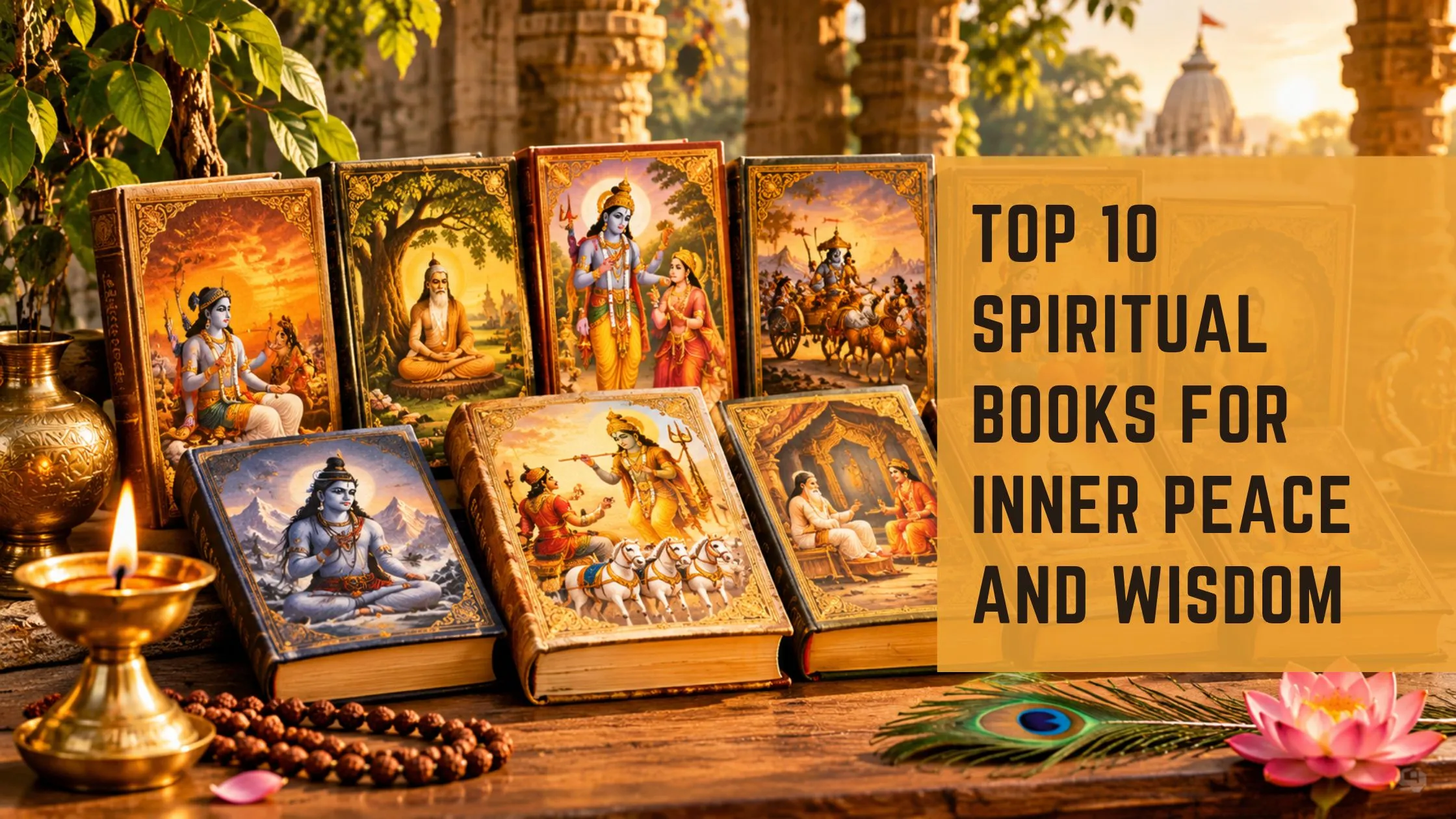
In a world filled with stress, distractions, competition, and endless responsibilities, finding inner peace has become more important than ever. We often search for happiness outside ourselves, forgetting that true peace begins within.
But what if a book could change the way you understand life, relationships, success, failure, and yourself?
Spiritual books are more than collections of religious stories or philosophical ideas. They are sources of wisdom that guide us towards self-awareness, discipline, compassion, devotion, and a meaningful life.
From the divine teachings of the Bhagavad Gita to the profound philosophy of the Upanishads, these timeless books offer lessons that remain relevant across generations.
In this article, we explore the top 10 spiritual books that can help you understand yourself, develop a positive mindset, overcome challenges, and discover the deeper meaning of life.
Table of Contents
Key Takeaways
Spiritual books help develop self-awareness and inner peace.
Ancient Indian scriptures offer practical lessons about karma, dharma and devotion.
The Bhagavad Gita teaches how to perform duties without attachment to results.
The Upanishads explore the nature of the soul and ultimate reality.
Reading spiritual literature regularly can encourage mindfulness, compassion and personal growth.
Spiritual wisdom becomes meaningful when applied in everyday life.
Top 10 Spiritual Books Everyone Should Read
1. Bhagavad Gita – The Art of Living with Purpose
The Bhagavad Gita is one of the most influential spiritual texts in Hindu philosophy. It contains a conversation between Lord Krishna and Arjuna on the battlefield of Kurukshetra.
Across 18 chapters and 700 verses, Krishna explains karma yoga, bhakti yoga, jnana yoga, self-discipline, duty and the nature of the soul.
Important teachings:
Perform your duties sincerely without becoming attached to outcomes.
Control your mind instead of allowing it to control you.
Accept life's challenges with courage and wisdom.
Understand the difference between the temporary body and eternal soul.
Famous quote:
"Karmanye vadhikaraste Ma Phaleshu Kadachana."
Meaning: You have the right to perform your actions, but not to control their results.
Life lesson: Focus on your efforts, maintain faith and do your duty with honesty. Success and failure should not control your inner peace.
2. The Upanishads – Discover the True Self
The Upanishads are ancient philosophical scriptures that explore the relationship between the individual soul (Atman) and ultimate reality (Brahman).
They encourage readers to question the nature of existence and discover the deeper truth beyond material life.
Important teachings:
Understand your true identity beyond physical appearance.
Seek knowledge through self-inquiry and contemplation.
Recognize the deeper connection between existence and consciousness.
Famous quote:
"अहं ब्रह्मास्मि" (Aham Brahmasmi).
Meaning: I am Brahman.
Life lesson: True self-discovery begins when you look beyond external identity and understand your inner nature.
3. Ramayana – Lessons in Duty and Righteousness
The Ramayana, traditionally attributed to Sage Valmiki, is an ancient Indian epic that narrates the life of Lord Rama.
It teaches the importance of truth, family values, sacrifice, courage, devotion and dharma.
Important teachings:
Always stand for truth and righteousness.
Respect relationships and responsibilities.
Remain humble even when you possess power.
Face difficulties with patience and courage.
Famous quote:
"धर्मो रक्षति रक्षितः"
Meaning: Dharma protects those who protect dharma.
Life lesson: A meaningful life is built through good character, responsible actions and commitment to righteousness.
4. Mahabharata – Understand Human Nature and Life's Choices
The Mahabharata is one of India's greatest epics. It explores complex human emotions, family conflicts, ambition, loyalty, morality and the consequences of decisions.
It also contains the Bhagavad Gita as part of the Bhishma Parva.
Important teachings:
Every action has consequences.
Greed and ego can destroy relationships.
Wisdom is essential when making difficult decisions.
Truth and justice should guide human behaviour.
Famous quote:
"अहिंसा परमो धर्मः"
Meaning: Non-violence is the highest dharma.
Life lesson: Life is full of difficult choices. Wisdom means choosing what is right rather than what is easy.
5. Srimad Bhagavatam – The Power of Devotion
The Srimad Bhagavatam, also known as the Bhagavata Purana, is an important Hindu devotional scripture centred on Lord Vishnu and his avatars, especially Lord Krishna.
It contains stories of devotion, divine love, faith and surrender.
Important teachings:
Develop unconditional devotion.
Practise humility and compassion.
Trust in divine guidance.
Keep your heart free from hatred and ego.
Life lesson: Devotion is not simply a ritual; it is a way of developing love, gratitude and surrender in everyday life.
6. Yoga Sutras of Patanjali – Master Your Mind
The Yoga Sutras of Patanjali are foundational teachings on yoga, meditation and mental discipline.
The text explains how to calm mental fluctuations and develop concentration through an eight-limbed path known as Ashtanga Yoga.
Important teachings:
Practise self-discipline and mindfulness.
Develop control over thoughts and emotions.
Maintain balance through meditation.
Cultivate truthfulness, non-violence and contentment.
Famous quote:
"योगश्चित्तवृत्तिनिरोधः"
Meaning: Yoga is the stilling of the fluctuations of the mind.
Life lesson: A peaceful mind is developed through regular practice, patience and self-control.
7. Dhammapada – The Path to Inner Peace
The Dhammapada is a well-known collection of Buddhist teachings traditionally associated with Gautama Buddha.
It discusses wisdom, compassion, mindfulness, discipline and freedom from suffering.
Important teachings:
Your thoughts influence your actions.
Avoid hatred and practise forgiveness.
Control desires and attachments.
Follow the path of wisdom and mindfulness.
Famous quote:
"Mind is the forerunner of all things."
Meaning: Our mental attitudes shape how we experience and respond to life.
Life lesson: Change your thoughts, improve your actions and cultivate compassion towards yourself and others.
8. Shiva Purana – Wisdom of Transformation
The Shiva Purana is an important Hindu scripture dedicated to Lord Shiva. It explores devotion, spiritual knowledge, creation, divine manifestations and the significance of Shiva worship.
Important teachings:
Let go of ego and unnecessary attachments.
Embrace change as a natural part of existence.
Develop devotion and inner discipline.
Understand the importance of meditation and self-awareness.
Life lesson: Transformation begins when you release negative habits and make space for personal and spiritual growth.
9. Ashtavakra Gita – The Freedom of Self-Realization
The Ashtavakra Gita is a philosophical dialogue between Sage Ashtavakra and King Janaka. It explores non-duality, self-realization and freedom from identification with the body and mind.
Important teachings:
You are more than your thoughts and emotions.
True freedom comes through self-knowledge.
Attachment creates unnecessary suffering.
Inner peace is not dependent on external circumstances.
Life lesson: Stop defining yourself through temporary situations. Develop awareness of your deeper identity.
10. Vivekachudamani – The Path of Spiritual Wisdom
Vivekachudamani, traditionally attributed to Adi Shankaracharya, is a philosophical text that explains discrimination between the real and unreal, self-knowledge and liberation.
It guides seekers towards understanding the eternal Self and overcoming ignorance.
Important teachings:
Develop discrimination between temporary and eternal things.
Seek knowledge rather than material satisfaction alone.
Practise detachment and self-discipline.
Make self-realization the goal of spiritual inquiry.
Life lesson: Wisdom begins when you learn to distinguish what truly matters from what is temporary.

Comparison Table: Top 10 Spiritual Books at a Glance
| Book | Main focus | Best for |
|---|---|---|
| Bhagavad Gita | Karma and dharma | Life guidance |
| Upanishads | Self-realization | Deep thinking |
| Ramayana | Righteousness | Character building |
| Mahabharata | Human nature | Decision-making |
| Srimad Bhagavatam | Devotion | Bhakti |
| Yoga Sutras | Meditation | Mind control |
| Dhammapada | Mindfulness | Inner peace |
| Shiva Purana | Transformation | Devotion |
| Ashtavakra Gita | Non-duality | Self-inquiry |
| Vivekachudamani | Self-knowledge | Spiritual wisdom |
How to Choose the Right Spiritual Book?
If you are new to spiritual reading, start with a book that matches your current interests and understanding.
For beginners: Start with the Bhagavad Gita.
For inner peace: Read the Dhammapada.
For meditation: Explore the Yoga Sutras of Patanjali.
For devotion: Read the Srimad Bhagavatam.
For self-realization: Explore the Upanishads and Ashtavakra Gita.
For moral values: Begin with the Ramayana.
Remember, you do not need to read every spiritual book at once. Read slowly, reflect on its teachings and apply one lesson at a time.
Why Should You Read Spiritual Books Regularly?
Spiritual reading can contribute to personal development by encouraging:
Mental clarity: Helps you reflect before reacting.
Emotional balance: Encourages patience and acceptance.
Self-awareness: Helps you understand your thoughts and behaviour.
Better relationships: Promotes kindness, respect and forgiveness.
Purposeful living: Encourages you to identify meaningful goals.
Positive habits: Inspires discipline, gratitude and mindfulness.
Spiritual books do not promise a life without difficulties. Instead, they offer wisdom to face difficulties with greater understanding and courage.
Frequently Asked Questions (FAQs)
1. Which is the best spiritual book to read for beginners?
The Bhagavad Gita is an excellent starting point for beginners because it explains karma, duty, self-discipline, devotion and the purpose of life through practical teachings.
2. What are the top 10 spiritual books in the world?
Some widely respected spiritual texts include the Bhagavad Gita, Upanishads, Ramayana, Mahabharata, Srimad Bhagavatam, Yoga Sutras of Patanjali, Dhammapada, Shiva Purana, Ashtavakra Gita and Vivekachudamani.
3. Which spiritual book is best for inner peace?
The Dhammapada, Bhagavad Gita and Yoga Sutras of Patanjali offer valuable teachings about mindfulness, controlling the mind and developing inner peace.
4. Are ancient Indian spiritual books relevant today?
Yes. Their teachings about self-discipline, relationships, compassion, responsibility and emotional balance can be applied to many modern challenges.
5. Can spiritual books help reduce stress?
Spiritual books can encourage reflection, mindfulness and healthier perspectives towards challenges. However, reading alone is not a substitute for professional help when stress becomes overwhelming.
6. Which spiritual book teaches about self-realization?
The Upanishads, Ashtavakra Gita and Vivekachudamani explore self-knowledge, consciousness and the nature of the true Self.
7. How should I start reading spiritual books?
Begin with one accessible book, read a few pages daily, reflect on its message and try applying its teachings to your everyday life.
Conclusion
The journey of spirituality is not about collecting books or memorising quotes. It is about understanding yourself, improving your actions and discovering the deeper purpose of existence.
The Bhagavad Gita teaches us to perform our duties. The Upanishads encourage self-discovery. The Ramayana inspires righteousness, while the Yoga Sutras guide us towards mental discipline.
Each of these spiritual books offers a different perspective, but their deeper message is connected: live with awareness, compassion, wisdom and purpose.
Remember: A book can show you the path, but walking that path is your responsibility.
Explore more timeless spiritual teachings, Bhagavad Gita wisdom and life lessons at TheGita.in