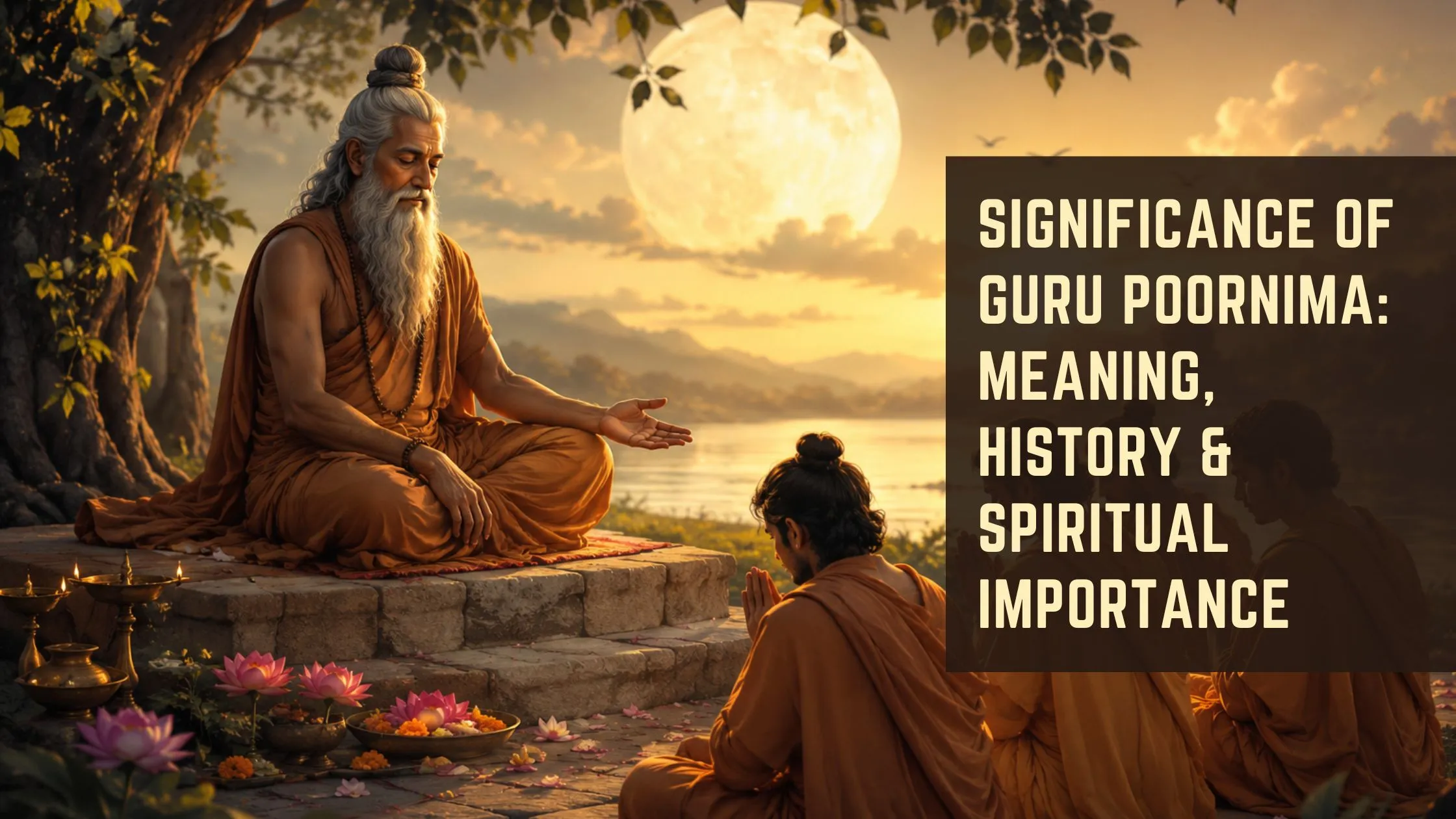
The significance of Guru Poornima extends far beyond a traditional festival. It is a day dedicated to honoring those who illuminate our path with wisdom, values, and spiritual understanding. Whether it is a teacher in school, a life mentor, or a spiritual guru, every guide plays an essential role in shaping our character and helping us discover our true potential.
Guru Poornima is celebrated across India and many parts of the world by Hindus, Buddhists, and Jains. The festival is deeply rooted in the ancient guru-disciple tradition that has preserved knowledge, philosophy, and culture for thousands of years.
In today's fast-paced digital world, the significance of Guru Poornima remains just as relevant. It reminds us to value knowledge over information, wisdom over opinions, and gratitude over pride. This article explores its history, spiritual meaning, rituals, life lessons, and why this sacred occasion continues to inspire millions.
Table of Contents
- Key Takeaways
- What is Guru Poornima?
- Why is Guru Poornima Celebrated?
- The Spiritual Significance of Guru Poornima
- Historical Significance of Guru Poornima
- Guru Poornima in Hindu Tradition
- Guru Poornima in Buddhism
- Guru Poornima in Jainism
- Traditional Rituals of Guru Poornima
- Why Guru Poornima is Relevant Today
- Life Lessons from Guru Poornima
- Guru vs Teacher: What's the Difference?
- How to Celebrate Guru Poornima
- What the Bhagavad Gita Teaches About the Guru
- Common Misconceptions About Guru Poornima
- Frequently Asked Questions (FAQs)
- Conclusion
Key Takeaways
- Guru Poornima honors teachers, mentors, and spiritual guides.
- The significance of Guru Poornima is rooted in gratitude and wisdom.
- The festival commemorates Sage Ved Vyasa.
- It celebrates the timeless guru-disciple tradition.
- Knowledge should transform character, not just careers.
- Guru Poornima is observed by Hindus, Buddhists, and Jains.
- Gratitude toward teachers enriches both personal and spiritual life.
- The festival inspires lifelong learning and humility.
What is Guru Poornima?
Guru Poornima is an annual festival celebrated on the full moon day of the month of Ashadha according to the Hindu lunar calendar.
The word Guru comes from Sanskrit:
- Gu means darkness.
- Ru means remover.
Thus, a guru is someone who removes the darkness of ignorance through knowledge.
The significance of Guru Poornima lies in recognizing that learning is not limited to classrooms. Every genuine teacher who helps us grow intellectually, morally, emotionally, or spiritually deserves gratitude.
Why is Guru Poornima Celebrated?
The significance of Guru Poornima is closely associated with honoring Sage Ved Vyasa, one of the greatest scholars in Indian history.
Who Was Ved Vyasa?
Ved Vyasa is traditionally credited with:
- Compiling the four Vedas
- Writing the Mahabharata
- Authoring the Brahma Sutras
- Compiling many Puranas
- Preserving India's spiritual knowledge
Because of these extraordinary contributions, Guru Poornima is also known as Vyasa Purnima.
His work continues to influence millions of people studying Sanatana Dharma, philosophy, ethics, and spirituality.
The Spiritual Significance of Guru Poornima
The true significance of Guru Poornima goes beyond rituals. It celebrates the relationship between knowledge and transformation.
1. Gratitude for Knowledge
Every achievement begins with learning.
Guru Poornima teaches us to appreciate those who help us become wiser, kinder, and more capable.
2. Removal of Ignorance
A guru does not merely provide information.
Instead, a guru:
- Clears confusion
- Encourages self-discovery
- Inspires discipline
- Guides spiritual awakening
This is one of the deepest aspects of the significance of Guru Poornima.
3. Spiritual Growth
Many spiritual traditions consider the guru essential because they help seekers understand profound truths that books alone cannot explain.
A true guru helps students:
- Develop inner peace
- Practice self-control
- Overcome ego
- Discover purpose
4. Living with Humility
Guru Poornima reminds us that no matter how much knowledge we gain, we remain lifelong students.
Humility is one of the greatest spiritual virtues.
Historical Significance of Guru Poornima
The significance of Guru Poornima has been recognized for centuries across multiple traditions.
| Tradition | Importance |
|---|---|
| Hinduism | Honors Sage Ved Vyasa and all gurus |
| Buddhism | Marks Buddha's first sermon at Sarnath |
| Jainism | Commemorates Lord Mahavira's first disciple |
| Yoga Tradition | Dedicated to Adiyogi Shiva as the first guru |
This demonstrates that honoring teachers is a universal human value.
Guru Poornima in Hindu Tradition
In Hinduism, the guru is regarded as equal to the divine because they reveal spiritual truth.
A well-known Sanskrit verse says:
Guru Brahma Guru Vishnu Guru Devo Maheshwara
Guru Sakshat Parabrahma Tasmai Shri Gurave Namah.
The verse highlights the immense respect given to spiritual teachers.
The significance of Guru Poornima is reflected in this timeless philosophy of honoring those who guide us toward enlightenment.
Guru Poornima in Buddhism
For Buddhists, Guru Poornima commemorates the day when Lord Buddha delivered his first sermon after attaining enlightenment.
This event marked the beginning of the spread of Buddhist teachings.
The festival symbolizes:
- Compassion
- Wisdom
- Right understanding
- Noble teachings
Guru Poornima in Jainism
In Jainism, Guru Poornima celebrates the relationship between Lord Mahavira and his first disciple, Gautam Swami.
It emphasizes:
- Learning
- Self-discipline
- Detachment
- Spiritual guidance
Traditional Rituals of Guru Poornima
The significance of Guru Poornima is reflected through meaningful customs practiced across India.
Common Rituals
- Offering flowers to the guru
- Touching the guru's feet as a mark of respect
- Chanting prayers
- Reading sacred scriptures
- Meditation
- Charity and donations
- Serving teachers and parents
- Attending spiritual discourses
These rituals symbolize gratitude rather than mere ceremony.
Why Guru Poornima is Relevant Today
Some may wonder whether Guru Poornima still matters in the modern world.
The answer is yes.
The significance of Guru Poornima is even greater today because knowledge is abundant, but wisdom is often scarce.
Today's gurus may include:
- School teachers
- Professors
- Parents
- Spiritual leaders
- Coaches
- Mentors
- Authors
- Life guides
Anyone who genuinely helps us grow deserves appreciation.
Life Lessons from Guru Poornima
Respect Every Teacher
Every teacher contributes to your journey in different ways.
Never Stop Learning
Learning continues throughout life.
Curiosity keeps the mind young.
Practice Gratitude
Expressing thanks strengthens relationships and nurtures humility.
Knowledge Should Lead to Character
True education develops compassion, integrity, and responsibility—not just skills.
Share Wisdom
The greatest tribute to your teachers is passing good values to others.
Guru vs Teacher: What's the Difference?
| Teacher | Guru |
|---|---|
| Shares information | Transforms understanding |
| Focuses on education | Focuses on wisdom |
| Builds career skills | Builds inner character |
| Guides academic growth | Guides spiritual growth |
| Helps answer questions | Helps discover truth |
The significance of Guru Poornima reminds us that while every guru is a teacher, not every teacher serves the role of a spiritual guru.
How to Celebrate Guru Poornima
You don't need elaborate rituals.
Simple acts include:
- Thank your teachers.
- Call your parents.
- Read a spiritual book.
- Practice meditation.
- Donate to education.
- Help someone learn.
- Reflect on your personal growth.
- Spend time in self-study.
These meaningful actions reflect the true significance of Guru Poornima.
What the Bhagavad Gita Teaches About the Guru
The Bhagavad Gita emphasizes the importance of approaching enlightened teachers with humility.
In Bhagavad Gita 4.34, Lord Krishna advises seekers to learn from realized teachers through respectful inquiry and sincere service. This verse beautifully reflects the significance of Guru Poornima, reminding us that wisdom is best gained through humility, devotion, and a genuine desire to learn.
Common Misconceptions About Guru Poornima
| Myth | Reality |
|---|---|
| It is only for spiritual gurus | It honors all genuine teachers and mentors |
| Only Hindus celebrate it | Buddhists and Jains also observe it |
| It is only about rituals | Gratitude and learning are its true essence |
| It is outdated | Its values are timeless and universally relevant |
Frequently Asked Questions (FAQs)
1. What is the significance of Guru Poornima?
The significance of Guru Poornima lies in honoring teachers, mentors, and spiritual guides who remove ignorance through knowledge and wisdom.
2. Why is Guru Poornima called Vyasa Purnima?
It is celebrated in honor of Sage Ved Vyasa, who compiled the Vedas and authored the Mahabharata.
3. Who celebrates Guru Poornima?
Guru Poornima is observed by Hindus, Buddhists, Jains, yogic traditions, and spiritual communities worldwide.
4. Why is a guru important in Hinduism?
A guru guides individuals toward knowledge, self-realization, discipline, and spiritual growth.
5. How is Guru Poornima celebrated?
People offer prayers, express gratitude to teachers, meditate, read scriptures, perform charity, and attend spiritual gatherings.
6. What is the difference between a teacher and a guru?
A teacher imparts knowledge, while a guru helps transform one's understanding, character, and spiritual awareness.
Conclusion
The significance of Guru Poornima goes beyond celebrating a single day—it is a timeless reminder to honor those who shape our minds, hearts, and character. From the legacy of Sage Ved Vyasa to the enduring guru-disciple tradition, this sacred festival emphasizes gratitude, humility, and the pursuit of wisdom. In today's rapidly changing world, the values celebrated on Guru Poornima remain as meaningful as ever, encouraging us to seek knowledge with sincerity and to share it with compassion.
Inspired by the timeless significance of Guru Poornima? Explore more articles on the Bhagavad Gita, Sanatana Dharma, spiritual festivals, and life-changing wisdom at TheGita.in. Deepen your understanding of ancient teachings and discover practical insights for modern life through authentic, research-based spiritual content.