The teachings of Gautama Buddha, also known as Siddhartha Gautama, are among the most profound spiritual insights ever shared with humanity. Buddha teachings on life are not limited to religion; they are universal principles that address human suffering, happiness, desire, fear, love, and liberation.
In a world filled with stress, uncertainty, and constant mental noise, Buddha teachings on life offer clarity, balance, and inner peace. These teachings help individuals understand the nature of existence and guide them toward a meaningful, ethical, and mindful life.
Table of Contents
Who Was Buddha? Understanding the Source of These Teachings
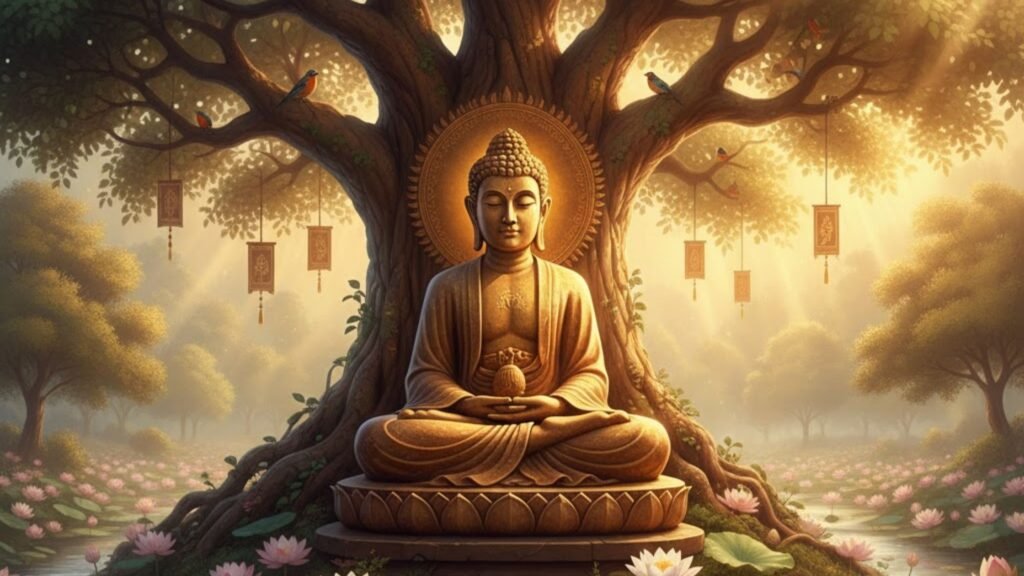
Siddhartha Gautama was born as a prince but renounced luxury after witnessing suffering in the form of old age, illness, and death. His deep meditation under the Bodhi Tree led to enlightenment, after which he became known as the Buddha, meaning “the Awakened One.”
Buddha teachings on life are rooted in direct experience rather than blind belief. He encouraged people to question, reflect, and practice rather than merely accept doctrines.
“Do not believe in anything simply because you have heard it. Test it through your own experience.”
The Core Philosophy Behind Buddha Teachings on Life
At the heart of Buddha teachings lies a deep understanding of human suffering and its cessation. Buddha observed that suffering is universal but not permanent, and that freedom from suffering is achievable through awareness and right living.
The Middle Path
Buddha rejected both extreme luxury and extreme self-denial. Instead, he taught the Middle Path, a balanced way of living that avoids excess and attachment.
“There are two extremes that should not be followed—the pursuit of pleasure and the pursuit of self-torture.”
The Four Noble Truths: Foundation of Buddha Teachings on Life
1. The Truth of Suffering (Dukkha)
Life includes suffering—physical pain, emotional distress, dissatisfaction, and impermanence.
“Birth is suffering, aging is suffering, death is suffering.”
2. The Cause of Suffering
Suffering arises from desire, attachment, and ignorance.
“From craving arises sorrow; from craving arises fear.”
3. The End of Suffering
By letting go of craving and attachment, suffering can end.
“Peace comes from within. Do not seek it without.”
4. The Path Leading to the End of Suffering
This path is known as the Noble Eightfold Path.
The Noble Eightfold Path: Practical Buddha Teachings on Life
The Eightfold Path is a practical guide to ethical living, mental discipline, and wisdom.
Wisdom
- Right View
- Right Intention
Ethical Conduct
- Right Speech
- Right Action
- Right Livelihood
Mental Discipline
- Right Effort
- Right Mindfulness
- Right Concentration
“Just as a solid rock is not shaken by the storm, even so the wise are not affected by praise or blame.”
Buddha Teachings on Life and Mindfulness
Mindfulness is one of the most powerful aspects of Buddha teachings. It involves being fully present, aware of thoughts, emotions, and actions without judgment.
“The mind is everything. What you think, you become.”
Through mindfulness, one learns to observe thoughts rather than be controlled by them. This practice reduces anxiety, anger, and confusion.
Teachings on Desire and Attachment
Buddha taught that attachment is the root of suffering. Desire itself is not evil, but clinging to outcomes creates pain.
“You only lose what you cling to.”
Buddha teachings emphasize letting go—not in rejection, but in understanding impermanence.
Buddha Teachings on Life and Compassion
Compassion (Karuna) and loving-kindness (Metta) are central to Buddha teachings. Buddha encouraged kindness toward all beings, including oneself.
“Hatred does not cease by hatred, but only by love; this is the eternal rule.”
Compassion creates harmony, reduces conflict, and purifies the heart.
Teachings on Karma and Responsibility
Karma means action. Buddha taught that every thought, word, and deed has consequences.
“What you are is what you have been. What you will be is what you do now.”
Buddha teachings emphasize personal responsibility rather than fate or divine punishment.
Buddha Teachings on Life and Impermanence
Everything in life is impermanent—joy, sorrow, success, failure.
“All conditioned things are impermanent.”
Understanding impermanence helps one remain balanced during both happiness and hardship.
Inner Peace and Enlightenment
Enlightenment is the ultimate goal of Buddha teachings. It is not escape from life but complete awareness of reality.
“There is no path to happiness. Happiness is the path.”
Relevance of Buddha Teachings on Life in the Modern World
In today’s fast-paced society, Buddha teachings help individuals:
- Manage stress and anxiety
- Cultivate emotional intelligence
- Practice mindful living
- Build compassionate relationships
- Find purpose beyond material success
These teachings are increasingly adopted in psychology, leadership, education, and wellness practices worldwide.
Buddha Teachings on Life and the Power of Self-Awareness
One of the most transformative aspects of Buddha teachings is self-awareness. Buddha emphasized knowing oneself deeply—observing thoughts, emotions, and reactions without attachment or judgment. According to Gautama Buddha, ignorance of one’s own mind is the greatest cause of suffering. When a person becomes aware of inner patterns such as anger, greed, fear, or pride, those patterns begin to lose their control.
“You yourself, as much as anybody in the entire universe, deserve your love and affection.”
Buddha teachings explain that self-awareness is the gateway to freedom. A mindful person responds to life with wisdom rather than reacting blindly. This awareness slowly transforms pain into understanding and confusion into clarity.
Buddha Teachings on Life and Emotional Balance
Buddha teachings offer profound guidance on handling emotions. Instead of suppressing emotions or being ruled by them, Buddha taught the art of equanimity—remaining calm in both pleasure and pain. Joy does not make the wise arrogant, and sorrow does not make them hopeless.
“Just as a candle cannot burn without fire, men cannot live without a spiritual life.”
By observing emotions as temporary mental states, one learns not to identify with them. Buddha teachings help individuals understand that emotions arise and pass away, just like waves in the ocean. This insight builds emotional strength, patience, and inner stability in daily life.
Buddha Teachings on Life and the Meaning of True Freedom
True freedom, according to Buddha teachings on life, does not come from controlling the world but from mastering the mind. External achievements may bring temporary satisfaction, but inner freedom arises when attachment, fear, and ignorance dissolve.
“Freedom is not given by others; it is taken by oneself.”
Buddha teachings on life define liberation as freedom from compulsive desires, false identities, and constant dissatisfaction. When a person lives with awareness, compassion, and wisdom, life itself becomes meditation. This inner freedom allows one to live fully, peacefully, and truthfully—regardless of circumstances.
Every Buddha teaching on life carries a powerful life lesson—to live with awareness, compassion, and freedom from unnecessary suffering.
FAQs
1. What are the main Buddha teachings on life?
The main teachings include the Four Noble Truths, the Eightfold Path, mindfulness, compassion, impermanence, and liberation from suffering.
2. Are Buddha teachings on life religious or philosophical?
They are both spiritual and philosophical, focusing on experience rather than belief.
3. Can anyone follow Buddha teachings on life?
Yes. Buddha teachings on life are universal and applicable to all, regardless of religion.
4. How can I practice Buddha teachings daily?
Through mindfulness, ethical living, meditation, compassion, and self-awareness.
5. Do Buddha teachings promote detachment from society?
No. They promote balance, awareness, and responsible engagement with life.
Conclusion
Buddha teachings on life are timeless truths that illuminate the human journey. They teach us how to face suffering with wisdom, live with compassion, and cultivate inner peace. Rather than offering escape, these teachings guide us toward deeper understanding and conscious living.
By practicing Buddha teachings on life, one does not merely read wisdom—one becomes wisdom in action. In silence, awareness, and compassion, the essence of Buddha’s message continues to transform lives across generations.
“Better than a thousand hollow words is one word that brings peace.”
Discover timeless wisdom, spiritual clarity, and life-changing insights through Buddha teachings on life—only at TheGita.in, where ancient knowledge meets modern understanding.