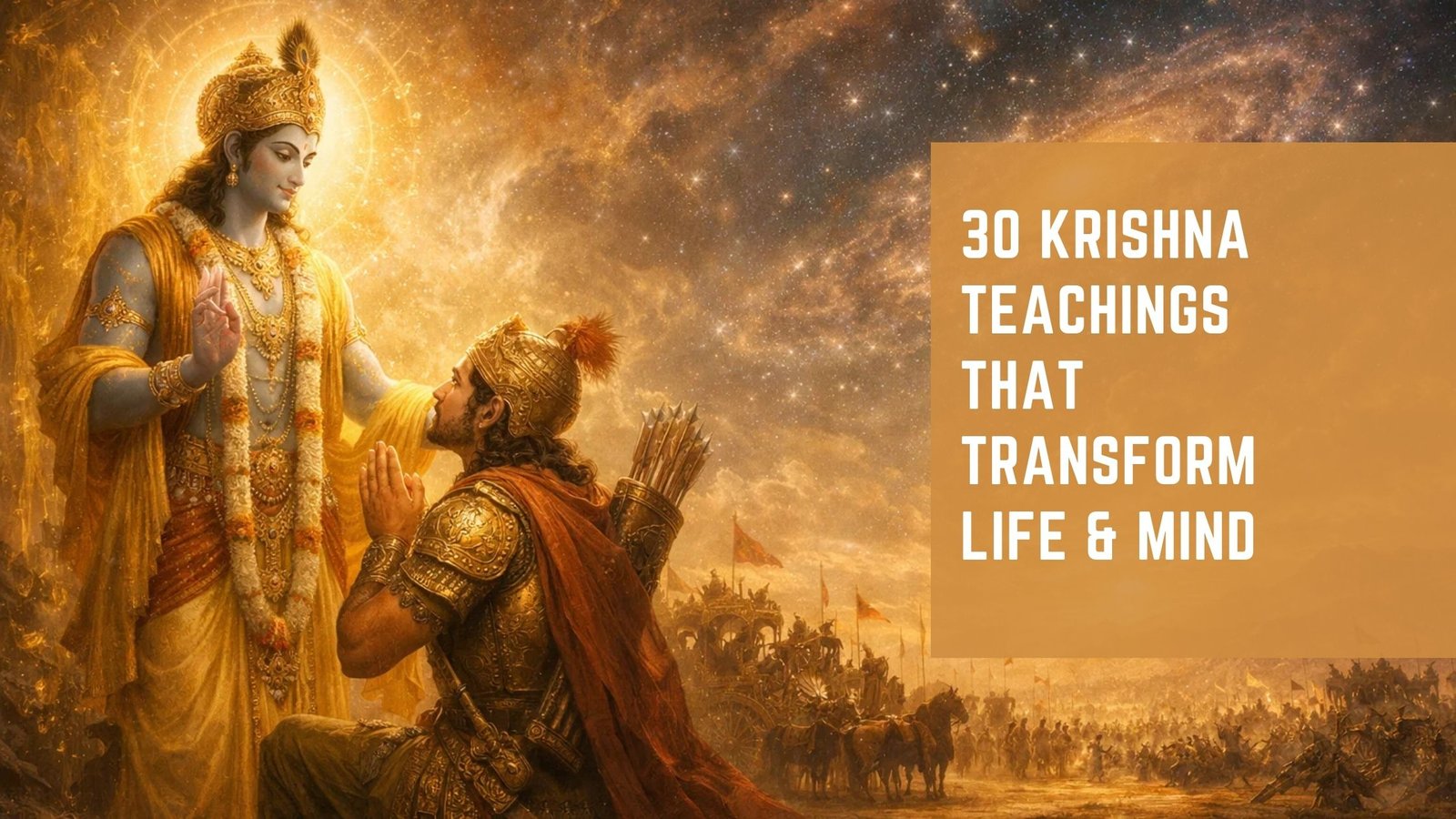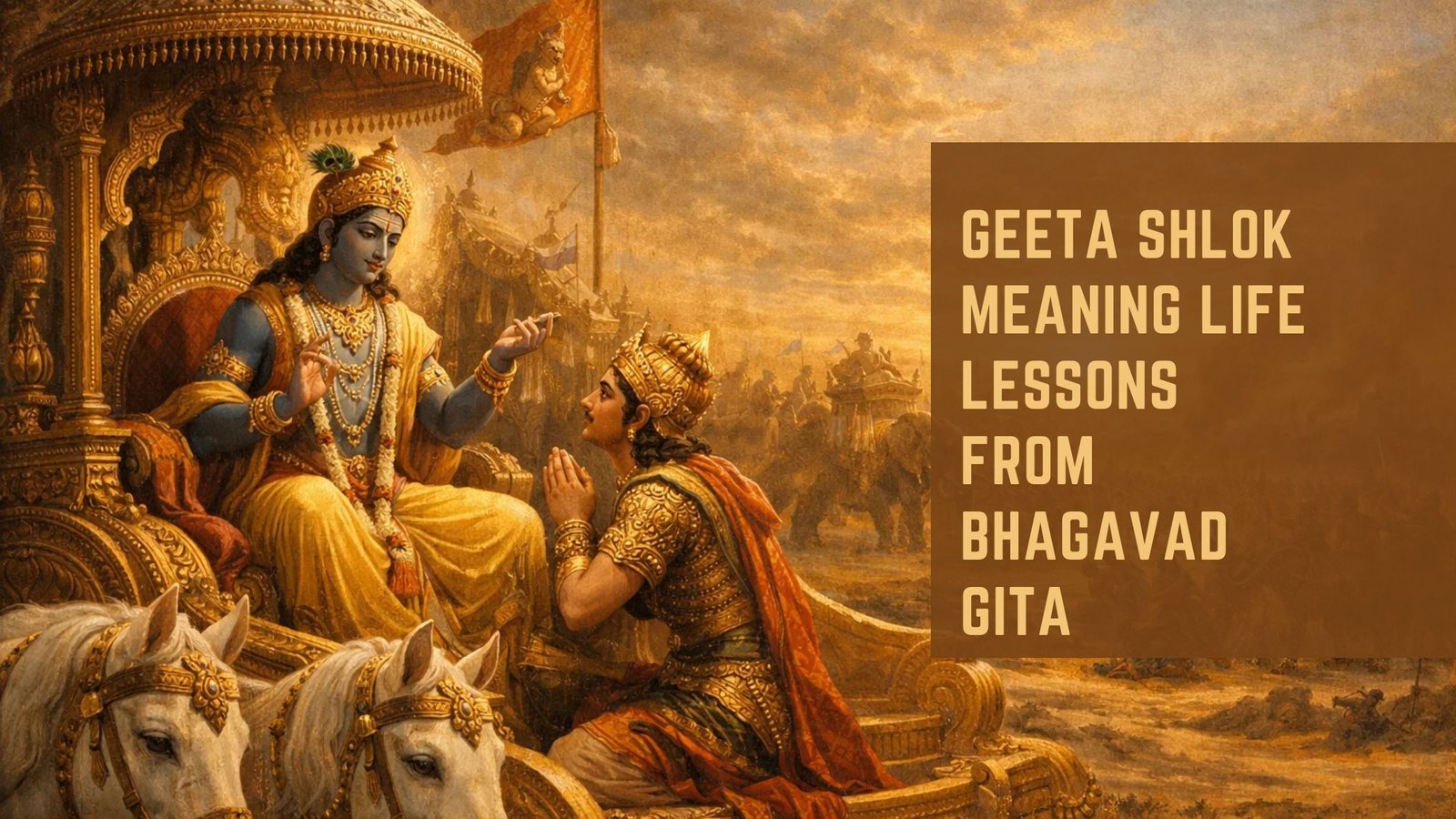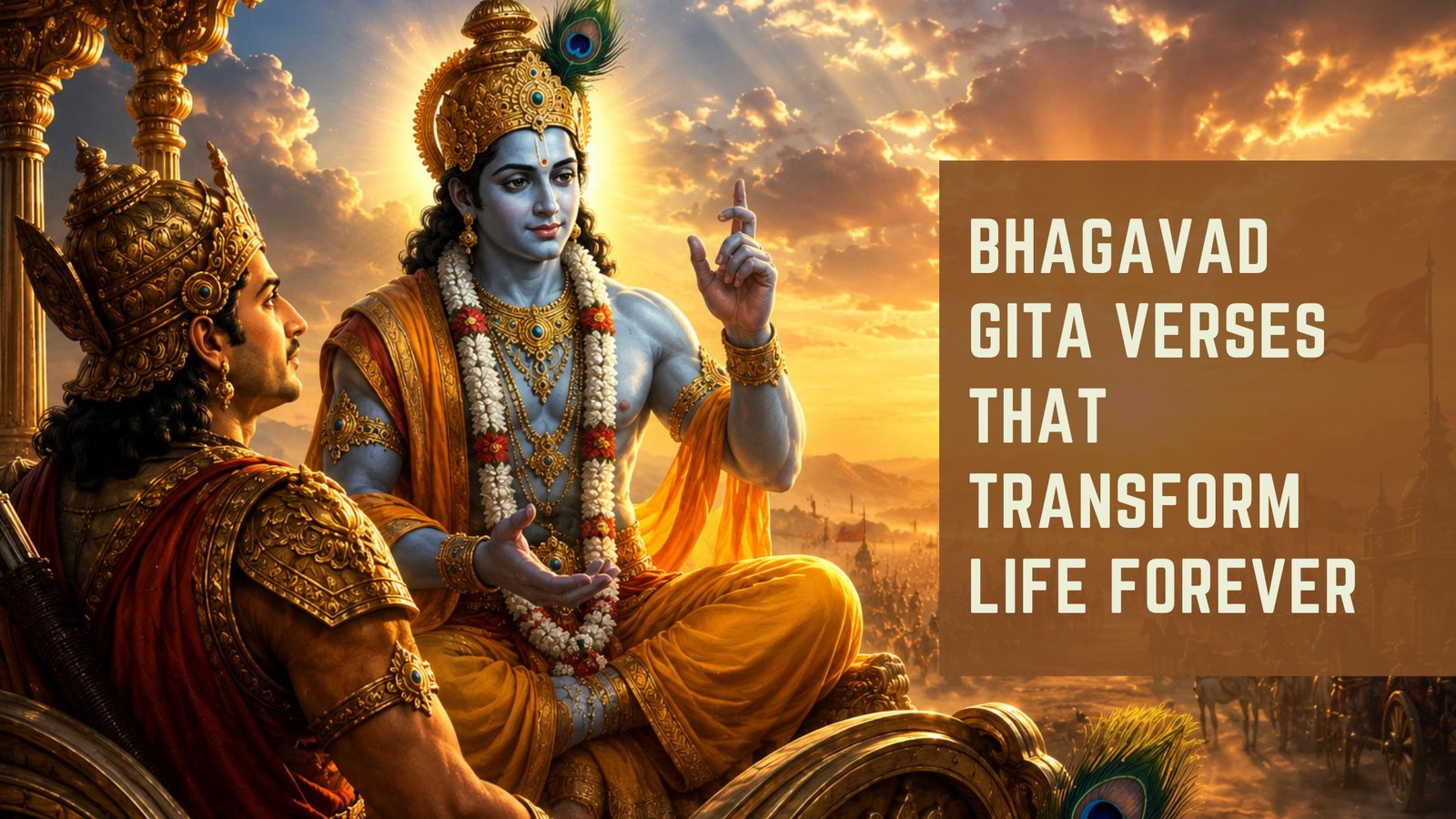
Bhagavad Gita philosophy is not just a spiritual text—it is a living guide for every human struggle, confusion, fear, ambition, and search for purpose. When Arjuna stands confused on the battlefield, his dilemma mirrors our own inner battles: career pressure, emotional pain, attachment, ego, failure, and the desire to find meaning. The Bhagavad Gita philosophy teaches us how to act without fear, love without attachment, work without ego, and live without losing inner peace.
This sacred dialogue between Lord Krishna and Arjuna offers timeless wisdom on karma (action), bhakti (devotion), jnana (knowledge), and yoga (discipline). Even in today’s fast-moving world of anxiety, competition, and distractions, Bhagavad Gita philosophy remains deeply relevant.
Table of Contents
Key Takeaways
- Bhagavad Gita philosophy teaches balance between action and detachment
- It explains karma, dharma, devotion, knowledge, and self-realization
- The soul is eternal; the body is temporary
- True peace comes from surrender and inner discipline
- Desire and attachment cause suffering
- Detachment leads to freedom
- Work with purpose, not obsession
- Faith strengthens the mind
- Self-control builds character
- The Gita is a guide for modern life
What Is Gita Philosophy?
Bhagavad Gita philosophy is the spiritual and practical wisdom given by Lord Krishna to Arjuna during the Kurukshetra war. It combines spiritual insight with real-life guidance.
The philosophy explains:
- Who we truly are (the soul, not the body)
- Why suffering exists
- How to act in difficult situations
- How to detach from outcomes
- How to find peace in chaos
“You have the right to perform your duty, but not to the fruits of your actions.”
— Bhagavad Gita 2.47
This single verse captures the heart of philosophy.

Core Pillars of Gita Philosophy
1. Karma Yoga – The Path of Action
Karma Yoga teaches action without attachment to results.
- Work sincerely
- Do your duty
- Let go of obsession with success or failure
- Serve without ego
“Perform your duty without attachment.”
This principle is powerful for career, relationships, and personal growth.
2. Bhakti Yoga – The Path of Devotion
Gita philosophy highlights devotion as a way to dissolve ego and fear.
- Surrender to a higher purpose
- Cultivate love for the Divine
- Develop trust in the universe
“Offer all actions to Me, with a mind focused on the Self.”
Bhakti builds emotional strength and inner security.
3. Jnana Yoga – The Path of Knowledge
Jnana Yoga focuses on wisdom and self-awareness.
- Know the difference between body and soul
- Understand impermanence
- Realize your eternal nature
“The soul is neither born nor dies.”
This knowledge frees us from fear of loss and death.
4. Dhyana Yoga – The Path of Meditation
Meditation is emphasized in Gita philosophy to control the restless mind.
- Calm the mind
- Observe thoughts
- Build inner silence
- Practice self-discipline
“A disciplined mind brings happiness.”
Life Lessons from Gita Philosophy
- Do your duty without fear
- Control desire before desire controls you
- Detach from results, not from effort
- Be steady in success and failure
- See the same divine essence in all
- Choose growth over comfort
- Practice self-control
- Cultivate inner peace
- Serve others selflessly
- Surrender ego
Bhagavad Gita Quotes Table
| Gita Quote | Teaching | Life Lesson |
|---|---|---|
| “You are what you believe.” | Power of mindset | Thoughts shape destiny |
| “The soul is eternal.” | Immortality of self | Fear of death dissolves |
| “Do your duty.” | Dharma | Responsibility over excuses |
| “Desire leads to anger.” | Chain of suffering | Control cravings |
| “One who is content is peaceful.” | Contentment | Peace > possessions |
| “Control the mind.” | Self-discipline | Mastery over emotions |
Essence of Gita Philosophy
The essence of Bhagavad Gita philosophy lies in inner freedom. It teaches us how to live fully in the world while remaining detached internally. True spirituality is not escape—it is balance.
When we follow Bhagavad Gita philosophy, we begin to act responsibly without becoming emotionally enslaved by outcomes. This wisdom creates calm confidence.
Modern Relevance of Gita Philosophy
Even in corporate life, relationships, mental health struggles, and leadership, Bhagavad Gita philosophy is deeply applicable.
- For entrepreneurs → Act without fear of failure
- For students → Focus on effort, not marks
- For leaders → Lead with wisdom, not ego
- For families → Love without attachment
- For mental peace → Detach from anxiety
Gita philosophy offers emotional resilience in a chaotic digital world.
Verse Explanations
Verse 2.47 – Focus on your actions, not the rewards.
Verse 6.5 – Uplift yourself; your mind can be your friend or enemy.
Verse 12.15 – One who does not disturb others is dear to the Divine.
Verse 18.66 – Surrender and be free from fear.
Each verse of Gita philosophy acts like a life compass.
How to Apply Bhagavad Gita Philosophy Daily
- Begin the day with intention
- Work honestly
- Let go of outcomes
- Practice gratitude
- Control reactions
- Reflect before sleeping
- Read one verse daily
- Observe your mind
- Serve someone selflessly
- Surrender worries
Additional Deep-Dive Paragraphs
Gita Philosophy & Emotional Healing
The teachings heal anxiety, overthinking, insecurity, and fear. Detachment from outcomes reduces emotional burnout.
Gita Philosophy & Leadership
True leadership is self-mastery. Leaders must act with wisdom, not ego.
Gita Philosophy & Success
Success without attachment leads to peace. Failure without ego leads to growth.
Bhagavad Gita Philosophy & Inner Strength
The Gita strengthens inner stability when life feels uncertain.
Bhagavad Gita Philosophy & Mental Health in the Modern Age
Bhagavad Gita philosophy offers powerful tools for emotional balance and mental well-being in today’s high-pressure lifestyle. Anxiety, comparison, burnout, and fear of failure are common struggles in the modern world. The Gita teaches detachment from outcomes and mastery over the mind, which directly helps reduce stress and overthinking. When one learns to focus on sincere effort instead of obsessing over results, the nervous system naturally relaxes. The philosophy also emphasizes self-awareness, helping individuals observe their thoughts without becoming trapped by them. This mindful awareness builds emotional resilience and inner stability, making the teachings of the Bhagavad Gita deeply relevant for mental health and inner peace.
Bhagavad Gita Philosophy & Decision-Making in Confusing Times
One of the most practical applications of Bhagavad Gita philosophy is in decision-making during confusion, doubt, and moral dilemmas. Arjuna’s hesitation on the battlefield reflects the inner conflict we feel when facing tough choices in career, relationships, or personal values. The Gita advises clarity through dharma (right duty), inner conscience, and wisdom rather than emotional impulse. By aligning decisions with long-term values instead of short-term comfort, one develops moral strength. This philosophy teaches us to pause, reflect, and act consciously, turning confusion into clarity and fear into purposeful action.
Bhagavad Gita Philosophy & Relationships
Relationships often suffer due to expectations, attachment, ego clashes, and fear of loss. Bhagavad Gita philosophy teaches loving without possession and caring without controlling. When love becomes free from insecurity and dependency, relationships grow healthier and more respectful. The practice of seeing the same divine essence in others encourages compassion and patience. By reducing emotional attachment to how others “should” behave, one experiences fewer disappointments and more peace. This wisdom helps in family bonds, friendships, romantic relationships, and even workplace interactions, creating harmony through inner maturity.
Bhagavad Gita Philosophy & Inner Discipline
Self-mastery is a central theme in Bhagavad Gita philosophy. The text explains that the uncontrolled mind becomes an enemy, while a disciplined mind becomes the greatest ally. Developing habits like self-control, mindfulness, and consistency strengthens inner discipline. This discipline is not harsh restriction but conscious direction of energy. When one learns to regulate desires, emotions, and impulses, life becomes more stable and focused. Over time, this inner discipline builds character, confidence, and spiritual strength, helping individuals walk their path with clarity and dignity.
FAQs
Q1. Is Bhagavad Gita philosophy only for religious people?
No. It is a life guide for everyone—students, professionals, leaders, and seekers.
Q2. Can Bhagavad Gita philosophy help with stress?
Yes. Detachment and mindfulness reduce anxiety.
Q3. Is Bhagavad Gita philosophy practical today?
Absolutely. Its wisdom fits modern challenges perfectly.
Q4. Can I follow Bhagavad Gita philosophy without rituals?
Yes. The Gita focuses on mindset, action, and awareness.
Q5. What is the main message of Bhagavad Gita philosophy?
Act with duty, detach from results, surrender ego, and seek inner peace.
Conclusion
Bhagavad Gita philosophy is a timeless mirror to the human mind. It does not promise a life without problems—it teaches a way to face problems with strength, clarity, and peace. By practicing its teachings, one can live in the world yet remain untouched by chaos. This sacred wisdom transforms confusion into clarity, fear into courage, and suffering into spiritual growth.
Explore more spiritual wisdom at thegita.in.