Can a person who once walked the wrong path become a timeless symbol of wisdom? The inspiring story of Maharishi Valmiki reminds us that our past does not have to define our future. Through self-realisation, discipline, and spiritual transformation, a person can discover a completely new purpose in life.
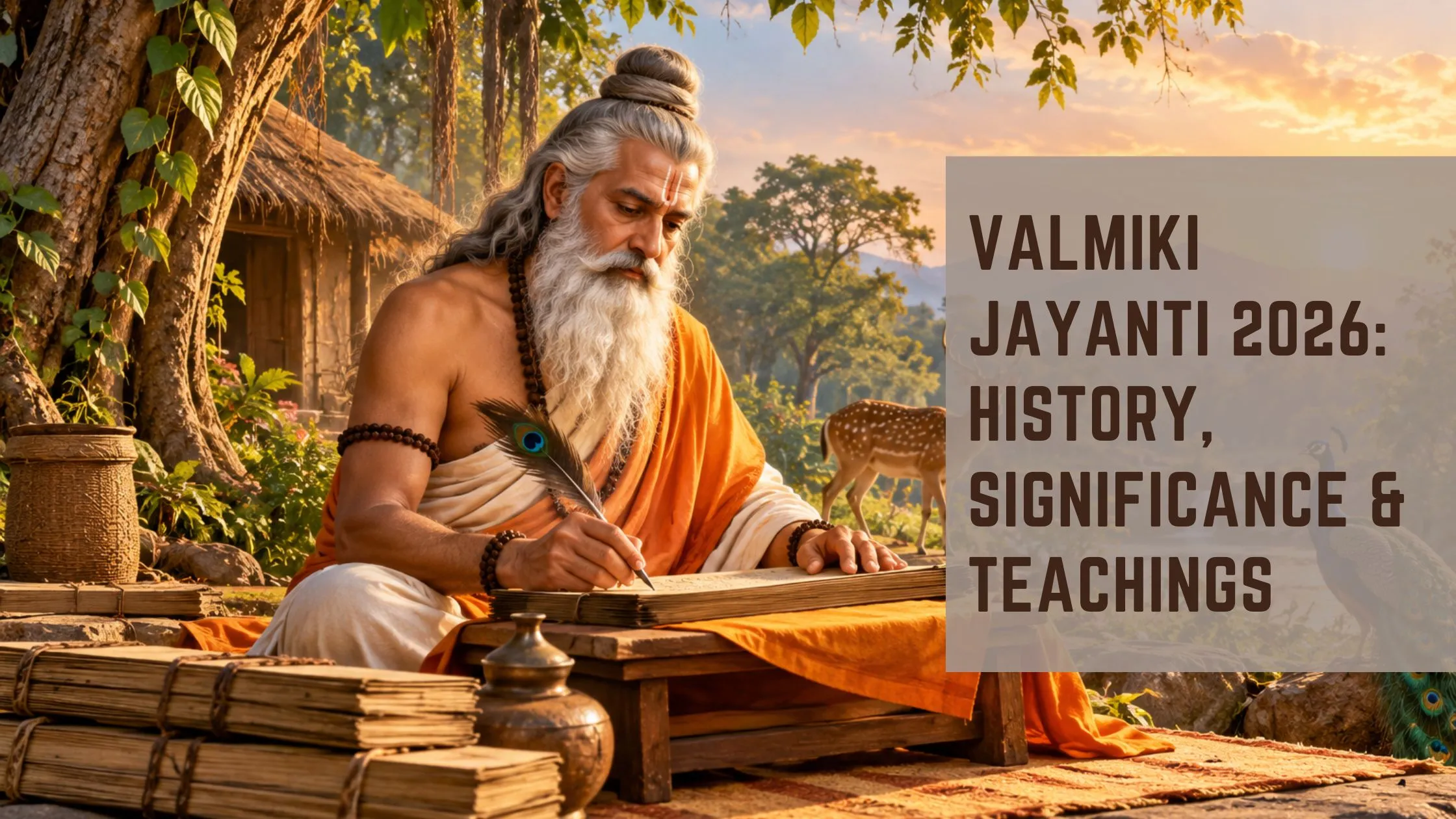
Valmiki Jayanti celebrates the birth anniversary of Maharishi Valmiki, revered as the Adi Kavi, or the first poet, in Indian literary tradition. He is traditionally credited with composing the Ramayana, one of the most influential epics in Indian culture.
Observed with devotion and respect, this occasion celebrates not only a great sage but also the values of truth, righteousness, compassion, courage, and the possibility of personal transformation.
For readers of thegita.in, Valmiki Jayanti offers a meaningful opportunity to explore how ancient Indian wisdom can inspire better choices in modern life.
Table of Contents
- Key Takeaways
- 1. What Is Valmiki Jayanti?
- 2. Who Was Maharishi Valmiki?
- 3. The Inspiring Story of Maharishi Valmiki's Transformation
- 4. The Ramayana: Maharishi Valmiki's Timeless Legacy
- 5. Religious and Spiritual Significance of Valmiki Jayanti
- 6. How Is Valmiki Jayanti Celebrated?
- 7. Seven Life Lessons from Maharishi Valmiki
- 8. Inspirational Quotes and Teachings for Valmiki Jayanti
- 9. Valmiki Jayanti and Modern Life: Ancient Wisdom, Today's Challenges
- Frequently Asked Questions
- Conclusion
Key Takeaways
Valmiki Jayanti honours Maharishi Valmiki, traditionally regarded as the author of the Ramayana.
He is known as Adi Kavi, the first poet in the Sanskrit literary tradition.
The traditional story of his transformation highlights repentance, self-awareness, and spiritual discipline.
The Ramayana teaches important values such as truth, duty, loyalty, compassion, and courage.
Devotees celebrate the occasion through prayers, recitations, processions, and community gatherings.
Valmiki's legacy reminds us that positive change is possible at every stage of life.
1. What Is Valmiki Jayanti?
Valmiki Jayanti is a Hindu religious and cultural observance dedicated to Maharishi Valmiki. It commemorates his legacy as a revered sage and the traditional composer of the Sanskrit Ramayana.
The festival is especially significant for devotees who admire his spiritual journey and the enduring influence of his literary work. It also highlights the importance of education, moral conduct, self-improvement, and devotion.
Valmiki Jayanti is commonly observed on the full moon day, or Purnima, of the Hindu lunar month of Ashwin. The Gregorian date changes each year because the Hindu calendar is lunar.
When Is Valmiki Jayanti in 2026?
In 2026, Valmiki Jayanti falls on Sunday, 25 October 2026, according to commonly published Hindu festival calendars. Local panchang timings and observance practices may vary.
| Festival detail | Information |
|---|---|
| Festival name | Valmiki Jayanti |
| Honoured figure | Maharishi Valmiki |
| 2026 date | 25 October 2026 |
| Hindu calendar | Ashwin Purnima |
| Other name | Pragat Diwas |
| Traditional title | Adi Kavi |
| Major association | The Ramayana |
| Main message | Transformation, wisdom, and righteousness |

2. Who Was Maharishi Valmiki?
Maharishi Valmiki is one of the most respected sages in Indian tradition. He is celebrated for his association with the Valmiki Ramayana, a foundational Sanskrit epic narrating the life, exile, struggles, and return of Lord Rama.
The Ramayana explores the complexities of human relationships and moral responsibility through characters such as Rama, Sita, Lakshmana, Hanuman, and Ravana.
Valmiki's contribution extends beyond literature. His legacy is associated with spiritual reflection, ethical conduct, poetic expression, and the search for truth.
Why Is Valmiki Called Adi Kavi?
The Sanskrit expression Adi Kavi means “the first poet.” Valmiki is traditionally given this title because of his foundational place in Sanskrit epic poetry.
According to a well-known account, Valmiki witnessed a hunter kill one of a pair of krauncha birds. Moved by the surviving bird's sorrow, he uttered a verse expressing grief and condemning the act of violence.
This episode is traditionally associated with the emergence of the first shloka in the Ramayana's poetic tradition. The story symbolises how compassion can give rise to powerful literary expression.
3. The Inspiring Story of Maharishi Valmiki's Transformation
One of the best-known traditional stories about Valmiki describes his transformation from Ratnakara, a man who lived by robbing travellers, into a devoted sage.
According to this account, Ratnakara encountered the sage Narada. Narada encouraged him to reflect on his actions and whether his family would share responsibility for the wrongdoing he committed to support them.
The question prompted Ratnakara to examine his life. Realising that he alone was responsible for his actions, he turned towards spiritual practice and meditation.
In popular retellings, he meditated for such a long time that an anthill formed around him. The Sanskrit word valmika means anthill, and the story connects this image with the name Valmiki.
This narrative is part of traditional religious storytelling; details of the sage's early life are not independently established as modern historical facts.
What Does His Transformation Teach Us?
Valmiki's traditional life story communicates a powerful message: recognising our mistakes can be the beginning of a better life.
His transformation encourages us to:
Accept responsibility for our choices.
Learn from mistakes instead of repeating them.
Develop patience through consistent effort.
Replace harmful habits with meaningful actions.
Seek knowledge and guidance when we need direction.
The story does not suggest that change happens without effort. Instead, it emphasises reflection, discipline, and a sustained commitment to personal growth.
4. The Ramayana: Maharishi Valmiki's Timeless Legacy
The Valmiki Ramayana is one of India's great Sanskrit epics. Traditionally attributed to Maharishi Valmiki, it narrates the story of Lord Rama and examines the challenges of living according to dharma, or righteous conduct.
The epic is commonly organised into seven kandas, or books:
Bala Kanda: Rama's early life and the events leading to his marriage to Sita.
Ayodhya Kanda: The events surrounding Rama's exile.
Aranya Kanda: Life in the forest and Sita's abduction.
Kishkindha Kanda: Rama's alliance with Sugriva and his search for Sita.
Sundara Kanda: Hanuman's journey to Lanka and his discovery of Sita.
Yuddha Kanda: The conflict in Lanka and Rama's battle with Ravana.
Uttara Kanda: Later events associated with Rama's reign and family.
The epic's central themes include duty, justice, loyalty, sacrifice, leadership, devotion, and the consequences of human decisions.
Its cultural influence continues through religious recitations, theatre, dance, literature, television, festivals, and family storytelling across India and beyond.
5. Religious and Spiritual Significance of Valmiki Jayanti
Valmiki Jayanti is an occasion to honour wisdom and reflect on the spiritual values associated with the sage.
Celebrating Knowledge and Literature
The occasion recognises the role of sacred literature in transmitting ethical and spiritual teachings across generations.
Reflecting on Dharma
The Ramayana encourages readers to consider what righteousness means when duties, emotions, and personal interests come into conflict.
Honouring Compassion
The traditional story of the krauncha birds links Valmiki's poetic inspiration with sensitivity towards suffering.
Encouraging Self-Transformation
The story of Ratnakara's transformation inspires people to reflect on their conduct and work towards a more meaningful life.
Promoting Equality Through Learning
Valmiki's legacy can also inspire respect for human dignity and the belief that access to knowledge, reflection, and personal growth should not be limited by a person's background.
6. How Is Valmiki Jayanti Celebrated?
Celebrations differ across regions, communities, and temples. Common observances include:
Temple prayers: Devotees offer prayers and pay respect to Maharishi Valmiki.
Ramayana recitations: Passages from the epic are read or recited.
Processions: Some communities organise devotional processions and public gatherings.
Community service: People may organise food distribution, charitable activities, and social welfare programmes.
Educational events: Schools and community organisations may arrange speeches, discussions, and cultural programmes.
Bhajans and kirtans: Devotional singing brings communities together.
Reflection and prayer: Families may use the day to discuss the sage's teachings and their relevance to everyday conduct.
The most meaningful observance is not limited to rituals. It also involves practising honesty, compassion, and responsibility in daily life.
7. Seven Life Lessons from Maharishi Valmiki
1. Your Past Does Not Define Your Future
The traditional transformation story reminds us that mistakes need not determine the rest of our lives. Honest reflection can help us choose a better direction.
2. Take Responsibility for Your Actions
Personal growth begins when we stop blaming others and recognise our own role in our decisions.
3. Knowledge Can Transform Life
Learning broadens our understanding and helps us make wiser decisions. Valmiki's literary legacy demonstrates the lasting power of knowledge.
4. Compassion Is a Sign of Strength
The episode of the krauncha birds teaches us to notice suffering and respond with sensitivity rather than indifference.
5. Discipline Creates Lasting Change
Meaningful transformation requires consistent effort. Small, positive habits can gradually reshape our lives.
6. Follow Dharma Even When It Is Difficult
The Ramayana explores the challenges of fulfilling duties and making ethical decisions under pressure.
7. Use Your Talents for a Higher Purpose
Valmiki's association with the Ramayana reminds us that creativity, learning, and communication can inspire generations when used thoughtfully.
8. Inspirational Quotes and Teachings for Valmiki Jayanti
The following are original reflections inspired by Valmiki's traditional story and the themes of the Ramayana, not verbatim quotations from the sage.
“Your past may explain your journey, but it does not have to decide your destination.”
“The first step towards wisdom is the courage to recognise your own mistakes.”
“Compassion turns the pain we witness into a reason to create something meaningful.”
“True transformation begins when excuses end and responsibility begins.”
“Knowledge becomes powerful when it guides our actions towards truth and righteousness.”
“A life guided by dharma seeks what is right, not merely what is easy.”
These reflections can be shared in Valmiki Jayanti speeches, devotional messages, educational programmes, and social media posts, provided they are not presented as historical quotations.
9. Valmiki Jayanti and Modern Life: Ancient Wisdom, Today's Challenges
Although Maharishi Valmiki belongs to India's ancient literary and spiritual tradition, the values associated with his legacy remain relevant today.
| Modern challenge | Lesson inspired by Valmiki's legacy | Practical action |
|---|---|---|
| Regretting past mistakes | Transformation is possible | Learn from errors and make amends |
| Anger and intolerance | Compassion matters | Listen before reacting |
| Career or personal confusion | Seek knowledge and guidance | Research options and reflect carefully |
| Lack of discipline | Change requires persistence | Build consistent daily habits |
| Pressure to compromise values | Dharma requires ethical reflection | Choose honesty over short-term gain |
| Negative self-image | Growth remains possible | Focus on constructive actions |
| Social indifference | Recognise others' suffering | Help people in practical ways |
The central message is simple: spirituality becomes meaningful when it shapes the way we treat people, fulfil responsibilities, and respond to life's difficulties.
Frequently Asked Questions
Q1. When is Valmiki Jayanti in 2026?
Valmiki Jayanti is commonly observed on Sunday, 25 October 2026, corresponding to Ashwin Purnima. Local panchang timings may vary.
Q2. Why is Valmiki Jayanti celebrated?
It celebrates Maharishi Valmiki's legacy as a revered sage and the traditional composer of the Ramayana, while encouraging spiritual reflection and ethical living.
Q3. Who was Maharishi Valmiki?
Maharishi Valmiki was an ancient Indian sage traditionally credited with composing the Sanskrit Ramayana. He is also known as Adi Kavi, or the first poet.
Q4. What was Valmiki's original name?
In the popular traditional account of his transformation, his earlier name was Ratnakara. This detail belongs to religious storytelling rather than independently verified biography.
Q5. Why is Valmiki called the first poet?
He is traditionally known as Adi Kavi because the Ramayana is regarded as a foundational work of Sanskrit epic poetry. The story of the krauncha birds is associated with the origin of its poetic form.
Q6. What are the main teachings of Maharishi Valmiki?
The values associated with his legacy include truth, compassion, discipline, responsibility, knowledge, righteousness, and the possibility of personal transformation.
Q7. How can we celebrate Valmiki Jayanti at home?
You can read the Ramayana, offer prayers, share inspirational teachings, help people in need, and discuss the importance of honesty and compassion with family members.
Q8. What is the main message of Valmiki Jayanti?
Its central message is that wisdom, self-reflection, and sincere effort can guide people towards a more ethical and meaningful life.
Conclusion
Valmiki Jayanti is more than a celebration of a revered sage. It is an invitation to reflect on the power of knowledge, the importance of compassion, and the courage required to change our lives for the better.
Maharishi Valmiki's association with the Ramayana has left a lasting mark on India's spiritual and literary heritage. The traditional story of his transformation offers another enduring lesson: people can move beyond past mistakes by accepting responsibility and committing themselves to growth.
As we celebrate Valmiki Jayanti 2026, let us remember that true wisdom is reflected not only in what we read or recite but also in how we live.
Life Lesson: Your past may be part of your story, but your choices today can help write a better chapter tomorrow.
Explore more spiritual wisdom, Bhagavad Gita teachings, and practical life lessons on thegita.in.