What if fasting were not simply about giving up food but about learning to give up distraction, attachment and uncontrolled desires?
This is the deeper idea behind Ekadashi Vrat, one of the most widely observed Hindu fasting traditions dedicated especially to Lord Vishnu. Ekadashi occurs on the 11th lunar day (tithi) of both the waxing and waning phases of the Moon, meaning there are normally 24 Ekadashis in a lunar year. In an intercalary Adhik Maas, two additional Ekadashis are observed.
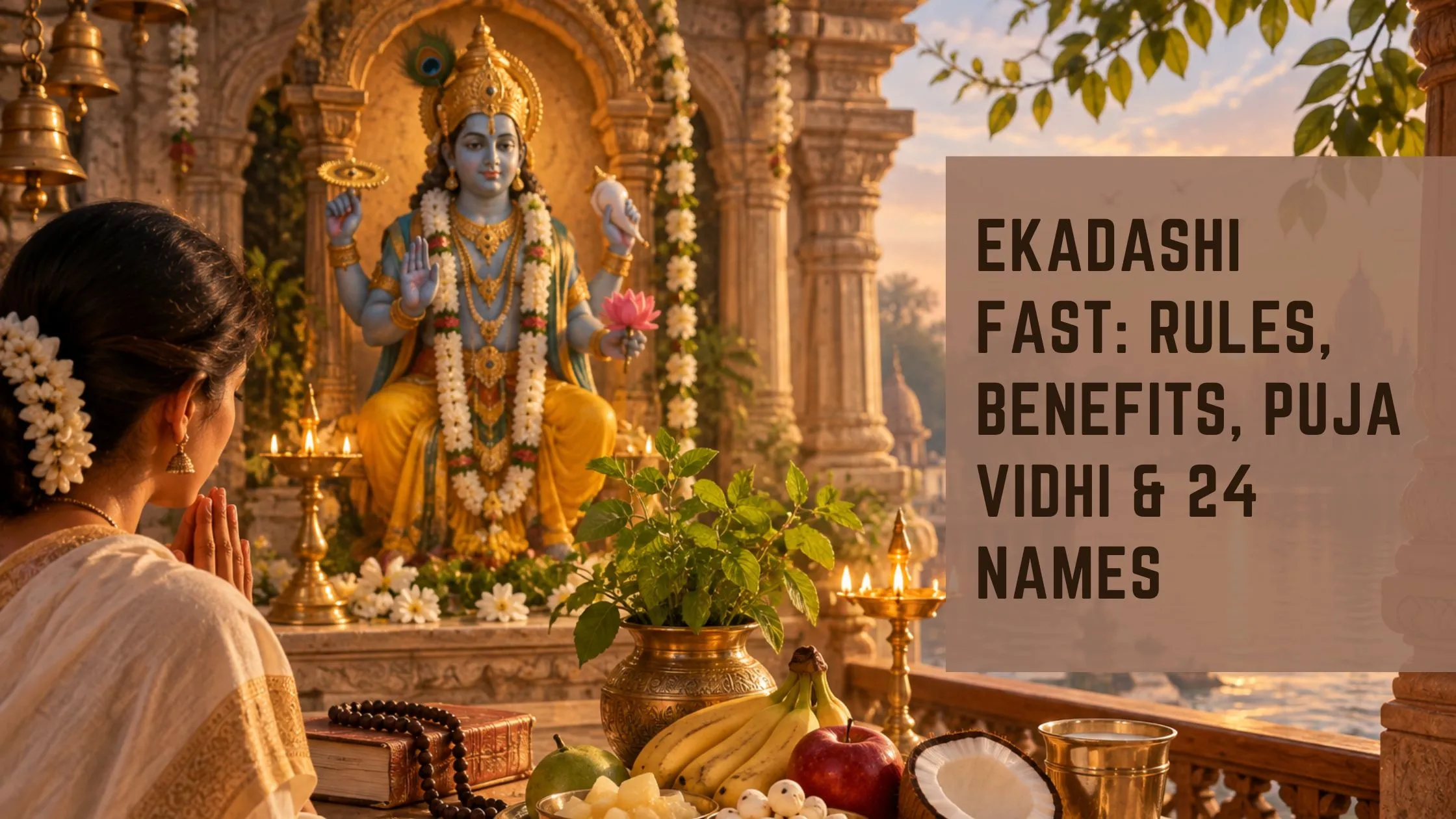
For devotees, Ekadashi is a day of fasting, prayer, self-discipline, charity, japa and remembrance of God.
“A fast becomes meaningful when it changes not only what we eat, but also how we think, speak and live.”
The exact rules can differ among Vaishnava, Smarta and regional traditions, so devotees should follow the practice prescribed by their family or spiritual tradition.
Table of Contents
- Key Takeaways
- What Is Ekadashi Vrat?
- Why Do Hindus Observe Ekadashi Fast?
- Ekadashi Fast Rules
- Types of Ekadashi Fast
- What Is Nirjala Ekadashi?
- Ekadashi Puja Vidhi
- What to Eat During Ekadashi Fast?
- What Should Be Avoided on Ekadashi?
- Ekadashi Parana: How to Break the Fast
- 24 Ekadashi Names and Their Traditional Associations
- Spiritual Lessons From Ekadashi Vrat
- Is Ekadashi Fasting Good for Health?
- Ekadashi Vrat: Dos and Don'ts
- Frequently Asked Questions About Ekadashi Fast
- Conclusion:
Key Takeaways
- Ekadashi means the 11th lunar day.
- It occurs twice in most lunar months once in Shukla Paksha and once in Krishna Paksha.
- The vrat is especially associated with Lord Vishnu.
- Fasting may range from a water-only or food-restricted fast to a complete fast, depending on tradition and individual capacity.
- Grains and certain foods are traditionally avoided.
- Parana means breaking the fast, usually on Dwadashi, within the prescribed time.
- Prayer, Vishnu naam-japa, Bhagavad Gita reading, meditation and charity are important parts of the observance.
- Ekadashi is traditionally viewed as a practice of purification, restraint and devotion.
- People with medical conditions should not undertake a strict fast without appropriate medical advice.
What Is Ekadashi Vrat?
The word Ekadashi comes from the Sanskrit word Ekādaśī, meaning eleven.
It refers to the 11th tithi of each lunar fortnight. Therefore, Ekadashi comes twice in a lunar month:
- Shukla Paksha Ekadashi – during the waxing Moon
- Krishna Paksha Ekadashi – during the waning Moon
This makes approximately 24 Ekadashis in a regular year. During an additional lunar month, traditionally called Adhik Maas, two more are observed, known as Padmini Ekadashi and Paramā Ekadashi.
The day is particularly important in Vaishnava traditions, where devotees dedicate the vrat to Lord Vishnu and spend the day in spiritual practices.

Why Do Hindus Observe Ekadashi Fast?
Ekadashi is not merely a dietary restriction. Its traditional purpose is connected with self-control and spiritual discipline.
During the fast, devotees may reduce worldly activities and devote more time to:
- Vishnu worship
- Mantra chanting
- Meditation
- Reading the Bhagavad Gita
- Listening to stories of Lord Vishnu
- Charity
- Satsang
- Self-reflection
- Controlling anger and unnecessary speech
The Spiritual Idea Behind Ekadashi
Food is only one part of the discipline.
The deeper practice is to observe restraint in:
Food → Speech → Thoughts → Desires → Actions
This makes Ekadashi a powerful reminder that spiritual growth requires control over the senses and mind.
“Ekadashi reminds us that sometimes the soul needs silence more than the body needs abundance.”
Ekadashi Fast Rules
There is no single universal fasting method followed by every Hindu community. Practices differ according to tradition, region, family customs and individual capacity.
Common observances include:
1. Avoiding Grains
Many devotees avoid:
- Rice
- Wheat
- Barley
- Pulses
- Beans
- Certain grain-based foods
Rice is especially avoided in many Ekadashi traditions.
2. Eating Satvik Food
Those following a partial fast may consume foods such as:
- Fruits
- Milk
- Curd
- Nuts
- Coconut
- Potatoes
- Sweet potatoes
- Singhara
- Sabudana
- Rock salt (sendha namak)
However, permitted foods vary by tradition.
3. Avoiding Tamasic or Heavy Foods
Devotees generally avoid:
- Meat
- Fish
- Eggs
- Alcohol
- Tobacco
- Onion and garlic in many traditions
- Excessively spicy or processed foods
4. Practicing Brahmacharya and Restraint
Many traditional observances encourage devotees to control sensual desires and maintain a peaceful state of mind.
5. Avoiding Anger and Negative Speech
Ekadashi is also an opportunity to fast from:
- Anger
- Gossip
- Arguments
- Jealousy
- Harsh speech
- Excessive entertainment
This is where the vrat becomes a practice of inner purification.
Types of Ekadashi Fast
Different devotees follow different levels of fasting.
| Type of Fast | General Practice |
|---|---|
| Jal Aahar | Water is consumed; food is avoided |
| Phalahar | Fruits and permitted fasting foods are consumed |
| Dugdhahar | Milk and permitted dairy may be consumed |
| Ekabhukta | One permitted meal during the day |
| Nirjala | No food or water, traditionally observed by some devotees |
| Partial Fast | Selected Ekadashi foods are consumed |
What Is Nirjala Ekadashi?
Nirjala Ekadashi is traditionally considered one of the most rigorous Ekadashi observances because nirjala means without water.
However, a waterless fast should not be treated as a test of spiritual worth or attempted without considering one's health.
Ekadashi Puja Vidhi
A simple Ekadashi puja can be performed at home.
Step 1: Wake Up Early
Take a bath and wear clean clothes.
Step 2: Make a Sankalpa
Before beginning the vrat, mentally resolve to observe the day with devotion and self-control.
Step 3: Clean the Puja Space
Keep an image or murti of Lord Vishnu or Krishna.
Step 4: Offer Puja
Offer traditionally appropriate items such as:
- Tulsi leaves
- Yellow flowers
- Sandalwood
- Fruits
- Incense
- A diya
- Water
Tulsi is especially associated with Vishnu worship.
Step 5: Chant a Vishnu Mantra
A commonly recited mantra is:
ॐ नमो भगवते वासुदेवाय।
Om Namo Bhagavate Vasudevaya.
Step 6: Read or Listen to Scripture
Devotees may read:
- Bhagavad Gita
- Vishnu Sahasranama
- Vishnu-related stories
- Ekadashi Vrat Katha
Step 7: Practice Japa and Meditation
Use the day to reduce distractions and turn attention inward.
Step 8: Charity
Food, clothes, money or other useful items may be donated according to one's ability.
What to Eat During Ekadashi Fast?
If you are observing a phalahar or partial fast, traditional options may include:
- Fresh fruits
- Coconut
- Milk
- Curd
- Makhana
- Peanuts
- Almonds
- Walnuts
- Potato
- Sweet potato
- Sabudana
- Singhara flour
- Rajgira
- Rock salt
But remember: Ekadashi food rules differ between traditions. Some devotees follow stricter Vaishnava rules than others.
The goal should not be to turn the vrat into a feast of fried fasting foods.
“Fasting is not replacing one form of indulgence with another.”
What Should Be Avoided on Ekadashi?
Commonly avoided items include:
- Rice
- Wheat
- Regular flour
- Pulses
- Beans
- Grains
- Meat and fish
- Alcohol
- Tobacco
- Excessive fried foods
- Foods prohibited by one's tradition
Along with food restrictions, devotees are traditionally encouraged to avoid anger, dishonesty, gossip and harmful behavior.
Ekadashi Parana: How to Break the Fast
Parana means breaking the Ekadashi fast.
It is generally performed on Dwadashi, the 12th lunar day, during the prescribed Parana period.
The exact Parana timing changes from one Ekadashi to another and depends on the local Panchang, sunrise and the particular tradition being followed.
Therefore, devotees should check a reliable local Panchang rather than assuming the same time for every Ekadashi.
A simple Parana may begin with water or another permitted item followed by a light meal.
“The wisdom of a vrat lies not only in beginning with discipline, but also in ending it with balance.”
24 Ekadashi Names and Their Traditional Associations
A regular lunar year contains 24 Ekadashis. Their names and traditional associations include:
| Ekadashi | Lunar Month | Traditional Association |
|---|---|---|
| Saphala | Pausha Krishna | Spiritual success and devotion |
| Putrada | Pausha Shukla | Family welfare and blessings |
| Shattila | Magha Krishna | Charity and purification |
| Jaya | Magha Shukla | Spiritual victory |
| Vijaya | Phalguna Krishna | Overcoming difficulties |
| Amalaki | Phalguna Shukla | Devotion and sacred observance |
| Papamochani | Chaitra Krishna | Repentance and purification |
| Kamada | Chaitra Shukla | Devotion and fulfillment of righteous aspirations |
| Varuthini | Vaishakha Krishna | Protection and spiritual merit |
| Mohini | Vaishakha Shukla | Freedom from delusion |
| Apara | Jyeshtha Krishna | Charity and spiritual merit |
| Nirjala | Jyeshtha Shukla | Rigorous fasting and devotion |
| Yogini | Ashadha Krishna | Spiritual discipline |
| Devshayani | Ashadha Shukla | Beginning of Chaturmas |
| Kamika | Shravana Krishna | Vishnu devotion |
| Putrada | Shravana Shukla | Family welfare |
| Aja | Bhadrapada Krishna | Repentance and devotion |
| Parivartini | Bhadrapada Shukla | Vishnu's symbolic change during Chaturmas |
| Indira | Ashwin Krishna | Remembrance of ancestors |
| Papankusha | Ashwin Shukla | Purification and devotion |
| Rama | Kartika Krishna | Vishnu-Lakshmi devotion |
| Devutthana | Kartika Shukla | Awakening of Vishnu and end of Chaturmas |
| Utpanna | Margashirsha Krishna | Origin and power of Ekadashi |
| Mokshada | Margashirsha Shukla | Liberation and spiritual knowledge |
The names and sequence can vary in calendars depending on lunar-month calculation and regional tradition. In an Adhik Maas year, Padmini and Parama Ekadashi are additionally observed.
Spiritual Lessons From Ekadashi Vrat
1. Self-Control Is Greater Than Self-Denial
The purpose is not simply to suffer without food.
The real lesson is learning to say no to unnecessary impulses.
2. Discipline Creates Freedom
When we learn to control our habits, our habits stop controlling us.
3. Devotion Requires Attention
Ekadashi gives devotees an opportunity to consciously redirect attention from worldly distractions toward God.
4. Simplicity Can Bring Clarity
A simpler routine can create space for prayer, reflection and gratitude.
5. Charity Completes the Practice
A vrat becomes more meaningful when personal discipline is accompanied by compassion toward others.
6. Spirituality Is About Inner Transformation
The most important fast may be the one we observe from:
anger, ego, greed, jealousy and hatred.
“The true Ekadashi begins when we learn to fast from the habits that disturb the peace of the mind.”
Is Ekadashi Fasting Good for Health?
Fasting has been studied in modern medicine, but religious fasting should not automatically be equated with medically studied intermittent fasting. The type, duration and nutritional pattern can differ significantly.
People with diabetes may face risks such as hypoglycemia, hyperglycemia and dehydration while fasting. Medical guidance recommends individualized assessment and adjustment of treatment for people with diabetes who intend to fast.
People who are pregnant or breastfeeding, children, older adults, people who are unwell, or those taking medicines affected by food or fluid intake should seek appropriate medical advice before attempting a strict fast. Clinical guidance specifically emphasizes individualized assessment for people with diabetes.
Never consider a waterless fast mandatory at the expense of your health.
Ekadashi Vrat: Dos and Don'ts
Do
- Wake up early.
- Keep your surroundings clean.
- Worship Lord Vishnu.
- Chant Vishnu mantras.
- Read spiritual texts.
- Practice meditation.
- Donate according to your ability.
- Maintain peaceful speech.
- Follow your family or sampradaya's fasting rules.
- Break the fast at the prescribed Parana time.
Don't
- Overeat fasting foods.
- Treat fasting as a competition.
- Become angry because you are fasting.
- Criticize people who follow a different fasting method.
- Ignore medical needs.
- Attempt Nirjala fasting simply because it seems more difficult.
- Forget the spiritual purpose of the vrat.
Frequently Asked Questions About Ekadashi Fast
1. What is Ekadashi fast?
Ekadashi fast is a Hindu spiritual observance performed on the 11th lunar day of each fortnight, traditionally dedicated to Lord Vishnu.
2. How many Ekadashis are there in a year?
There are normally 24 Ekadashis in a lunar year. Two additional Ekadashis—Padmini and Parama—occur during Adhik Maas.
3. Can we drink water during Ekadashi?
Yes, many devotees follow a water-allowed fast. However, some traditions observe stricter forms such as Nirjala Ekadashi. The appropriate practice depends on tradition and personal health.
4. Why is rice avoided on Ekadashi?
Avoiding rice and other grains is a longstanding religious practice in many Ekadashi traditions. The theological explanations come from traditional texts and devotional customs rather than modern medical evidence.
5. Can we eat fruits during Ekadashi?
Yes. Phalahar, or fruit-based fasting, is commonly practiced, although individual traditions may have additional restrictions.
6. Can children observe Ekadashi fast?
Children should generally not be expected to undertake a strict fast. A lighter devotional observance may be more appropriate, depending on age, health and family tradition.
7. Can pregnant women observe Ekadashi?
A strict fast during pregnancy should not be undertaken without medical advice. Religious observance can be adapted to protect health.
Conclusion:
Ekadashi is more than a day without grains or a challenge to go without food.
It is an invitation to pause.
To eat with awareness.
To speak with kindness.
To control anger.
To reduce distractions.
To remember the Divine.
To give more than we take.
The deepest meaning of Ekadashi can therefore be understood as turning inward while temporarily stepping away from excess.
Whether you observe a strict fast, a fruit-based fast or simply dedicate the day to prayer and self-discipline, the essence remains the same: devotion should transform the mind, not merely change the menu.
“When the body learns restraint, let the mind learn peace and let the heart learn devotion.”
Life Lesson: True fasting is not only about giving up food for a day; it is about giving up the habits that keep us away from inner peace.
For more spiritual wisdom, Bhagavad Gita teachings and practical lessons for daily life, explore The Gita.