Imagine waiting for the Moon to appear after an entire day of fasting, holding a decorated puja thali in your hands, and offering a heartfelt prayer for someone you love. For many women, this moment is not simply a ritual. It is an expression of faith, devotion, hope, and an emotional connection that has been passed down through generations.
Karwa Chauth is one of the most cherished Hindu festivals, particularly in North India. Traditionally, married women observe a fast and pray for their husbands' long life, good health, happiness, and prosperity. The festival brings families together through prayers, traditional clothing, mehendi, festive meals, and evening rituals.
But have you ever wondered why do women observe Karwa Chauth? What is the story behind this tradition, and what does it teach us about love and relationships?
Beyond fasting and moon worship, Karwa Chauth offers an opportunity to reflect on devotion, patience, gratitude, and the importance of caring for our loved ones. Understanding its meaning helps us appreciate not only the rituals but also the values that make the festival meaningful.
Table of Contents
- Key Takeaways
- 1. What Is Karwa Chauth?
- 2. Why Do Women Observe Karwa Chauth?
- 3. The Story of Karwa Chauth: The Legend of Veeravati
- 4. Important Karwa Chauth Rituals and Their Meaning
- 5. What Is the Spiritual Significance of Karwa Chauth?
- 6. Karwa Chauth in Modern Life
- 7. Life Lessons From Karwa Chauth
- 8. Frequently Asked Questions About Karwa Chauth
- Conclusion
Key Takeaways
Karwa Chauth is a traditional Hindu festival observed mainly by married women in North India.
Women traditionally pray for their husbands' long life, health, and prosperity.
The festival is associated with devotion, marital commitment, and family traditions.
The story of Veeravati is one of the most popular Karwa Chauth vrat kathas.
Sargi, evening puja, the karwa pot, and moon worship are important customs.
Karwa Chauth teaches lessons about faith, patience, gratitude, and mutual respect.
1. What Is Karwa Chauth?
Karwa Chauth, also written as Karva Chauth, is a Hindu festival observed on the Chaturthi, or fourth lunar day, during Krishna Paksha, the waning phase of the Moon.
The word Karwa refers to a traditional earthen pot used in the rituals, while Chauth means the fourth day.
The festival is widely celebrated in Punjab, Haryana, Rajasthan, Uttar Pradesh, Delhi, and other parts of North India. Women traditionally begin their fast before sunrise and continue until the Moon appears in the evening.
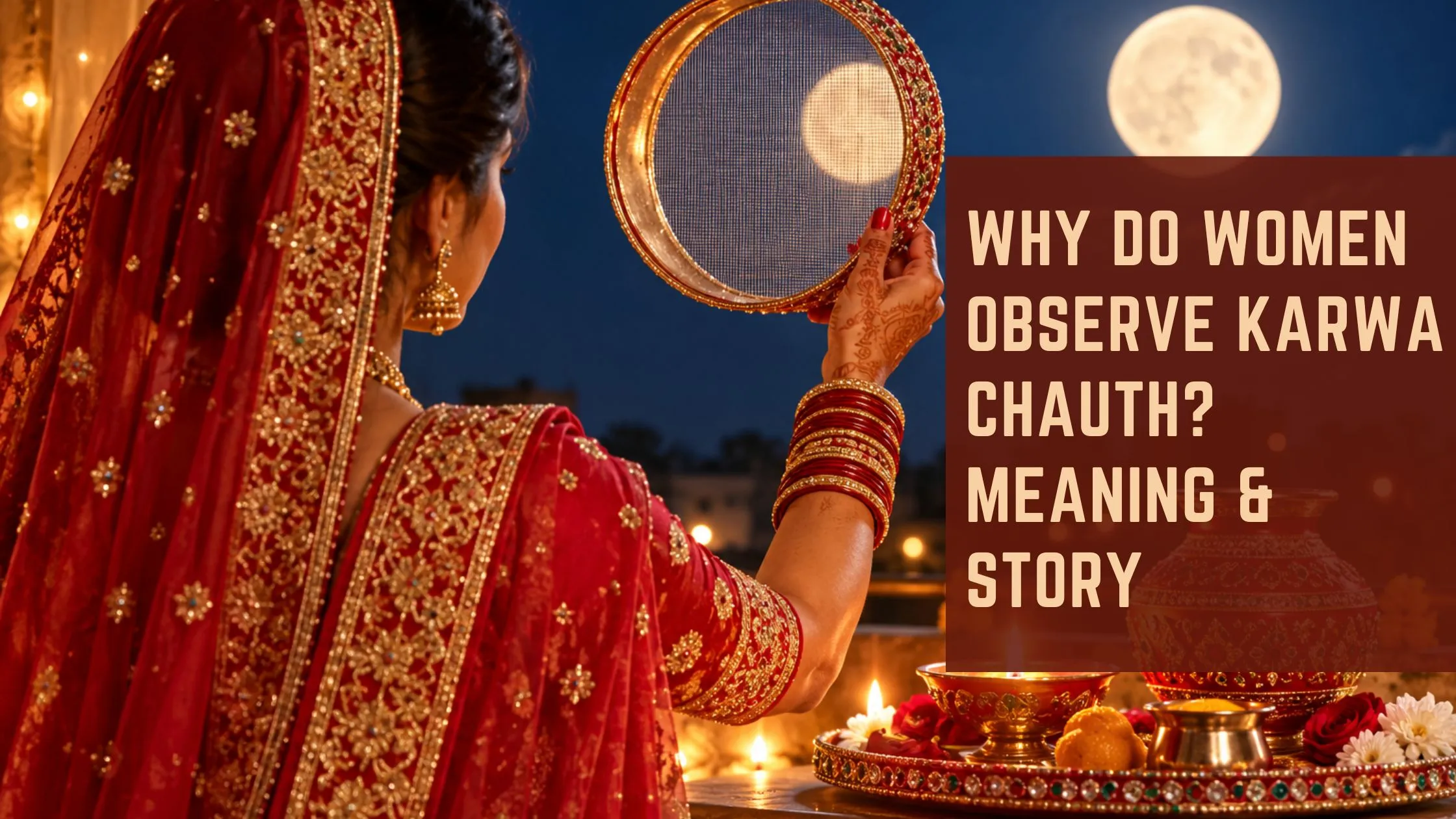
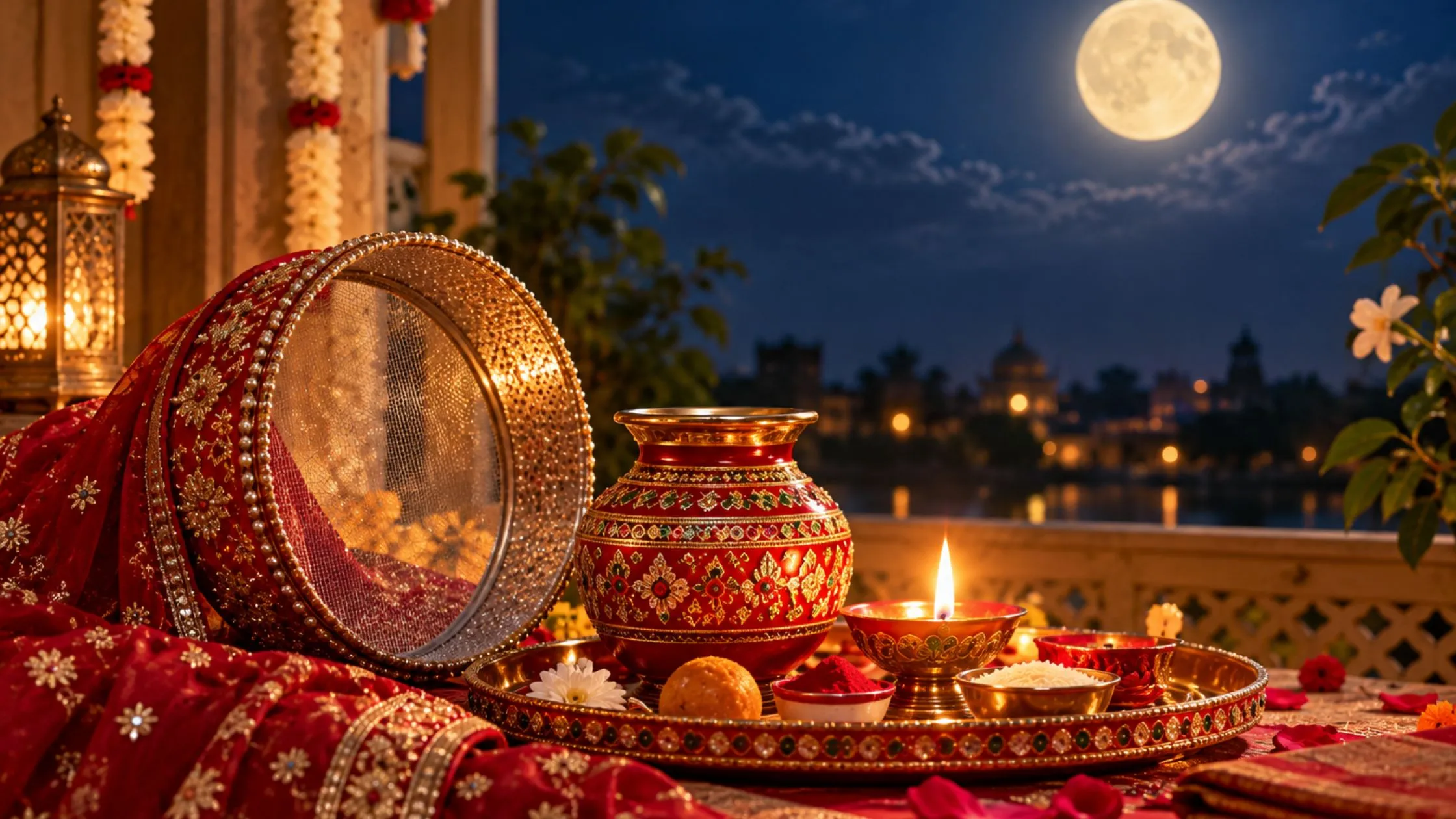
During the day, families prepare for the celebrations, women apply mehendi, and traditional puja items are arranged. In the evening, women perform puja, listen to the vrat katha, and offer prayers. In many traditions, they view the Moon through a sieve and then break their fast.
Karwa Chauth is observed according to lunar-calendar traditions, and some rituals differ between communities and families.
2. Why Do Women Observe Karwa Chauth?
The traditional purpose of Karwa Chauth is to pray for a husband's long life, health, happiness, and prosperity. However, the festival also has cultural, emotional, and spiritual significance.
A Prayer for a Husband's Long Life
Women traditionally observe the fast as a prayer for their husbands' well-being. The practice reflects their faith and their wish for a happy and healthy family life.
For devotees, fasting and prayer are ways to express sincere intentions and seek divine blessings.
An Expression of Love and Commitment
Karwa Chauth is also associated with love and commitment within marriage. The preparation, prayers, and celebration provide an opportunity for couples to appreciate their relationship and spend meaningful time together.
Love is not expressed only through grand gestures. It can also be seen in everyday care, patience, understanding, and support.
A Way to Preserve Cultural Traditions
The festival connects generations through stories, rituals, traditional clothing, songs, and family gatherings. Many women learn the customs from their mothers, grandmothers, and other family members.
These shared experiences help preserve cultural identity and create memories that families carry forward.
A Day of Spiritual Reflection
Fasting and prayer can encourage self-discipline, gratitude, and reflection. For those who observe the vrat, the day can be an opportunity to focus on their intentions and the relationships that matter most.
Spiritual reflection: The deeper value of a tradition lies not only in the ritual itself but also in the sincerity, compassion, and understanding it inspires.
3. The Story of Karwa Chauth: The Legend of Veeravati
One of the best-known stories associated with Karwa Chauth is the traditional vrat katha of Veeravati. Different versions of the story are told across regions and communities.
According to a popular version, Veeravati was a devoted woman who observed Karwa Chauth for her husband's well-being. She was the only sister of seven loving brothers.
On one occasion, Veeravati observed the fast but became weak as the day passed. Concerned about their sister, her brothers wanted her to eat and drink rather than continue suffering.
They devised a trick to make her believe that the Moon had risen. By placing a light behind a tree or on a distant hill, they created the appearance of moonrise.
Believing that the Moon had appeared, Veeravati ended her fast. Soon afterwards, she received the devastating news that her husband had died.
Heartbroken, Veeravati continued her prayers and devotion. In the traditional story, divine grace ultimately restored her husband's life.
The story is understood by devotees as a lesson in faith, devotion, patience, and the importance of sincerity when observing a sacred vow.
Lessons From the Veeravati Story
Faith: Remain sincere in your beliefs and intentions.
Patience: Difficult moments require understanding and perseverance.
Love: Caring for someone means valuing their well-being.
Hope: Even during painful circumstances, hope can provide strength.
This is a traditional religious narrative, and its different versions should be understood as part of the festival's devotional storytelling.
4. Important Karwa Chauth Rituals and Their Meaning
Each ritual has a place in the festival, although the details may vary between families.
| Ritual | What Happens | Traditional Significance |
|---|---|---|
| Sargi | A pre-dawn meal before the fast | Nourishment, blessings, and family affection |
| Mehendi | Women apply henna to their hands | Festivity, beauty, and auspiciousness |
| Solah Shringar | Traditional bridal adornments are worn | Celebration of marriage and cultural identity |
| Evening puja | Prayers are offered with a decorated karwa and diya | Devotion and wishes for family well-being |
| Vrat katha | The traditional story is heard or recited | Remembering the values associated with the vrat |
| Moon worship | Offerings and prayers are made at moonrise | Completion of the traditional observance |
| Breaking the fast | Food and water are taken after the rituals | Conclusion of the day's fast |
Sargi: Beginning the Day With Blessings
Sargi is traditionally eaten before sunrise. It may include fruits, dry fruits, sweets, milk, and other foods selected by the family.
In many North Indian households, a mother-in-law prepares or gives Sargi to her daughter-in-law as a gesture of affection and blessings.
The custom represents nourishment, care, and the bond between generations.
Evening Puja and the Karwa
In the evening, women arrange their puja thalis and gather for prayers. The thali may contain a diya, flowers, sweets, water, and other traditional items.
The karwa, usually an earthen pot, is an important symbol of the festival. Women may listen to the vrat katha and follow their family's customary puja procedure.
Moon Worship and Breaking the Fast
Moonrise is one of the most anticipated moments of Karwa Chauth. In many traditions, women offer arghya, or water, to the Moon and view it through a sieve.
Some then look at their husbands through the sieve before breaking the fast. The exact customs vary by region.
The Moon marks the conclusion of the traditional fast and symbolises a moment of prayer, gratitude, and celebration.
5. What Is the Spiritual Significance of Karwa Chauth?
Karwa Chauth can be understood as more than a collection of rituals. Its spiritual meaning is reflected in the values that devotees associate with the observance.
Faith and Devotion
Prayer allows people to express their hopes, concerns, and gratitude. For many women, the vrat is an act of devotion and an opportunity to seek blessings for their family.
Patience and Self-Discipline
The fast requires preparation and patience. For devotees, it can serve as a reminder to approach meaningful commitments with sincerity and discipline.
Gratitude for Loved Ones
The festival encourages people to appreciate the relationships they value. It can also remind couples to express gratitude for the care and support they receive from each other.
Mutual Respect and Responsibility
Although Karwa Chauth traditionally centres on a wife's prayers for her husband, a healthy relationship depends on mutual care. Respect, trust, emotional support, and shared responsibility are important for both partners.
Quote: “True devotion is reflected not only in the prayers we offer, but also in the kindness we show to others.”
This is an original reflective quote, not a quotation from a Hindu scripture.
6. Karwa Chauth in Modern Life
Traditions evolve as families and relationships change. Some women follow the customary fast, while others adapt the observance according to their personal beliefs, health needs, and family practices.
Some couples celebrate together, exchange gifts, or use the day to express appreciation. In some households, husbands also fast alongside their wives as a personal expression of solidarity.
The festival can remain meaningful even when customs differ. What matters is approaching traditions with understanding rather than judging how another person chooses to celebrate.
Fasting should never become a test of someone's love or worth. People who cannot fast because of illness, pregnancy, medication, or other health concerns can still express devotion through prayer, gratitude, or other appropriate practices. Health needs should always be respected.
What Can Couples Learn From Karwa Chauth?
Communicate honestly and listen to each other's concerns.
Express appreciation instead of taking one another for granted.
Share responsibilities and provide emotional support.
Respect each other's beliefs and personal choices.
Make time for meaningful moments throughout the year.
The festival can remind couples that love is not sustained by one day's celebration alone. It grows through daily actions, patience, and mutual understanding.
7. Life Lessons From Karwa Chauth
Karwa Chauth offers several lessons that extend beyond the festival.
1. Love requires care. Thoughtful actions and genuine concern often communicate love more clearly than words.
2. Patience strengthens relationships. Understanding and perseverance help people navigate difficulties together.
3. Faith can provide comfort. Prayer and spiritual reflection can offer hope and emotional strength.
4. Traditions connect generations. Shared customs preserve cultural memories and create opportunities to pass on values.
5. Respect must be mutual. Strong relationships depend on trust, dignity, and consideration from both partners.
6. Health is important. Spiritual practices should be approached responsibly, without ignoring physical needs or medical advice.
Life lesson: The true beauty of love lies not only in what we promise on special occasions but also in how we care for one another every day.
8. Frequently Asked Questions About Karwa Chauth
Why do women observe Karwa Chauth?
Women traditionally observe Karwa Chauth to pray for their husbands' long life, health, happiness, and prosperity. The festival also celebrates devotion, marital commitment, and family traditions.
What is the story behind Karwa Chauth?
The popular vrat katha tells the story of Veeravati, whose brothers tricked her into believing the Moon had risen. After tragedy followed, she continued her devotion, and her husband's life was restored through divine grace in the traditional story.
What is the meaning of Karwa Chauth?
Karwa Chauth is a Hindu festival observed on the fourth lunar day of Krishna Paksha. Its traditions are associated with prayer, marital well-being, devotion, and family bonds.
What is Sargi on Karwa Chauth?
Sargi is a pre-dawn meal eaten before the fast begins. It commonly includes fruit, dry fruits, sweets, and other foods, and is traditionally given by a mother-in-law to her daughter-in-law in many families.
Why do women look at the Moon through a sieve?
In many regional traditions, women view the Moon through a sieve and then look at their husbands through it. This is part of the customary moonrise ritual before breaking the fast.
Can unmarried women observe Karwa Chauth?
Practices vary between families and communities. Some unmarried women observe the vrat according to their personal intentions or family traditions, while others do not.
Is Karwa Chauth only about a wife's love for her husband?
Traditionally, the vrat centres on a wife's prayers for her husband's well-being. Today, many couples also see it as an occasion to celebrate mutual love, respect, commitment, and shared responsibility.
Is fasting without water necessary on Karwa Chauth?
The strict traditional form is a nirjala fast, meaning no food or water until moonrise. Practices differ. Anyone with health concerns should seek medical guidance and should not risk their health to follow a fasting custom.
Conclusion
Karwa Chauth brings together faith, tradition, and emotion through rituals that families have cherished for generations. From Sargi before sunrise to the evening puja and the sight of the Moon, each part of the festival holds a special place in the hearts of many devotees.
The story of Veeravati reflects the traditional importance of faith and devotion, while the festival itself offers an opportunity to appreciate the people who bring meaning to our lives.
Yet the deeper message of Karwa Chauth goes beyond a single day of fasting. Love becomes stronger through trust, patience, understanding, respect, and compassion.
Whether you celebrate through traditional rituals, family gatherings, or quiet prayer, let this festival remind you to cherish your loved ones and express gratitude for their presence.
Final life lesson: True devotion is not expressed through rituals alone; it is reflected in the love, respect, and kindness we practise every day.
For more spiritual wisdom, Hindu festival guides, and timeless teachings from the Bhagavad Gita, visit thegita.in.