What if there existed a place where time itself stops, where death loses fear, and where devotion transforms into liberation?
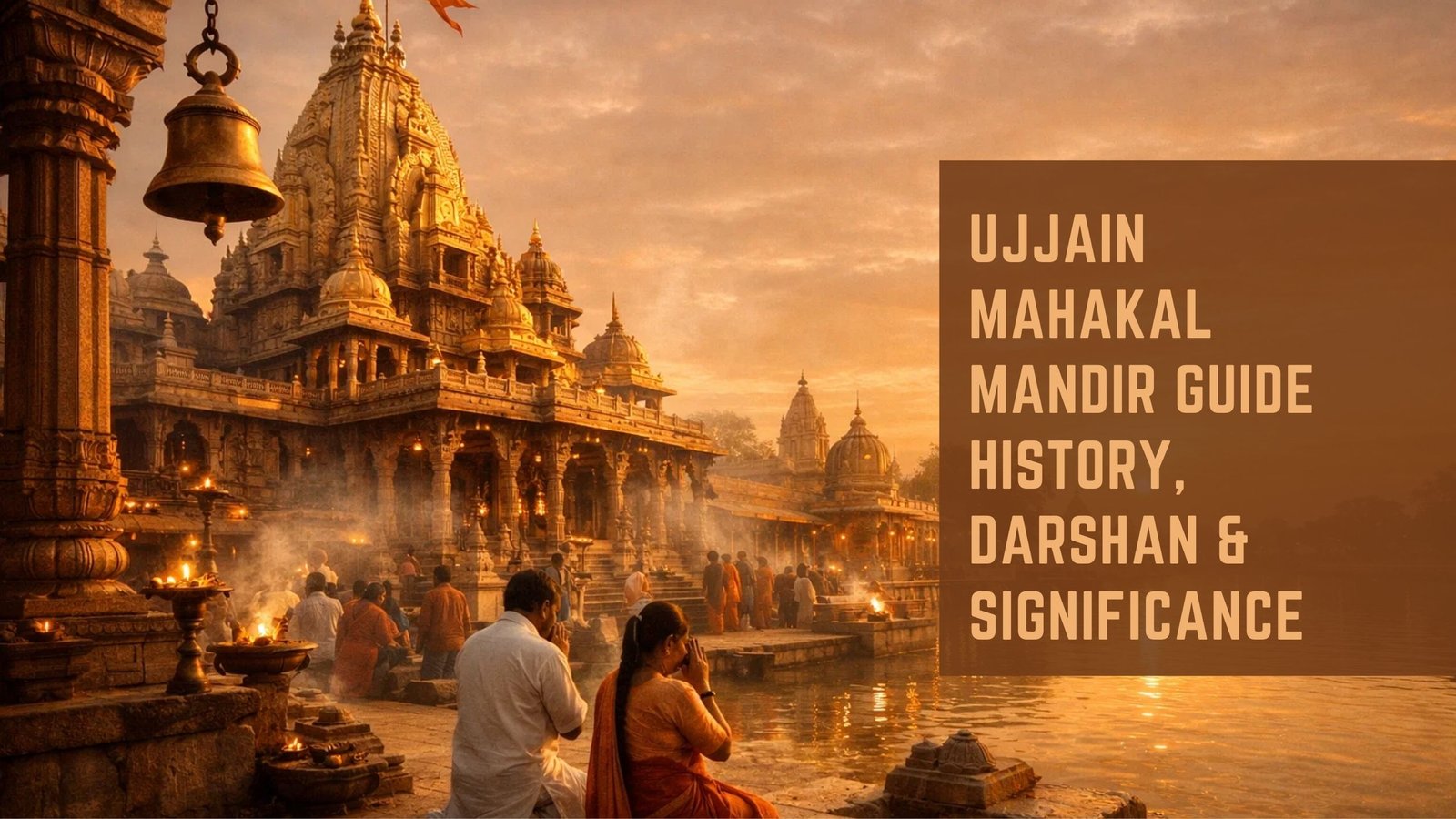
Welcome to Ujjain Mahakal Mandir, one of India’s most powerful spiritual destinations a sacred space where Lord Shiva is worshipped as Mahakal, the ruler of time and eternity. Unlike ordinary temples, Mahakal represents the cosmic force that governs life, death, and rebirth.
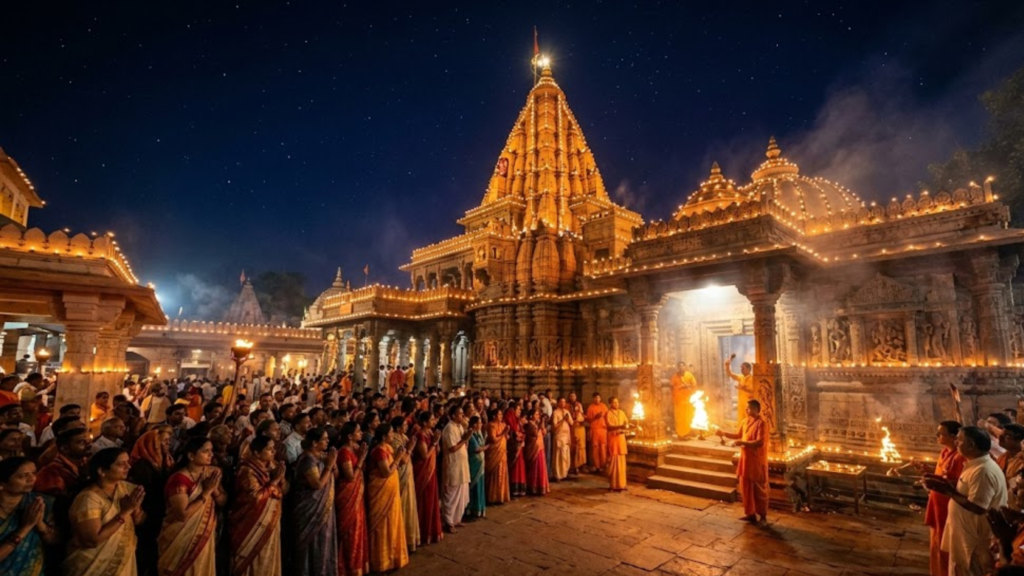
Situated in the ancient city of Ujjain on the banks of the holy Shipra River, the Mahakaleshwar Jyotirlinga is among the 12 sacred Jyotirlingas, believed to be manifestations of Shiva as divine light.
Millions of devotees visit every year seeking protection, peace, and spiritual awakening because Mahakal is not merely worshipped; He is experienced.
Table of Contents
Key Takeaways
- Mahakaleshwar Temple is one of the 12 Jyotirlingas of Lord Shiva.
- Located in Ujjain, Madhya Pradesh, near the Shipra River.
- The Shiva Lingam here is Swayambhu (self-manifested).
- Famous worldwide for the unique Bhasma Aarti ritual.
- The deity faces south a rare feature among Jyotirlingas.
- Represents Shiva as Mahakal Lord of Time.
- A major center of Hindu astronomy, spirituality, and pilgrimage.
The Sacred Identity of Ujjain Mahakal Mandir
What is Mahakaleshwar Jyotirlinga?
Mahakaleshwar Jyotirlinga symbolizes Shiva as the eternal cosmic pillar of light infinite and formless. According to Hindu scriptures, Shiva manifested as a blazing column to demonstrate divine supremacy and cosmic truth.
Unlike other temples:
- The Lingam is believed to generate spiritual energy from within.
- It is considered self-born, not installed by humans.
- Devotees believe Mahakal protects devotees from untimely death.
Spiritual Quote
“Time destroys everything, but devotion transcends time.”
History of Ujjain Mahakal Temple
Ancient Origins
The temple’s origins trace back to ancient Puranic times. Scriptures describe Ujjain (formerly Avantika) as a major spiritual and learning center.
According to legends:
- Prajapati Brahma is believed to have established the earliest shrine.
- King Chandrasena was a devoted worshipper of Shiva.
- Divine intervention of Shiva protected the city from enemies.
Medieval Destruction and Reconstruction
- The temple faced destruction during invasions in the 13th century.
- The sacred lingam was reportedly thrown into a nearby pond.
- Later rulers rebuilt and restored the temple complex.
This cycle of destruction and revival symbolizes faith’s resilience over time.
Architecture of Mahakal Temple
The temple reflects layered architectural evolution across centuries.
Key Features
- Five-storey temple structure.
- Underground sanctum (Garbhagriha).
- Massive courtyard and fortified walls.
- Sculpted spire (Shikhar).
- Brass lamps illuminating the sanctum.
The temple houses multiple deities:
- Lord Ganesha
- Goddess Parvati
- Kartikeya
- Nandi
- Nagchandreshwar (visible only on Nag Panchami)
Unique Feature South Facing Shiva
The Mahakal idol faces south (Dakshinamurti) extremely rare among Jyotirlingas and associated with tantric traditions.
Mythological Story Behind Mahakal
According to Shiva Purana:
A demon named Dushan terrorized Ujjain. Devotees prayed intensely to Shiva. Responding to their devotion, Shiva appeared as Mahakal, destroyed evil forces, and chose to reside permanently in Ujjain.
Lesson: Divine power manifests where devotion becomes fearless.
Bhasma Aarti The Most Mystical Ritual
What is Bhasma Aarti?
Bhasma Aarti is the temple’s most famous ritual, performed before sunrise using sacred ash symbolizing mortality and spiritual liberation.
- Timing: Around 4 AM – 6 AM.
- Represents the cycle of life and death.
- Reminds devotees that everything returns to ash.
The ritual attracts pilgrims from across the world.
Symbolism of Bhasma
| Element | Meaning |
|---|---|
| Ash (Bhasma) | Impermanence of life |
| Dawn timing | Spiritual awakening |
| Shiva worship | Freedom from ego |
| Chanting | Inner purification |
Spiritual Quote
“From ashes we rise, into eternity we merge.”
Daily Aarti & Darshan Timings
| Ritual | Approx Time |
|---|---|
| Bhasma Aarti | 4:00 AM |
| Morning Darshan | After Aarti |
| Bhog Aarti | 10:30 AM |
| Sandhya Aarti | Evening |
| Shayan Aarti | Night |
Online booking facilities now help manage crowds efficiently.
Festivals Celebrated at Mahakal Temple
Mahashivratri
The grandest celebration with night-long worship and massive fairs.
Shravan Month
Thousands of Kanwariyas visit daily.
Nag Panchami
Nagchandreshwar shrine opens once a year.
Spiritual Lessons from Mahakal Mandir
1. Time is Supreme
Mahakal teaches acceptance of change.
2. Ego Turns to Ash
Bhasma reminds us of humility.
3. Devotion Over Fear
True faith dissolves anxiety.
4. Life is Temporary, Soul Eternal
Wisdom of Mahakal
| Theme | Quote |
|---|---|
| Time | “Time bows only to truth.” |
| Devotion | “Faith makes the finite infinite.” |
| Death | “Endings are divine beginnings.” |
| Peace | “Silence is Shiva’s language.” |
Why Ujjain is Spiritually Powerful
Ujjain historically served as India’s central point for time calculation and astronomy. Mahakal is revered as the presiding deity of time itself.
The city blends:
- Spirituality
- Astronomy
- Sacred geography
- Ancient learning traditions
How to Reach Mahakal Temple
By Air
Nearest Airport: Indore (≈58 km).
By Rail
Ujjain Junction — about 2 km from temple.
By Road
Well connected to major cities in Madhya Pradesh.
Best Time to Visit
- October to March: Pleasant weather.
- Mahashivratri: Spiritual peak (crowded).
- Shravan month: Deep devotional atmosphere.
Visitor Guidelines
- Follow dress code during Bhasma Aarti.
- Carry ID for bookings.
- Arrive early due to heavy crowds.
Emotional Experience of Visiting Mahakal
Many devotees describe three stages:
- Curiosity before arrival
- Emotional surrender during darshan
- Inner calm after leaving
The temple atmosphere blends chanting, incense, bells, and devotion into a transformative experience.
Devotional Quote
“When you stand before Mahakal, time stands behind you.”
Life Lessons from Mahakal Mandir
- Accept impermanence.
- Live consciously.
- Surrender control.
- Practice humility.
- Value spiritual time over material success.
Mahakal teaches that life is not about escaping death but understanding eternity.
The Divine Energy of Ujjain Mahakal Mandir
Ujjain Mahakal Mandir is not only a sacred temple but a powerful spiritual center that attracts millions of devotees every year. The spiritual vibration of Ujjain Mahakal Mandir is believed to remove negativity and bring inner peace to those who visit with faith. Devotees consider Ujjain Mahakal Mandir a gateway to divine transformation because Lord Shiva here is worshipped as Mahakal — the ruler of time and destiny. The atmosphere inside Ujjain Mahakal Mandir creates a deep sense of surrender, where prayers feel more intense and spiritual connection becomes stronger. Pilgrims often say that a single darshan at Ujjain Mahakal Mandir feels equivalent to years of meditation.
Spiritual Importance of Ujjain Mahakal Mandir in Hindu Tradition
In Hindu spirituality, Ujjain Mahakal Mandir holds unmatched importance because it represents Shiva in his most powerful cosmic form. Scriptures describe Ujjain Mahakal Mandir as a place where divine energy constantly protects devotees from fear and suffering. Many saints and sages performed penance near Ujjain Mahakal Mandir, believing the temple amplifies spiritual growth. Visiting Ujjain Mahakal Mandir during Shravan or Mahashivratri is considered especially auspicious, as prayers offered at Ujjain Mahakal Mandir are believed to bring liberation and blessings for generations. The temple symbolizes the eternal truth that time governs all, yet devotion experienced at Ujjain Mahakal Mandir transcends time itself.
Why Devotees Feel Transformed After Visiting Ujjain Mahakal Mandir
A visit to Ujjain Mahakal Mandir is often described as emotionally overwhelming because the spiritual atmosphere deeply impacts the mind and heart. Many devotees report feeling calm and fearless after attending rituals at Ujjain Mahakal Mandir, especially the sacred Bhasma Aarti. The chanting, bells, and sacred ash ritual at Ujjain Mahakal Mandir remind visitors about the temporary nature of life and the permanence of the soul. Spiritual seekers believe that Ujjain Mahakal Mandir helps individuals release stress, ego, and attachment. This transformation is why countless pilgrims return repeatedly to Ujjain Mahakal Mandir, seeking guidance, peace, and divine reassurance.
Ujjain Mahakal Mandir as a Symbol of Faith and Eternal Time
The deeper meaning of Ujjain Mahakal Mandir lies in its symbolism of time, death, and rebirth. Lord Mahakal teaches that everything in life changes, yet spiritual truth remains eternal. The rituals performed daily at Ujjain Mahakal Mandir represent the continuous cycle of creation and dissolution. Devotees visiting Ujjain Mahakal Mandir learn acceptance, patience, and surrender through devotion. For many spiritual travelers, Ujjain Mahakal Mandir becomes more than a pilgrimage — it becomes a life lesson about humility and awareness. Ultimately, Ujjain Mahakal Mandir stands as a timeless reminder that faith connects humanity with the infinite.
FAQs
Why is Mahakal Temple famous?
Because it houses one of the 12 Jyotirlingas and hosts the unique Bhasma Aarti ritual.
What makes Mahakaleshwar different from other Jyotirlingas?
It is south-facing and believed to be self-manifested.
Can anyone attend Bhasma Aarti?
Yes, but advance booking and dress code compliance are required.
Which river flows near the temple?
The holy Shipra River.
Is photography allowed?
Usually restricted inside the sanctum.
Best time for darshan?
Early morning or non-festival weekdays.
Conclusion
Ujjain Mahakal Mandir is not just a pilgrimage destination; it is a philosophy carved into stone. Every bell echoes eternity, every chant dissolves ego, and every darshan reminds us that life is fleeting but consciousness is eternal.
Standing before Mahakal, one realizes a profound truth:
We do not control time time flows through us.
And perhaps that is why millions return again and again not just to seek blessings, but to rediscover themselves. Explore divine wisdom, spirituality, and sacred destinations with thegita.in where faith meets knowledge and every journey becomes a path toward inner peace.