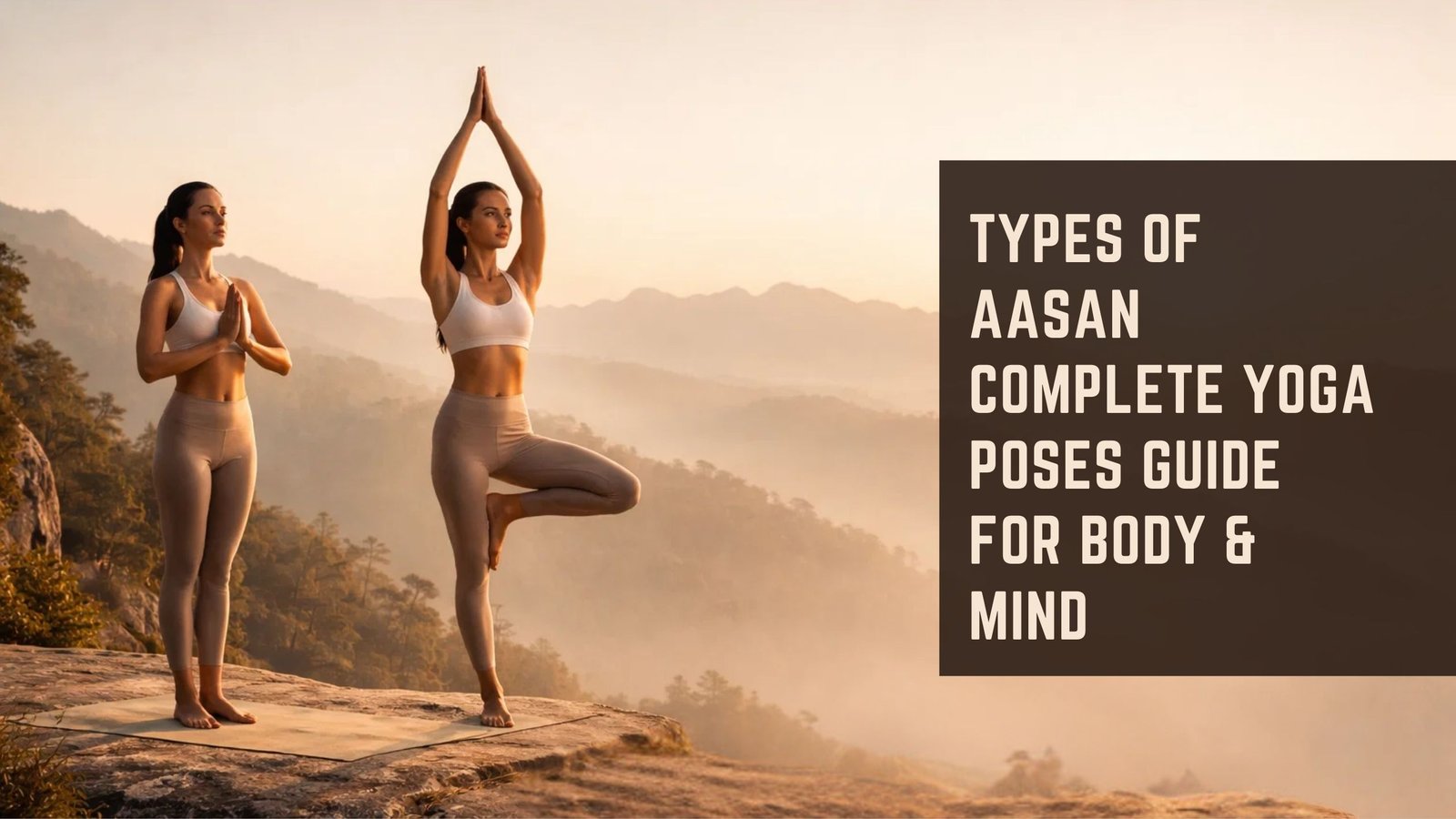
Yoga is not just exercise it is a sacred science of aligning the body, calming the mind, and awakening the soul. Among all limbs of Yoga, Aasan (आसन) plays a powerful role in building physical strength, mental clarity, emotional balance, and spiritual growth.
If you’ve ever wondered about the types of Aasan, their meanings, benefits, and deeper lessons, this complete guide will walk you through every major category of Aasan with practical insights, quotes, life lessons, and modern relevance.
“Yoga is the journey of the self, through the self, to the self.” Bhagavad Gita
Table of Contents
Key Takeaways
- Aasan means a stable and comfortable posture for mind–body harmony
- There are multiple types of Aasan, each serving unique physical and mental benefits
- Yoga postures are classified based on body position and purpose
- Practicing different Aasan types improves flexibility, focus, digestion, posture, and inner peace
- Aasan teaches discipline, patience, and self-awareness
- Regular Aasan practice supports modern lifestyle health issues like stress, back pain, and fatigue
What is Aasan? (Meaning & Essence)
The Sanskrit word “Aasan” (आसन) means a posture in which one can sit comfortably and steadily. In classical Yoga, Aasan is not only a physical pose but a state of balance between effort and ease.
“स्थिरसुखमासनम्”
“Aasan should be stable and comfortable.” Patanjali Yoga Sutra
Aasan prepares the body for meditation, improves circulation, balances energy channels, and connects breath with movement.
Main Types of Aasan (Yoga Posture Categories)
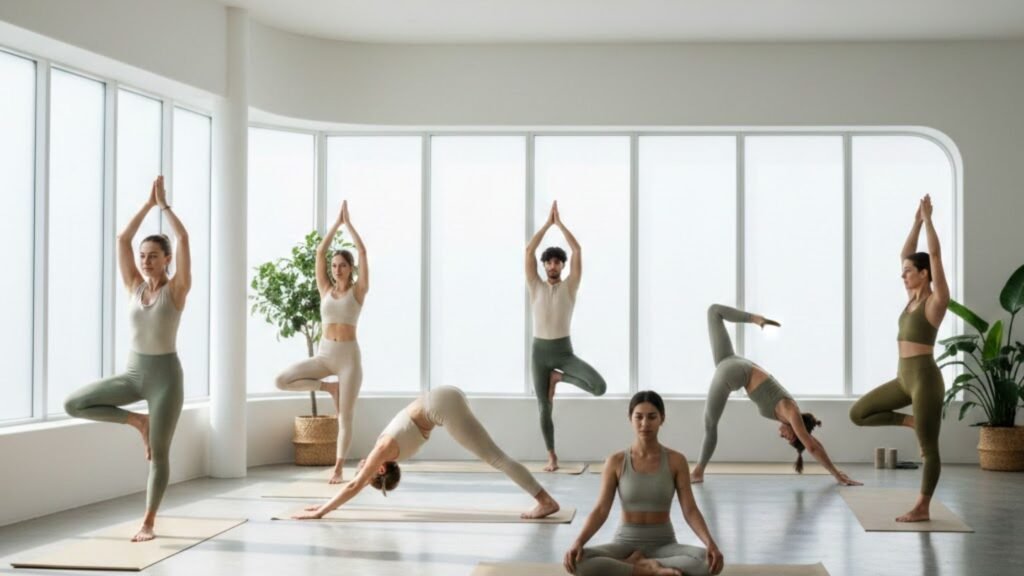
Yoga postures are traditionally classified based on body positioning and movement. Below are the major types of Aasan with examples and benefits:
1. Sitting Aasan (Seated Postures)
Sitting Aasan are designed to improve posture, digestion, flexibility of hips and knees, and meditation stability.
Popular Sitting Aasan:
- Padmasana (Lotus Pose)
- Sukhasana (Easy Pose)
- Vajrasana (Thunderbolt Pose)
- Baddha Konasana (Butterfly Pose)
Benefits:
- Enhances concentration
- Improves digestion
- Supports meditation and pranayama
- Relieves stiffness in hips and knees
“A calm posture creates a calm mind.”
Life Lesson:
Sitting Aasan teaches stillness and patience. Just like life, inner stability comes from calm posture and steady breathing.
2. Supine Aasan (Lying on the Back)
These Aasan relax the body, improve spinal alignment, and activate core muscles.
Popular Supine Aasan:
- Shavasana (Corpse Pose)
- Setu Bandhasana (Bridge Pose)
- Pavanamuktasana (Wind-Relieving Pose)
- Supta Padangusthasana
Benefits:
- Relaxes nervous system
- Improves digestion
- Reduces stress
- Strengthens lower back
“Rest is not laziness; it is restoration.”
Modern Relevance:
In today’s stressful lifestyle, supine Aasan help release mental fatigue and restore emotional balance.
3. Prone Aasan (Lying on the Stomach)
These poses strengthen the spine, improve posture, and energize internal organs.
Popular Prone Aasan:
- Bhujangasana (Cobra Pose)
- Dhanurasana (Bow Pose)
- Makarasana (Crocodile Pose)
- Shalabhasana (Locust Pose)
Benefits:
- Strengthens back muscles
- Improves lung capacity
- Stimulates digestion
- Corrects slouching posture
“Open your heart, and your body will follow.”
Life Lesson:
Prone Aasan teach courageopening the chest reminds us to face life with confidence.
4. Standing Aasan (Upright Postures)
Standing Aasan build strength, balance, stamina, and confidence.
Popular Standing Aasan:
- Tadasana (Mountain Pose)
- Trikonasana (Triangle Pose)
- Virabhadrasana (Warrior Pose)
- Vrikshasana (Tree Pose)
Benefits:
- Improves posture
- Strengthens legs
- Enhances balance
- Builds confidence
“Stand tall. Your body teaches your mind how to rise.”
Modern Relevance:
Standing Aasan counter sedentary lifestyle issues like weak legs, poor posture, and low energy.
5. Inverted Aasan (Upside-Down Postures)
In inverted poses, the head comes below the heart, improving circulation to the brain.
Popular Inverted Aasan:
- Sarvangasana (Shoulder Stand)
- Halasana (Plow Pose)
- Viparita Karani
Benefits:
- Improves blood flow to brain
- Boosts thyroid function
- Reduces fatigue
- Enhances memory
“Sometimes, seeing life upside down brings clarity.”
Life Lesson:
Inverted Aasan remind us to change perspectives in difficult situations.
6. Twisting Aasan (Spinal Twists)
These Aasan detoxify internal organs and improve spinal flexibility.
Popular Twisting Aasan:
- Ardha Matsyendrasana
- Bharadvajasana
- Parivrtta Trikonasana
Benefits:
- Improves digestion
- Detoxifies liver
- Relieves back pain
- Improves flexibility
“Twist the body, untangle the mind.”
7. Balancing Aasan
Balancing poses develop focus, coordination, and inner stability.
Popular Balancing Aasan:
- Vrikshasana (Tree Pose)
- Garudasana (Eagle Pose)
- Natarajasana (Dancer Pose)
Benefits:
- Improves concentration
- Enhances coordination
- Builds inner discipline
“Balance in posture creates balance in life.”
Wisdom on Types of Aasan & Yoga
| Quote | Meaning |
|---|---|
| “Yoga is harmony of body, mind, and soul.” | Aasan connects physical and inner balance |
| “In stillness, you find strength.” | Calm posture brings inner power |
| “Your body listens to your thoughts.” | Positive mindset improves posture |
| “Every posture is a lesson in awareness.” | Aasan builds mindfulness |
Health Benefits of Practicing Different Types of Aasan
- Improves flexibility & strength
- Enhances digestion & metabolism
- Boosts immunity
- Reduces stress & anxiety
- Improves posture
- Supports heart health
- Enhances mental clarity
- Promotes emotional balance
Modern Relevance of Types of Aasan
In the age of digital screens, long sitting hours, and mental overload, Aasan is a natural solution to:
- Back pain
- Neck stiffness
- Obesity
- Anxiety
- Sleep disorders
- Low energy
“Yoga does not change only the way we see things, it transforms the person who sees.”
Life Lessons from Aasan Practice
- Consistency beats intensity
- Discipline brings freedom
- Patience leads to mastery
- Self-awareness creates growth
- Breath teaches control over reactions
Beyond Physical Postures
The true essence of Aasan goes far beyond flexibility or muscle strength. In yogic philosophy, Aasan is a doorway to inner stillness. When the body becomes stable and comfortable, the mind naturally settles. This calmness allows deeper awareness of breath, thoughts, and emotions. Practicing different types of Aasan regularly helps dissolve physical tension stored in the body due to stress, fear, and overthinking. Over time, the practitioner begins to experience harmony between body posture and mental posture, creating a foundation for meditation and self-realization.
“When the body is steady, the mind becomes steady; when the mind is steady, the soul begins to shine.”
Different Types of Aasan
Every type of Aasan teaches a subtle life lesson. Standing Aasan teach confidence and grounding—just as a tree stands firm against storms, we learn to remain stable during challenges. Balancing Aasan remind us that focus and patience are essential in both yoga and life; losing attention causes imbalance. Twisting Aasan symbolize letting go of emotional toxins, grudges, and negativity. Inverted Aasan teach us the power of changing perspective—sometimes solutions appear only when we look at problems from a new angle. Through consistent Aasan practice, discipline, humility, and self-awareness naturally develop within the practitioner.
“Yoga does not teach you how to touch your toes; it teaches you what you learn on the way down.”
Aasan in Today’s Lifestyle
In today’s fast-paced digital world, people suffer from lifestyle disorders such as back pain, neck stiffness, anxiety, obesity, and mental fatigue. Different types of Aasan act as a natural corrective system for these modern problems. Sitting and supine Aasan help counter long hours of desk work, while standing and balancing Aasan restore strength and posture weakened by sedentary habits. Prone and twisting Aasan stimulate digestion, which is often disturbed by irregular eating patterns. Practicing Aasan daily becomes a powerful tool for digital detox, emotional regulation, and restoring natural energy flow in the body.
“In a world that moves fast, Aasan teaches you to slow down and breathe.”
FAQ
Q1. How many types of Aasan are there?
There are dozens of Aasan, but they are mainly classified into sitting, standing, supine, prone, inverted, twisting, and balancing categories.
Q2. Which Aasan is best for beginners?
Sukhasana, Tadasana, Vajrasana, and Shavasana are best for beginners.
Q3. Can Aasan cure diseases?
Aasan supports healing and prevention but should complement medical advice.
Q4. How long should one practice Aasan daily?
20–45 minutes daily is beneficial for most people.
Q5. Is Aasan suitable for all ages?
Yes, with proper guidance and modifications.
Conclusion
Understanding the types of Aasan opens the gateway to holistic health. Each posture is more than a physical shape it is a doorway to discipline, awareness, healing, and inner peace. Whether seated in calmness, standing in strength, twisting through tension, or resting in surrender, every Aasan teaches a lesson about balance in life.
“The body benefits from movement, and the mind benefits from stillness.”
Make Aasan your daily ritual, and let your body become your temple of awareness. Discover more authentic yoga wisdom, quotes, and life lessons at thegita.in.