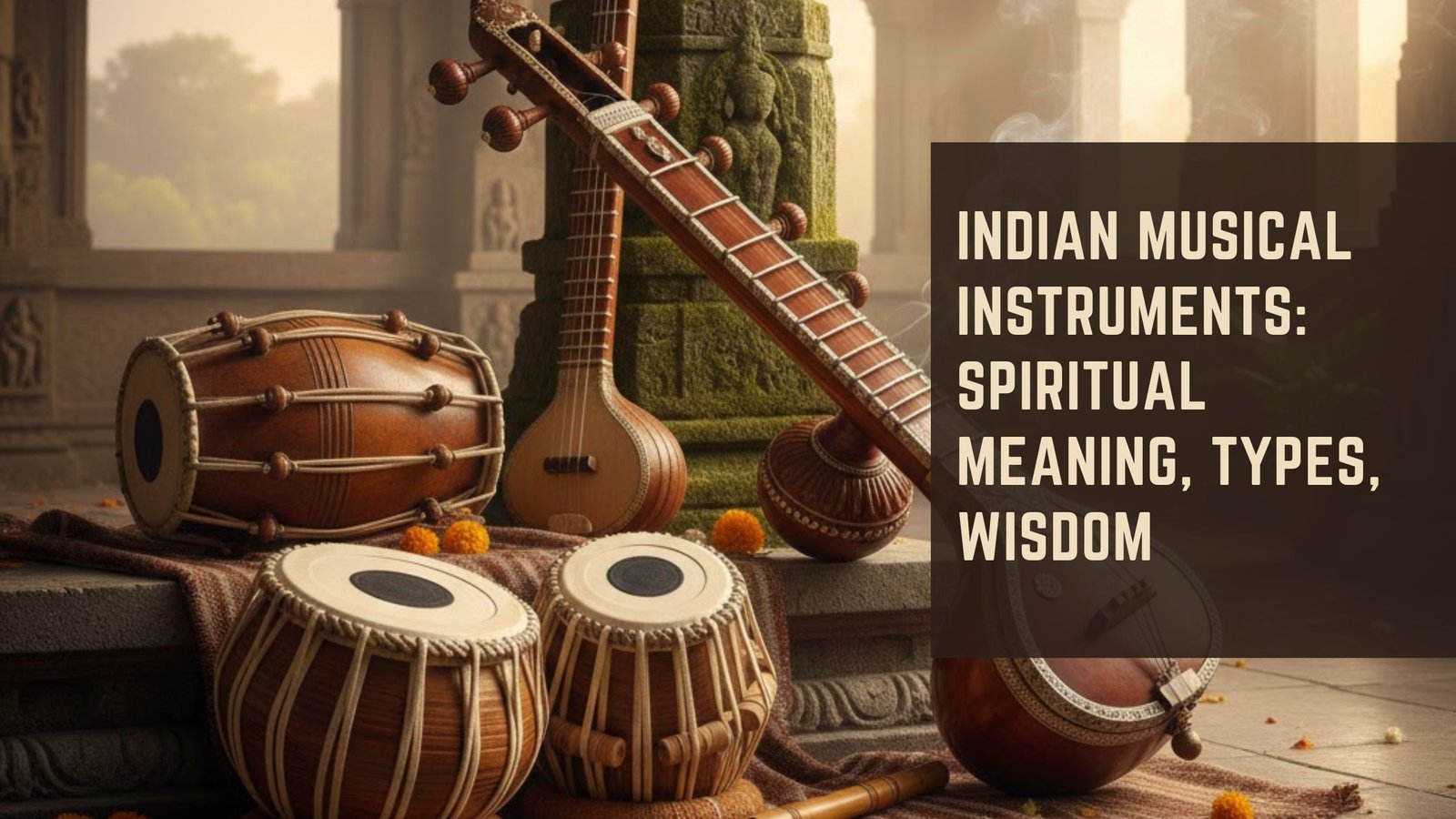
Indian musical instruments are not merely tools for producing sound; they are sacred mediums through which emotions, devotion, discipline, and divine consciousness flow. From ancient temples to royal courts, from folk gatherings to spiritual ashrams, Indian musical instruments have played a central role in shaping India’s cultural, spiritual, and philosophical identity. Each instrument carries within it centuries of wisdom, sadhana (spiritual practice), and inner stillness.
In Indian philosophy, sound (Nāda) is considered the origin of creation. The universe itself is believed to have emerged from the primordial vibration, “Om.” Indian musical instruments are deeply connected to this belief, making music not entertainment alone, but a spiritual path.
Table of Contents
The Spiritual Essence of Indian Musical Instruments
musical instruments are rooted in the idea that music purifies the mind and elevates the soul. Ancient scriptures describe music as “Nāda Yoga”—the yoga of sound. When played with devotion and discipline, these instruments help dissolve ego, calm restlessness, and guide the seeker toward inner silence.
“Music is the bridge between the material and the divine.”
The vibration produced by musical instruments aligns the human mind with cosmic rhythm. This is why saints, sages, and yogis embraced music as a form of meditation.
Classification of Indian Musical Instruments
musical instruments are traditionally classified into four major categories based on the method of sound production.
Tata Vadya – String Instruments
String instruments hold a special place in Indian spirituality. They symbolize harmony between tension and relaxation—just like human life.
Prominent String Instruments:
- Veena – Associated with Goddess Saraswati, symbolizing wisdom and learning
- Sitar – Represents emotional depth and cosmic resonance
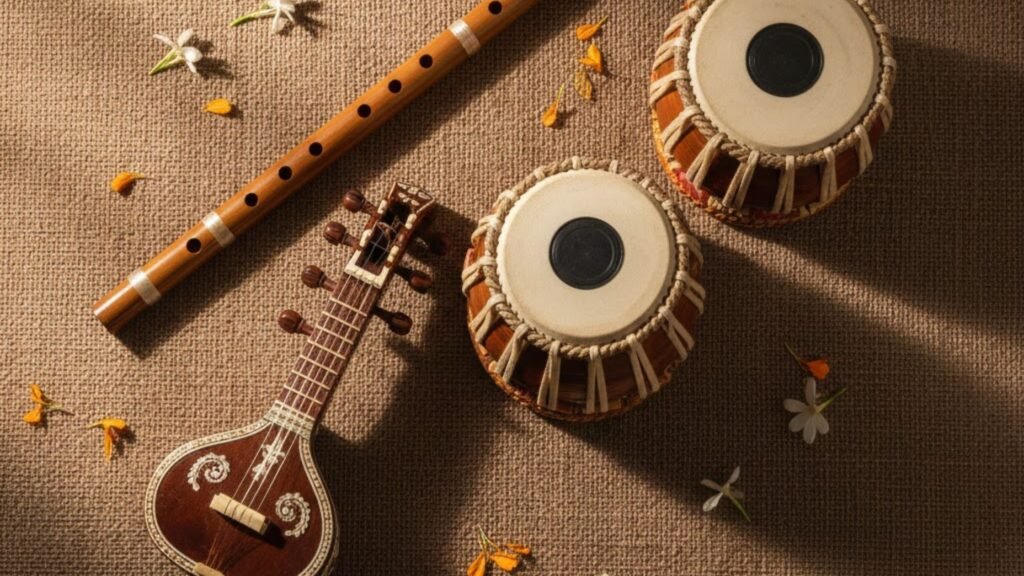
- Tanpura – Creates a continuous drone, symbolizing the eternal sound of the universe
- Sarod – Known for deep, meditative tones
Spiritual Lesson:
Just as strings must be tuned correctly to create music, life must be balanced to experience peace.
“When the strings of life are in harmony, the soul sings.”
Avanaddha Vadya – Percussion Instruments
Percussion instruments reflect the rhythm of life—birth, breath, heartbeat, and time.
Major Percussion Instruments:
- Tabla – Symbolizes balance between logic and creativity
- Mridangam – Sacred instrument in temple traditions
- Pakhawaj – Deep, resonant, and devotional
- Dholak – Folk rhythm connecting community and celebration
Spiritual Lesson:
Rhythm teaches discipline. Without rhythm, music becomes noise—just as life without discipline becomes chaos.
“The rhythm you follow decides the direction of your journey.”
3. Sushira Vadya – Wind Instruments
Wind instruments are closely associated with breath (Prana), the life force.
Important Wind Instruments:
- Bansuri – The flute of divine love, associated with Lord Krishna
- Shehnai – Symbol of auspicious beginnings
- Nadaswaram – Powerful temple instrument of South India
Spiritual Lesson:
Music flows only when ego is empty—just like the flute that sings only when hollow.
“Empty yourself, and the divine will flow through you.”
4. Ghana Vadya – Solid Instruments
These instruments produce sound through vibration of solid material and are often used in devotional music.
Examples:
- Manjira – Used in bhajans and kirtans
- Ghungroo – Worn by dancers, symbolizing devotion through movement
- Kartal – Used in folk and spiritual singing
Spiritual Lesson:
Even the simplest sound, when offered with devotion, reaches the divine.
Indian Musical Instruments in Scriptures and Spiritual Texts
Ancient texts like the Vedas, Upanishads, and Natya Shastra emphasize the spiritual role of music. Instruments were considered tools for inner awakening rather than performance.
“Nāda Brahma – The universe itself is sound.”
Music was used in yajnas, meditation, temple rituals, and storytelling to transmit spiritual knowledge.
The Role of Indian Musical Instruments in Devotion
Bhajans, kirtans, and temple music rely heavily on musical instruments. These sounds are meant to dissolve the ego and awaken devotion.
Why instruments matter in devotion:
- They focus the wandering mind
- They create collective spiritual energy
- They help express emotions beyond words
“Where words fail, music speaks to the soul.”
Life Lessons from Indian Musical Instruments
Indian musical instruments silently teach profound life lessons:
- Discipline: Regular practice leads to mastery
- Patience: Music unfolds slowly, just like wisdom
- Humility: The instrument shines, not the performer
- Balance: Harmony arises from controlled effort
“Music teaches us to listen—first to sound, then to silence.”
Indian Musical Instruments in Modern Times
Even in the modern world, Indian musical instruments continue to inspire meditation, therapy, and spiritual healing. Sound healing practices now use traditional instruments to balance emotions and calm the nervous system.
Despite technological change, the soul of Indian music remains timeless.
The essence of Indian musical instruments lies in their power to transform sound into devotion and silence into self-realization, as echoed in the wisdom of the Gita.
Indian Musical Instruments and the Philosophy of the Gita
The Bhagavad Gita teaches that harmony in life arises when action, intention, and awareness move together. Indian musical instruments reflect this same philosophy. Every note demands attention, every rhythm requires discipline, and every pause holds meaning. Just as the Gita emphasizes yoga as balance, music reminds us that true beauty emerges only when effort and surrender coexist. Playing or listening to Indian musical instruments becomes an inward journey—one that gently aligns the seeker with dharma and inner stillness.
“When the mind is steady like rhythm, wisdom flows effortlessly.”
Sound, Silence, and Self-Realization
In the Gita, silence is not emptiness but awareness. Indian musical instruments guide the listener from sound toward silence. The note arises, vibrates, and dissolves—leaving behind awareness. This mirrors the spiritual path described in the Gita, where attachment dissolves into understanding. Instruments like the tanpura and flute teach us that what follows sound is as important as sound itself. In that silent space, the soul listens to its own truth.
“Sound prepares the mind; silence reveals the self.”
Music as Karma Yoga in Daily Life
The Gita teaches Karma Yoga—performing one’s duty with dedication and without ego. Indian musical instruments embody this teaching beautifully. A musician practices daily, often for years, without seeking immediate reward. The focus remains on purity of effort rather than applause. In this way, music becomes spiritual discipline. Every practice session turns into devotion, every performance into offering, and every mistake into learning—just as the Gita advises for life itself.
“When action becomes offering, even music becomes meditation.”
FAQs
What is the spiritual importance of Indian musical instruments?
musical instruments help align the mind with universal vibration and promote inner peace and self-awareness.
Which Indian instrument is most associated with spirituality?
The Veena, Bansuri, and Tanpura are deeply associated with spiritual practices and devotion.
How are Indian musical instruments classified?
They are classified into Tata (string), Avanaddha (percussion), Sushira (wind), and Ghana (solid) instruments.
Can music really help in spiritual growth?
Yes, sound vibrations calm the mind, deepen focus, and support meditation and devotion.
Conclusion
musical instruments are sacred companions on the spiritual journey. They remind us that life itself is a rhythm, a melody, and a vibration flowing toward silence. When played with devotion, these instruments do not just create music—they awaken consciousness.
“When music ends, silence begins—and in that silence, the soul finds home.”
By understanding musical instruments not just technically but spiritually, we reconnect with the ancient wisdom that sees music as prayer, rhythm as discipline, and sound as the voice of the divine.
Let every sound lead you closer to truth through the wisdom of the Gita. Read more sacred insights at thegita.in.