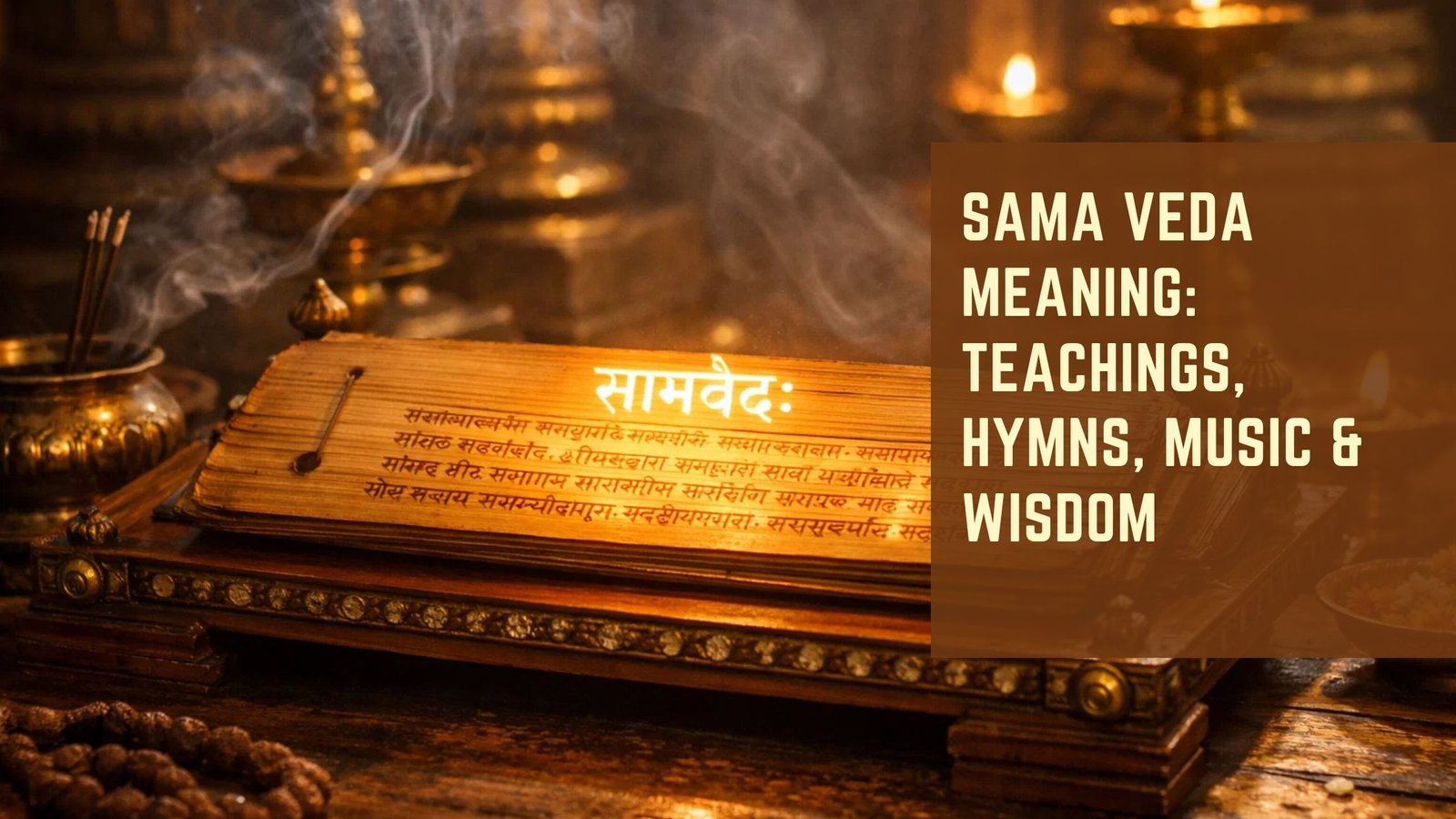
The Sama Veda meaning goes far beyond a literal translation. The word Sama originates from the Sanskrit root “Sam”, which means melody, song, or harmonious sound. Thus, Sama Veda meaning can be understood as “The Veda of melodies and sacred chants.” Among the four Vedas, the Sama Veda holds a unique place because it transforms spiritual wisdom into musical expression, allowing the human soul to connect with the divine through sound.
In ancient India, knowledge was not only read or memorized but sung. The Sama Veda meaning reflects this sacred tradition where devotion, discipline, and divine awareness merge into rhythm and tone. Even today, its influence can be felt in Indian classical music, spiritual chanting, and meditative practices.
Table of Contents
What Is the Sama Veda?
The Sama Veda is one of the four primary Vedas of Hindu philosophy, the others being the Rig Veda, Yajur Veda, and Atharva Veda.
While the Rig Veda focuses on hymns, the Yajur Veda on rituals, and the Atharva Veda on daily life and healing, the Sama Veda meaning lies in musical worship. Most of its verses are adapted from the Rig Veda but are arranged specifically to be sung during sacred ceremonies.
Key Identity of the Sama Veda
- Known as the Veda of Music
- Focuses on melodic chanting
- Recited during yajnas and soma rituals
- Considered the foundation of Indian musical tradition

Etymology and Deeper Sama Veda Meaning
The Sanskrit term Sāman signifies:
- Harmony
- Calmness
- Balance
- Musical resonance
Thus, the deeper Sama Veda meaning is the science of harmonizing the inner self with cosmic order through sound. It teaches that sound is not merely vibration—it is consciousness itself.
“Nāda Brahma” – Sound is Divine.
This principle is the heart of the Sama Veda meaning.
Structure of the Sama Veda
The Sama Veda consists of approximately 1,875 verses, though many are repeated variations meant for musical adaptation.
Major Parts of the Sama Veda
- Purvarchika – Hymns arranged for melodies
- Uttararchika – Verses for specific rituals
- Gramageya Gana – Songs for village performance
- Aranyageya Gana – Forest chants for meditation
Each section reinforces the Sama Veda meaning by guiding how sacred sound should be experienced in different settings—social, ritualistic, and meditative.
Sama Veda and the Power of Sound
One of the most profound aspects of the Sama Veda meaning is its recognition of sound as a spiritual force. According to Vedic thought, the universe itself was created through vibration (Om).
The Sama Veda teaches:
- Sound purifies the mind
- Melody stabilizes emotions
- Rhythm aligns human consciousness with nature
This is why Sama Vedic chanting follows strict tonal rules. Even a slight deviation could alter the spiritual effect.
Famous Quote Reflecting Sama Veda Meaning
“Through sacred song, the soul ascends toward truth.”
— Sama Vedic Teaching
This quote captures the essence of Sama Veda meaning: liberation through harmonious expression.
Sama Veda and Indian Classical Music
Indian classical music owes its spiritual roots to the Sama Veda. The concepts of:
- Raga (melodic framework)
- Tala (rhythmic cycle)
- Swara (musical notes)
all trace back to Sama Vedic chanting traditions.
Life Insight
Music is not entertainment alone—it is discipline, devotion, and meditation.
This understanding emerges directly from the Sama Veda meaning.
Philosophical Teachings of the Sama Veda
Beyond music, the Sama Veda conveys deep philosophical truths:
1. Harmony in Life
Just as music requires balance, life demands equilibrium between desire, duty, and devotion.
2. Discipline Leads to Freedom
The strict musical rules of the Sama Veda teach that structure creates inner freedom.
3. Inner Silence Through Sound
Ironically, sacred sound leads to inner stillness—a paradox central to the Sama Veda meaning.
Sama Veda Meaning in Daily Life
The Sama Veda meaning is not limited to rituals. Its principles can be applied daily:
- Speak gently and truthfully
- Maintain harmony in relationships
- Begin the day with calming sound or mantra
- Respect silence as much as speech
In modern times filled with noise, the Sama Veda reminds us that true sound creates peace, not chaos.
Spiritual Lessons from the Sama Veda
Lesson 1: Sound Shapes Consciousness
What we hear and speak influences our thoughts.
Lesson 2: Devotion Can Be Joyful
Spirituality need not be rigid; it can flow like music.
Lesson 3: Unity Through Vibration
All beings respond to harmony—this is universal truth embedded in the Sama Veda meaning.
Sama Veda and Meditation
Many meditative traditions unknowingly apply Sama Vedic wisdom:
- Chanting mantras
- Listening to soothing sounds
- Breath synchronized with rhythm
These practices awaken inner awareness, just as envisioned in the Sama Veda meaning thousands of years ago.
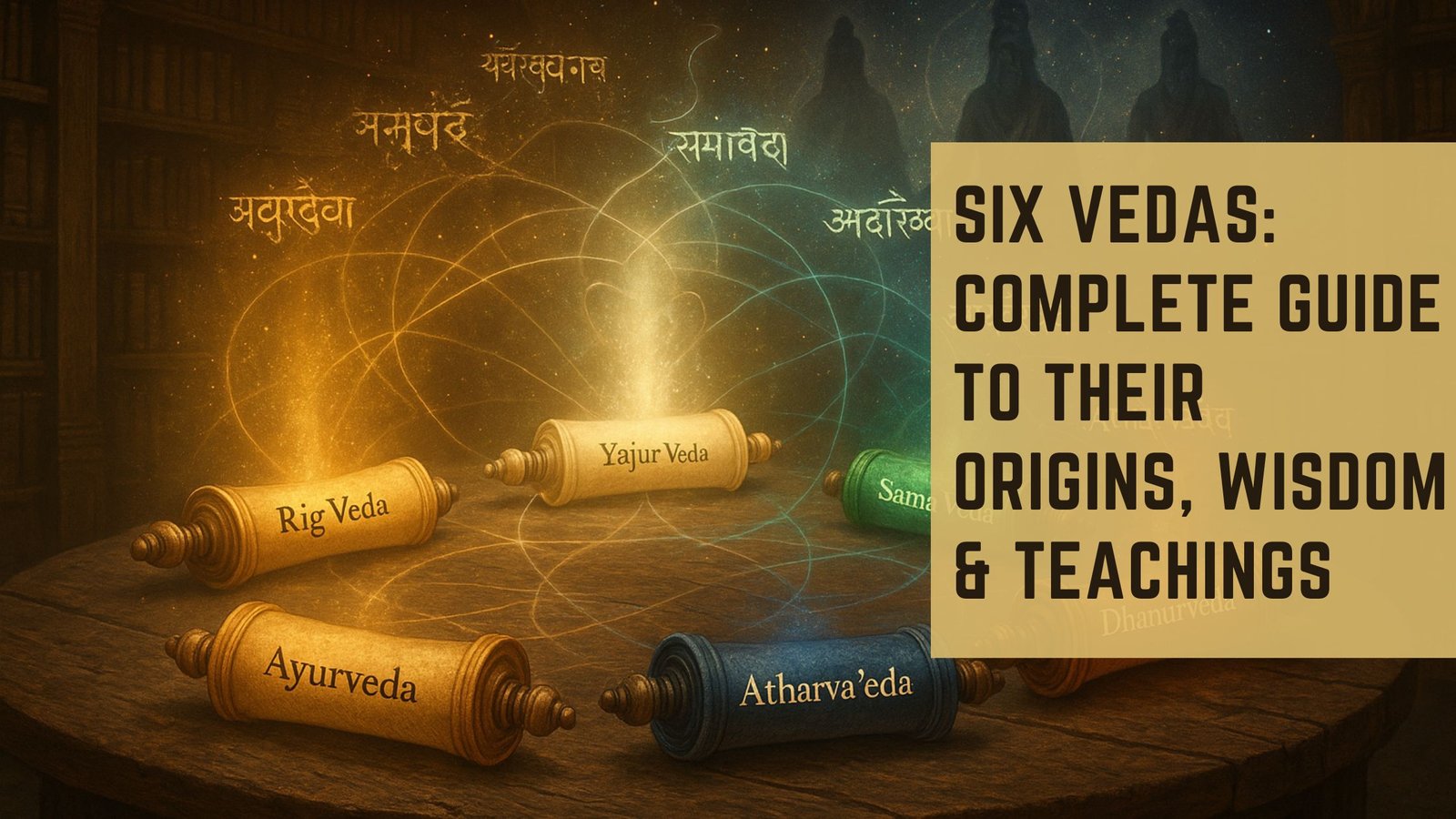
Sama Veda vs Other Vedas
| Veda | Core Focus |
|---|---|
| Rig Veda | Hymns and praise |
| Yajur Veda | Ritual procedures |
| Atharva Veda | Daily life and healing |
| Sama Veda | Melody and spiritual sound |
This comparison highlights why the Sama Veda meaning stands apart—it transforms knowledge into experience.
Modern Relevance of the Sama Veda
In today’s stressful world, the Sama Veda meaning is more relevant than ever:
- Music therapy aligns with its principles
- Sound healing reflects its wisdom
- Mindfulness practices echo its teachings
Science now confirms what the Sama Veda taught intuitively: sound can heal the mind and body.
The essence of the Sama Veda lies in transforming sacred knowledge into divine melody and inner harmony.
FAQs
What is the simple meaning of Sama Veda?
The Sama Veda meaning in simple words is the sacred knowledge of divine music and chanting.
How is Sama Veda different from Rig Veda?
The Rig Veda focuses on hymns, while the Sama Veda adapts those hymns into melodies for singing.
Is Sama Veda still relevant today?
Yes, its influence continues in music, meditation, and sound-based healing practices.
How many verses are in the Sama Veda?
It contains around 1,875 verses, mostly adapted from the Rig Veda.
What is the main teaching of Sama Veda?
The main teaching is achieving spiritual harmony through sound and disciplined expression.
Conclusion
The Sama Veda meaning is a timeless reminder that spirituality is not only to be understood—it is to be felt. Through melody, rhythm, and sacred sound, the Sama Veda bridges the human heart with the cosmic order. It teaches harmony over conflict, discipline over chaos, and devotion over fear.
In a world overwhelmed by noise, the Sama Veda invites us back to meaningful sound, where every note becomes a prayer and every breath a song of consciousness.
For deeper explorations of Vedic wisdom, sacred verses, and life-transforming insights, continue your spiritual journey with thegita.in, where ancient knowledge meets modern understanding.