The Om symbol is not just a sacred sign—it is the original vibration of the universe, the sound from which all creation emerged. Across Hinduism, Buddhism, Jainism, and yoga philosophy, Om is regarded as the supreme cosmic sound, the bridge between the material and the spiritual, the eternal and the temporary.
From ancient Vedic scriptures to modern meditation halls, the Om symbol continues to guide humanity toward self-realization, peace, and higher consciousness. This blog explores every dimension of the Om symbol—its origin, layers of meaning, scientific perspective, spiritual benefits, practical lessons, quotes, and frequently asked questions.
Table of Contents
What Is the Om Symbol?
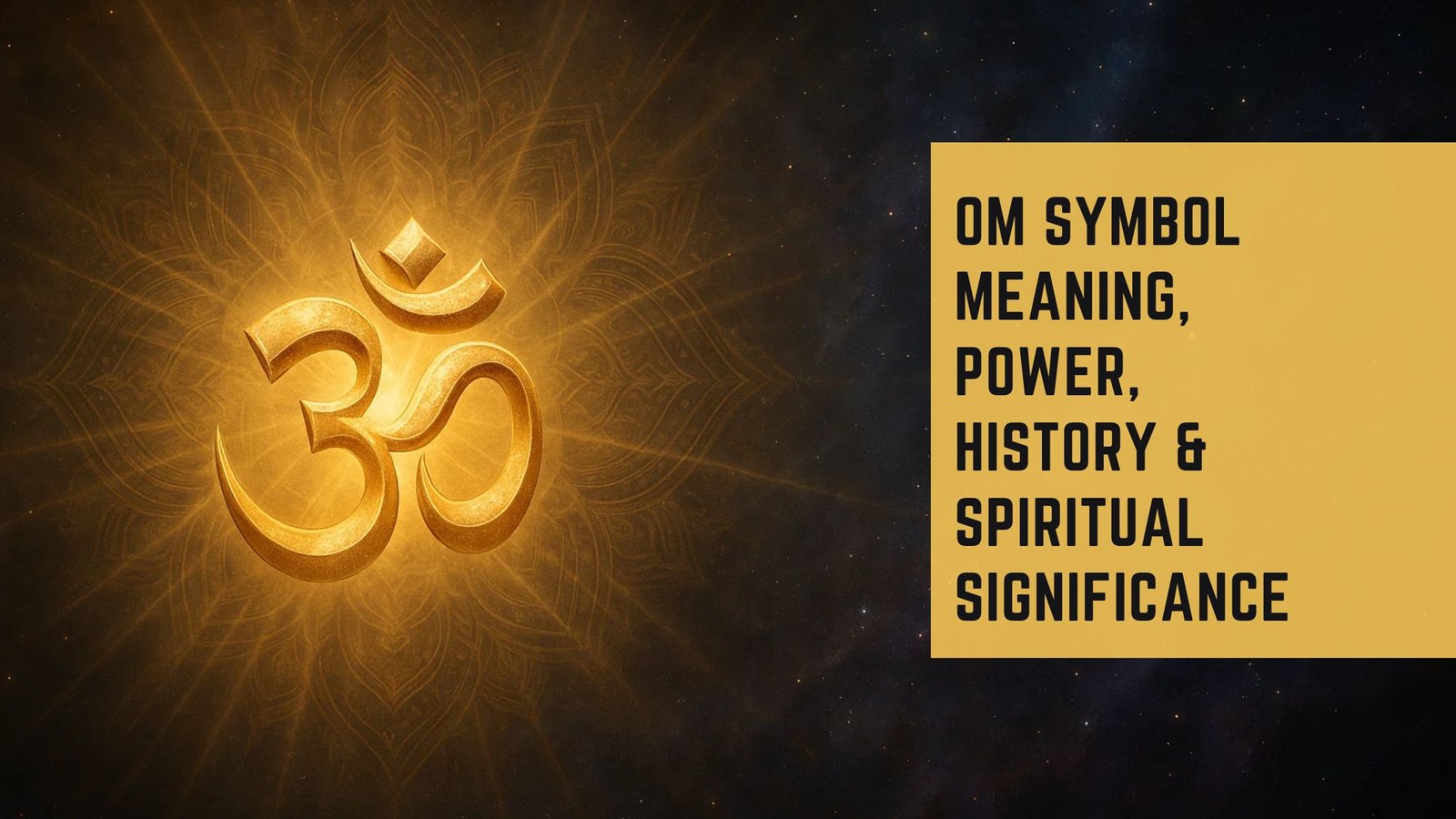
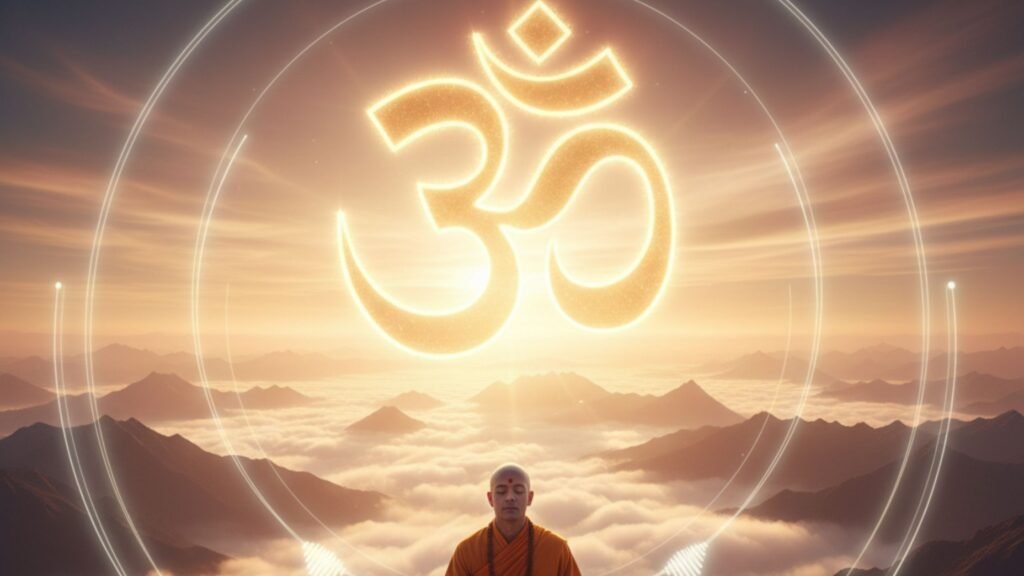
The Om symbol (ॐ) represents a sacred sound, a spiritual icon, and the vibration of existence itself. It is pronounced as A-U-M, a three-fold sound merging into one eternal resonance.
- A – Represents creation
- U – Represents preservation
- M – Represents dissolution
- The silence after chanting represents pure consciousness (Turiya)
“Om is the sound of the infinite, the syllable of eternity.” — Mandukya Upanishad
The symbol is both form and formlessness, both sound and silence—a reminder that truth exists beyond words.
Origin of the Om Symbol in Ancient Scriptures
The symbol appears for the first time in the Vedas, the oldest scriptures known to humanity. It is repeatedly mentioned in:
- Rig Veda
- Yajur Veda
- Sama Veda
- Atharva Veda
- Upanishads
- Bhagavad Gita
In the Mandukya Upanishad, Om is described as the complete map of consciousness—waking, dreaming, deep sleep, and the transcendental state.
संक्षेपेण ओंकार एव सर्वम्।
“Om alone is the whole universe in essence.”
Om is not a human invention—it is believed to be heard by sages in deep meditation as the primordial hum of creation.
Symbolic Structure of the Om Symbol
The written symbol consists of four distinct curves and a dot, each carrying deep philosophical meaning:
- Lower Curve – Waking state (Jagrat)
- Middle Curve – Dream state (Swapna)
- Upper Curve – Deep sleep (Sushupti)
- Dot – Absolute consciousness (Turiya)
- Semi-circle – Illusion (Maya)
This symbolic design teaches that human awareness evolves from illusion to illumination.
Om in Hinduism, Buddhism & Jainism
✔ Hinduism
Om represents Brahma (creator), Vishnu (preserver), and Shiva (destroyer). It is chanted before every ritual, mantra, and scripture reading.
✔ Buddhism
Om appears in mantras like “Om Mani Padme Hum”, symbolizing compassion, purity, and wisdom.
✔ Jainism
Om unites the five supreme beings—Arihant, Asharira, Acharya, Upadhyaya, and Muni.
Thus, the symbol transcends all religious boundaries and speaks to universal consciousness.
Scientific Perspective of the Om Symbol
Modern science has astonishingly aligned with ancient wisdom regarding Om:
- Chanting Om produces vibrations at 432 Hz, a frequency linked to natural harmony.
- MRI scans show activation in the vagus nerve, reducing stress and anxiety.
- Om chanting calms the amygdala, responsible for fear and emotional turbulence.
- The vibration synchronizes both brain hemispheres.
Scientists now recognize Om chanting as a neurological and psychological therapy for emotional balance and mental clarity.
Om Symbol in Yoga and Meditation
In yoga, Om is the gateway to inner stillness. Every yoga practice begins and ends with Om chanting because it:
- Centers the mind
- Clears mental clutter
- Aligns breath and awareness
- Awakens higher consciousness
- Purifies internal energy channels (Nadis)
“When you chant Om, you align your personal vibration with the cosmic rhythm.”
Even a single repetition of Om can bring deep relaxation and spiritual focus.
Spiritual Power & Benefits of the Om Symbol
Regular connection with the symbol offers profound benefits:
- Reduces stress and anxiety
- Improves concentration and memory
- Balances emotions
- Enhances spiritual awareness
- Strengthens intuition
- Invites inner peace and clarity
- Removes negative energy
- Creates a protective spiritual shield
The symbol works as a spiritual antenna, tuning the human soul to divine frequency.
Life Lessons from the Om Symbol
The Om symbol teaches timeless lessons for daily life:
- Everything is vibration – Your thoughts shape your reality.
- Silence is as powerful as sound – Inner stillness holds truth.
- Creation and destruction are part of growth
- Ego dissolves in higher awareness
- True peace comes from within
- The universe is one unified energy
- All diversity arises from one source
“In Om, the universe speaks without language.”
Powerful Om Symbol Quotes
Hindi Quote:
ओंकार ब्रह्म है, ओंकार ही सत्य का मार्ग है।
English Quote:
“Om is not a word; it is the doorway to the infinite.”
Sanskrit Quote:
ॐ शान्तिः शान्तिः शान्तिः
Punjabi Quote:
ਓਮ ਉਹ ਨਾਦ ਹੈ ਜੋ ਰੂਹ ਨੂੰ ਜਾਗਰੂਕ ਕਰਦਾ ਹੈ।
Om Symbol in Home, Tattoos & Daily Life
People place the Om symbol in:
- Home temples
- Meditation rooms
- Office desks
- Jewelry
- Tattoos
- Yoga studios
It is believed that Om attracts positivity, peace, and spiritual protection wherever it resides. Wearing Om close to the body strengthens mental resilience and emotional purity.
Om and the Concept of the Universe
Ancient sages believed that the entire cosmos emerged from the vibration of Om. Interestingly, modern astrophysics confirms that space is filled with vibrational frequencies. The Big Bang itself was a vibration—symbolically aligned with Om.
Thus, Om is not mythology—it is cosmic truth expressed through sound.
Psychological Impact of Om Chanting
- Improves sleep patterns
- Reduces blood pressure
- Brings emotional stability
- Boosts self-control
- Creates positive affirmations internally
People suffering from stress, depression, or anxiety often report extraordinary calm from daily Om meditation.
Om in Buddhism & Tantra Practices
In Tibetan Buddhism, Om purifies pride and ego. In Tantra, Om activates the Ajna (third-eye) chakra, expanding perception and insight. Tantric practitioners regard Om as the seed sound of awakening consciousness.
Moral & Ethical Meaning of Om
Om teaches:
- Compassion over conflict
- Awareness over ignorance
- Truth over illusion
- Harmony over chaos
- Unity over division
It reminds humans that life is sacred, interconnected, and purposeful.
FAQs
1.What is the true meaning of the Om symbol?
The Om symbol represents the sound of creation, universal consciousness, and the eternal truth.
2.Is Om only a Hindu symbol?
No. Om is used in Hinduism, Buddhism, Jainism, Yoga, and meditation traditions worldwide.
3.Can anyone chant Om?
Yes. Om is universal and inclusive—anyone, regardless of belief, can chant it.
4.How many times should Om be chanted daily?
Traditionally, 108 times is ideal, but even 3–9 repetitions daily bring benefits.
5.Is wearing the Om symbol safe?
Yes. Wearing Om is considered spiritually protective and energetically uplifting.
Conclusion
The Om symbol is not merely a religious mark—it is the blueprint of existence itself. From ancient Vedic sages to modern scientists, from spiritual seekers to ordinary householders, Om continues to guide humanity toward peace, clarity, and higher awareness.
It is the sound of creation, the breath of the universe, and the silent echo of divine consciousness. When one truly understands Om, life transforms from noise into harmony, from confusion into purpose, and from fear into faith.
“Those who understand Om understand the universe.”
Chant it with awareness. Visualize it with devotion. Live it with wisdom.
Because Om is not outside you—Om is you.
Discover the wisdom of Sanatan Dharma with The Gita — where every word leads you closer to truth, peace, and self-realization.