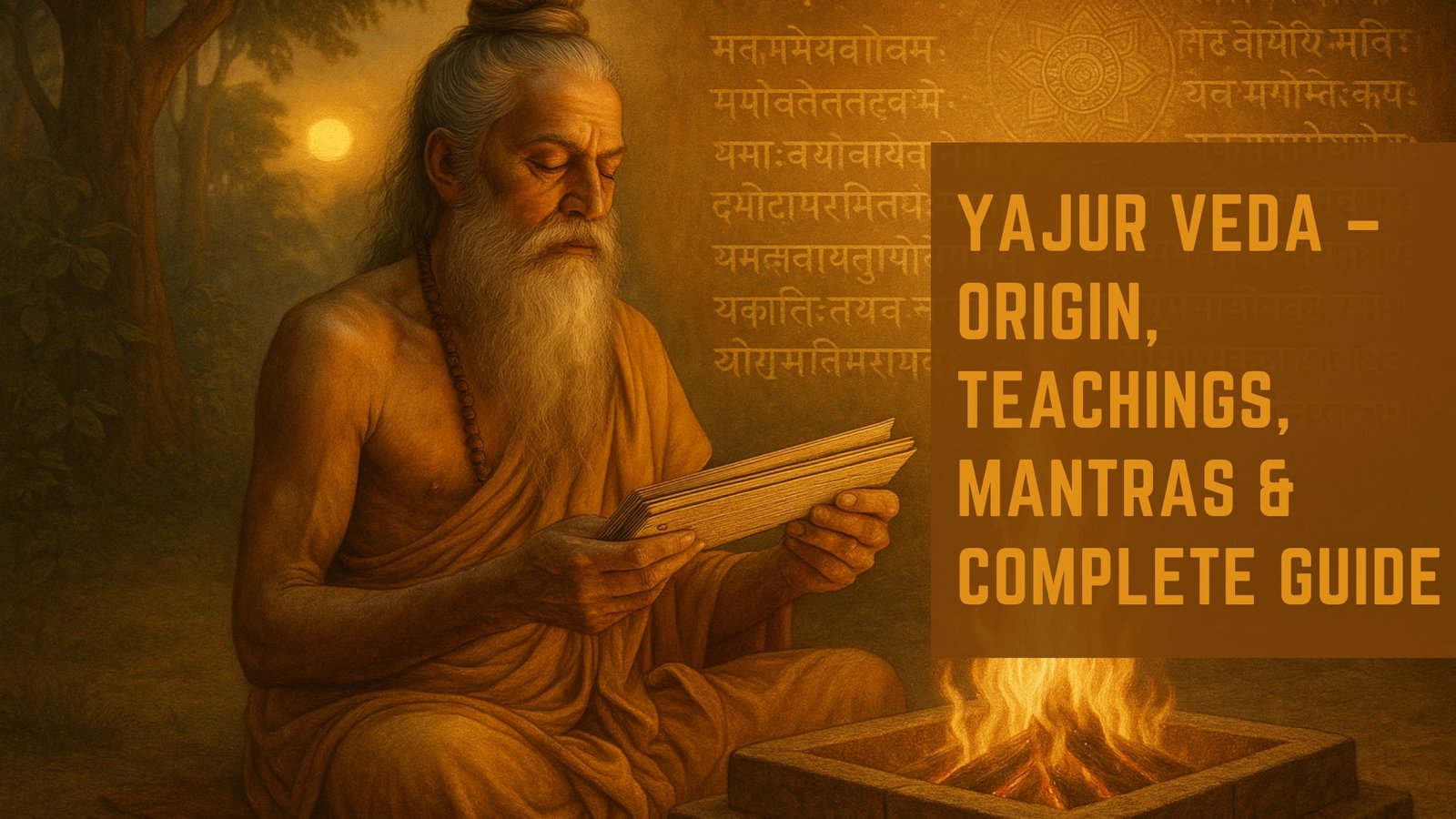
The Yajur Veda is the Veda of sacred actions. If Rig Veda sings the hymns and Sama Veda sets them to melody, then Yajur Veda is the practical guide that tells humanity how to perform sacred actions with purity, discipline, and divine intent. It is one of the foundational scriptures of Sanatana Dharma and has shaped spiritual life, rituals, yajnas, social order, and ethical living for thousands of years.
This long-form guide unfolds every aspect of the Veda—its history, structure, famous mantras, spiritual wisdom, ritual significance, stories, lessons for modern life, and divine insights from its shlokas.
Table of Contents
The Veda is known as the Veda of Yajna—the science of sacrificial rituals. The word Yajus means sacred formula or prose mantra used while performing rituals. It serves as the practical handbook for priests and seekers to perform fire offerings, invoke divine energies, purify the mind, and maintain cosmic order.
Where Rig Veda teaches cosmic truths, Veda teaches cosmic discipline.
“यजुर्वेदः कर्मणां वेदः”
Yajur Veda is the Veda of sacred actions
History and Origin of Yajur Veda
Veda emerged thousands of years ago in the Vedic age, guided by rishis like:
• Vasistha
• Yajnavalkya
• Taittiriya Rishi
• Kanva
• Madhyandina
The Veda was originally passed down through shruti—oral tradition—before being compiled into textual form.
Two major recensions emerged:
1. Krishna (Black) Veda
Called “black” because its mantras and explanations are intermixed.
Main branches:
• Taittiriya
• Maitrayani
• Kathaka
• Kapishthala
2. Shukla (White) Veda
Called “white” because its verses and explanations are clearly arranged.
Main branches:
• Madhyandina
• Kanva
Both contain deep spiritual wisdom, but Shukla Veda is more organized and widely studied.
Structure of Yajur Veda
The Veda has four major parts:
1. Samhita
Prose mantras recited during yajnas.
2. Brahmana
Rules, directions, meanings, and symbolism of rituals.
Includes Shatapatha Brahmana, a monumental text on dharma and rituals.
3. Aranyaka
Forest texts for contemplative seekers; bridge between rituals and meditation.
4. Upanishad
Pure spiritual teachings.
Famous Veda Upanishads include:
• Isha Upanishad
• Brihadaranyaka Upanishad
• Taittiriya Upanishad
• Katha Upanishad
These Upanishads contain some of the deepest philosophical insights of Hindu wisdom.
Famous Mantras from Yajur Veda
The Veda contains many powerful and universally loved mantras.
1. Gayatri Mantra (found in Veda too)
“ॐ भूर्भुवः स्वः… ”
Meaning: Seek illumination of the higher consciousness.
2. Mrityunjaya Mantra
“त्र्यम्बकं यजामहे…”
A mantra to overcome fear, heal the mind, and seek protection from divine grace.
3. Shanti Mantra
“ॐ शांतिः शांतिः शांतिः”
A call for peace in the body, mind, cosmos.
4. Isha Upanishad Opening Verse
“ईशा वास्यमिदं सर्वं…”
Everything in the universe is pervaded by the Divine.
5. Yajur Veda 40.8
“स पर्यगाच्छुक्रमकायम्…”
A sacred description of the formless, pure, omnipresent Brahman.
Teachings and Wisdom of the Veda
Here are the most powerful teachings of this sacred book. The tone of the Veda is action-oriented, disciplined, and practical.
1. Life is a sacred ritual
Every action becomes yajna when done with purity, dedication, and selflessness.
2. Discipline creates harmony
Veda teaches that cosmic order (Rita) is maintained through disciplined actions.
3. The Divine lives in every particle
As Isha Upanishad declares, the entire universe is sacred.
4. True offering is inner offering
Outer rituals have meaning only when the heart is pure.
5. Humility, sharing, and truthfulness are highest virtues
“सत्येन धार्यते पृथ्वी”—Truth holds the Earth together.
6. Death is not an end
The Katha Upanishad teaches the immortality of the soul.
7. Knowledge + Action = Liberation
The Veda never separates knowledge from karma.
Symbolism of Yajna in Veda
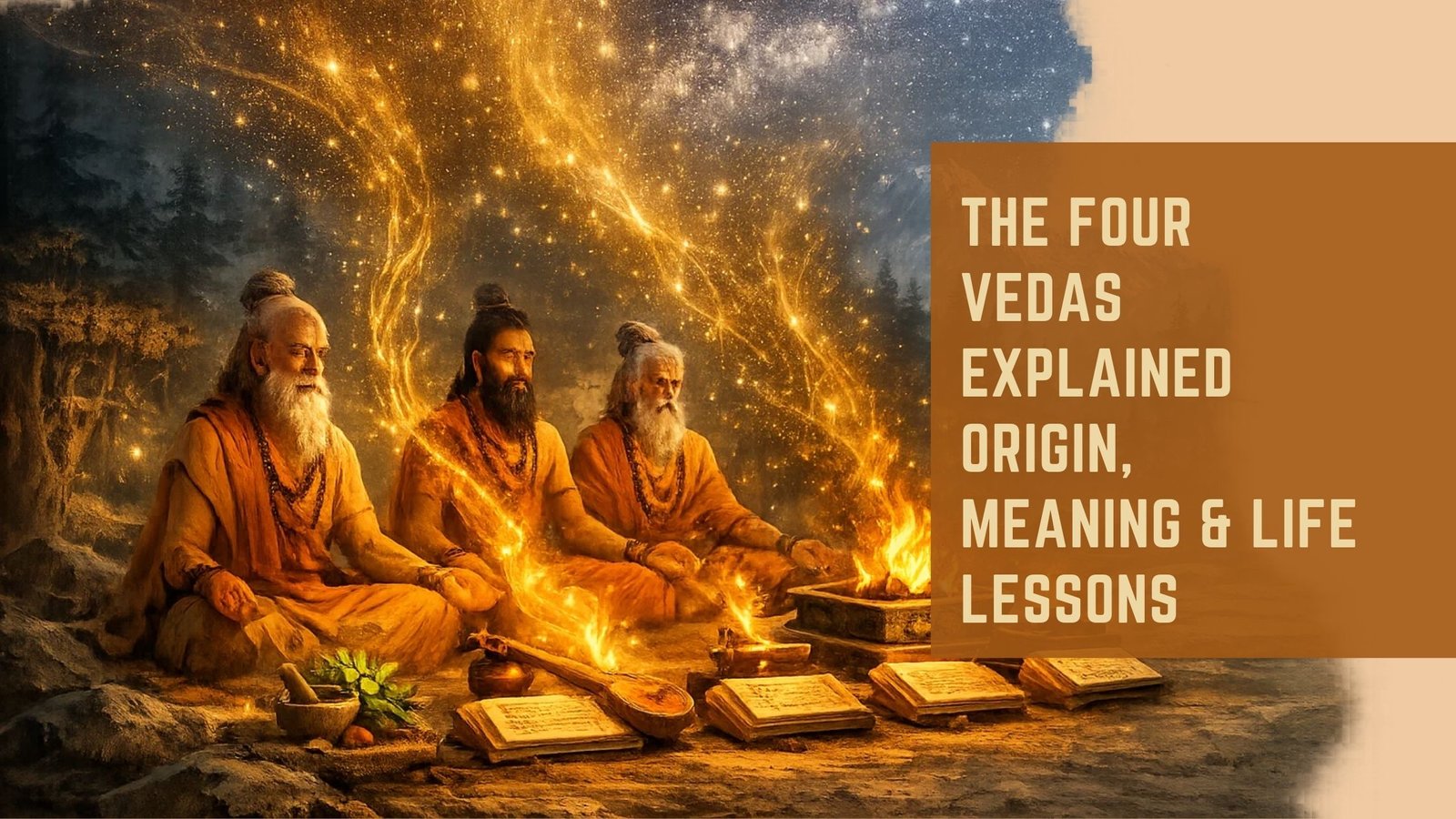
A yajna is not merely fire worship. It symbolizes:
• Transformation (impurities burn away)
• Sacrifice (ego dissolves)
• Connection (individual to cosmic forces)
• Purification (mind becomes clear)
• Prosperity & harmony (energy flows openly)
The yajna fire is considered the mouth of the gods. Every offering is a reminder that giving elevates the soul.

Yajur Veda in Modern Life
Even though it is ancient, the Veda gives practical guidance for modern life.
Mental Balance
Shanti mantras help calm anxiety and stress.
Ethical Living
The Vedic emphasis on truthfulness, purity, and discipline builds character.
Environmental Harmony
Veda praises the elements—fire, water, wind—teaching us to protect nature.
Meditation & Mindfulness
Upanishadic verses teach awareness, presence, and inner peace.
Leadership & Dharma
Its teachings on responsibility guide modern leadership and personal conduct.
Lessons from Yajur Veda
To make the wisdom easier to grasp, here are core life lessons:
- Live with intention and awareness.
- Actions done with purity bring divine results.
- Serve others; service purifies the heart.
- Practice truth in thought, speech, and action.
- Respect nature; everything is sacred.
- Mindfulness is the greatest worship.
- The soul is eternal; fear has no real power.
- Self-discipline opens the door to self-realization.
- Do not be attached to results—act with devotion.
- Share what you have; giving multiplies prosperity.
Yajur Veda Shlokas with Meaning
1. यज्ञो वै विष्णुः
Yajna itself is Divine energy.
2. अग्निर्होत्रम्—Agni is the purifier
Symbolizing burning away negativity.
3. ईशा वास्यमिदं सर्वं
Everything belongs to the Divine; live without greed.
4. माता भूमि: पुत्रोऽहम् पृथिव्या:
Earth is our mother; we must protect her.
5. असतो मा सद्गमय
Lead me from falsehood to truth.
Stories Connected to Yajur Veda
1. Yajnavalkya and the Sun God
Yajnavalkya received portions of the Shukla Veda directly from Surya (the Sun). This is why the White Veda represents clarity and illumination.
2. Nachiketa’s Dialogue with Yama
In the Katha Upanishad, young Nachiketa meets the Lord of Death and learns the secret of the immortal Self.
3. Gargi’s Debate
In the Brihadaranyaka Upanishad, the brilliant philosopher Gargi debates sages on the nature of reality—proving the profound intellectual depth of the Veda tradition.
Purpose of Yajur Veda
The Yajur Veda offers guidance for:
- Performing sacred rituals (yajnas)
- Developing inner purity
- Understanding cosmic order (Rta)
- Harmonizing life with nature
- Living with discipline and devotion
- Achieving spiritual liberation through selfless action
It teaches that action done with awareness becomes worship.
Yajur Veda & Modern Relevance
Though thousands of years old, the teachings of the Veda are relevant today:
✔ Helps manage stress through discipline
✔ Inspires mindful action
✔ Encourages living in harmony with nature
✔ Teaches ethical behavior
✔ Strengthens focus through mantra chanting
Every principle applies to modern life—from leadership and ethics to mental well-being and inner peace.
FAQs
1.What is the Yajur Veda?
It is the Veda of rituals, offering instructions for yajnas and spiritual discipline.
2.How many parts does it have?
Four—Samhita, Brahmana, Aranyaka, and Upanishad.
3.What are the two types of Yajur Veda?
Shukla (White) and Krishna (Black).
4.Which Upanishads belong to the Yajur Veda?
Isha, Brihadaranyaka, Taittiriya, and Katha.
5.What is the main teaching of Yajur Veda?
Purity in action, discipline, truth, and realization of the Divine within.
6.Is the Yajur Veda relevant today?
Yes—its teachings guide mindfulness, ethics, leadership, and spiritual clarity.
Conclusion
The Yajur Veda is a magnificent bridge between action and awareness. It teaches humanity how to live in harmony with cosmic order, how to perform rituals with discipline, and how to transform life into a sacred offering. Through its mantras, Upanishads, and shanti prayers, the Veda gifts us a way of living rooted in truth, purity, devotion, and inner freedom.
Its wisdom is timeless—guiding ancient seekers around the yajna fire and modern seekers navigating the fires of everyday life. Whoever studies the Veda, even lightly, carries within them the fragrance of divine order. For further spiritual resources and related articles, visit the gita.