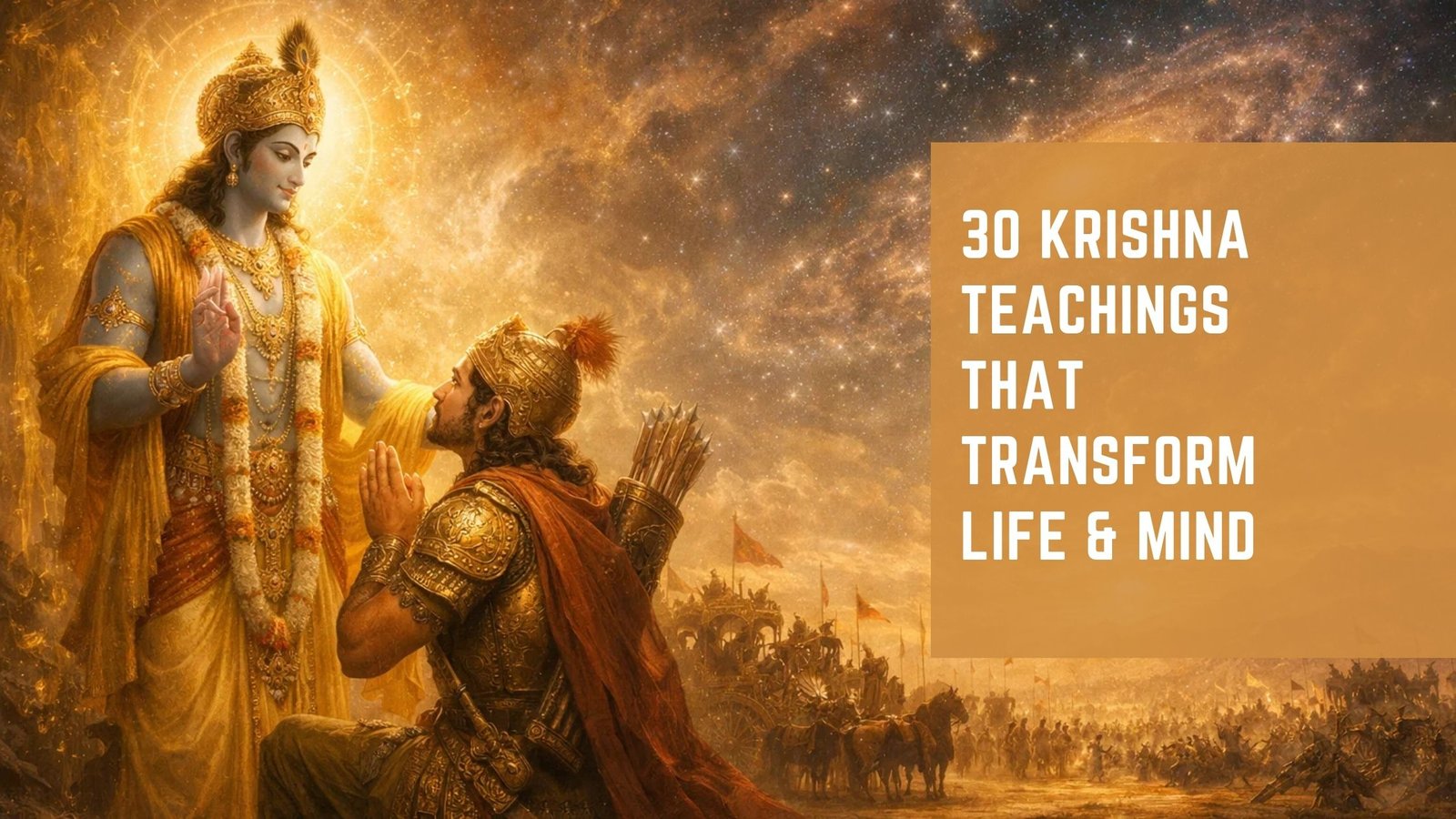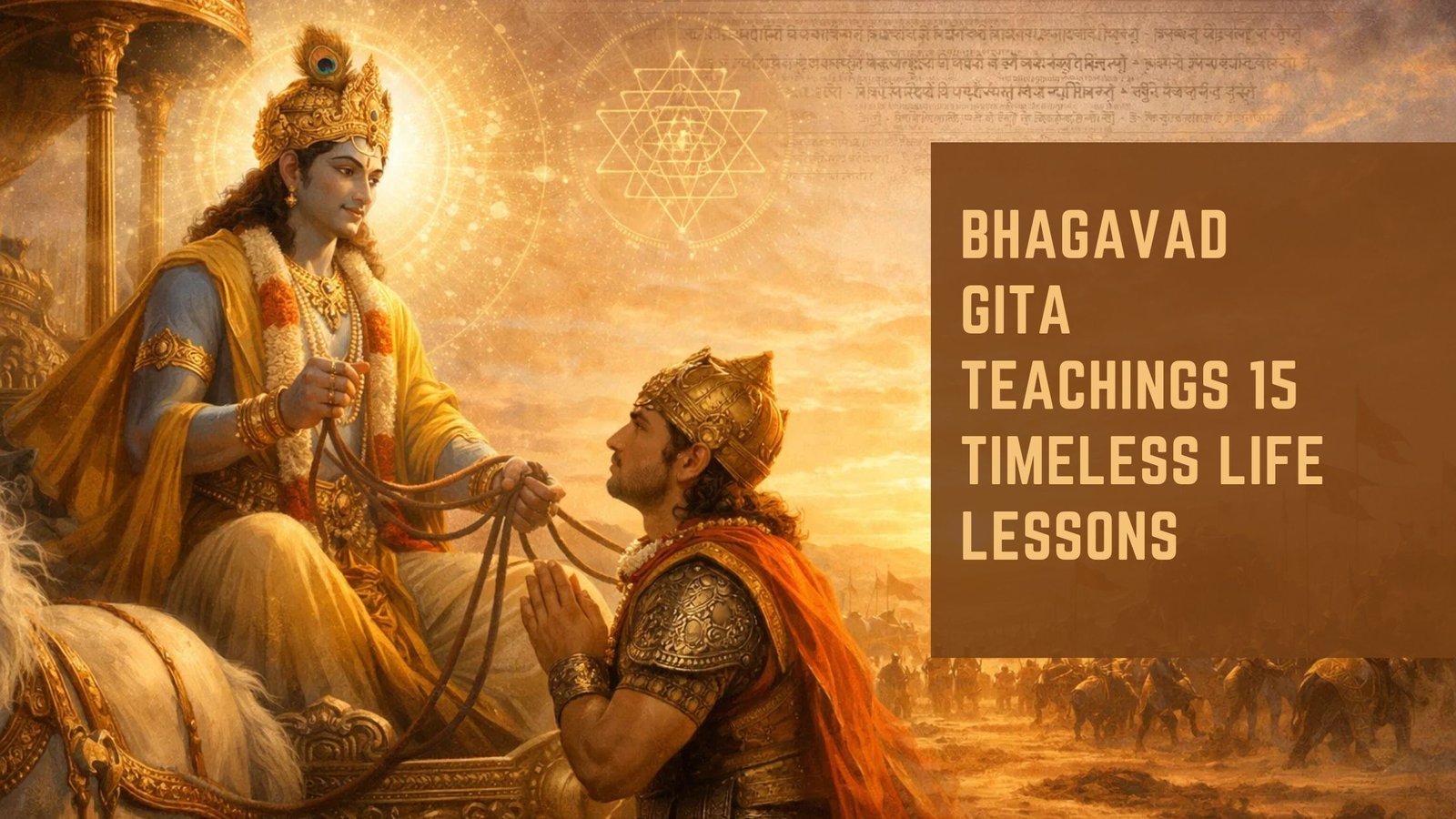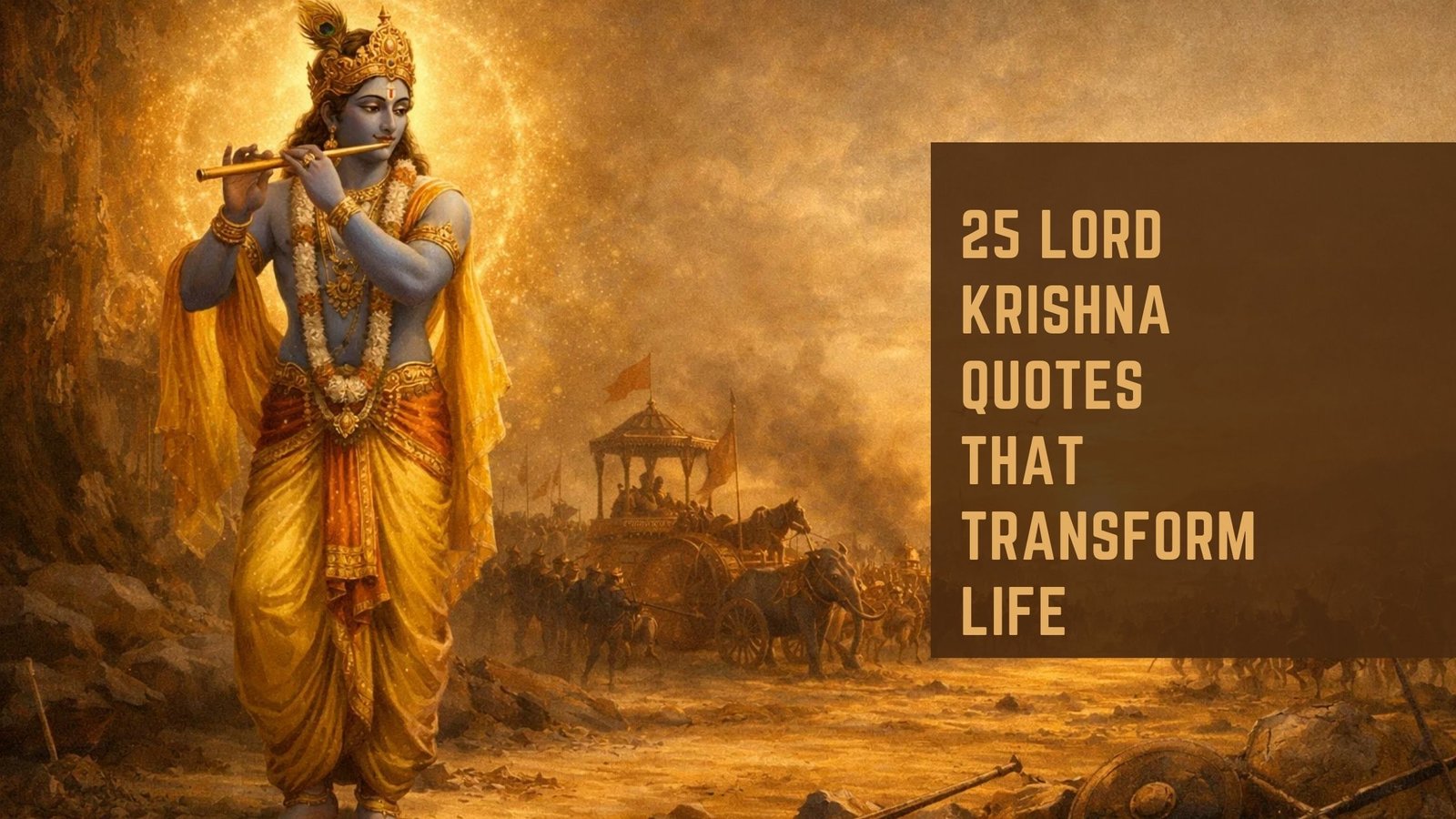
In moments of confusion, pain, ambition, love, loss, or inner silence, there is a voice that continues to guide humanity across centuries. That voice is Shri Krishna, and His words known as Krishna Shlok are not merely verses, but living wisdom.
A Krishna Shlok does not belong to time, religion, or geography. It belongs to the human heart.
When life feels overwhelming, when decisions feel heavy, and when the mind seeks clarity, Krishna Shlok become a spiritual compass. Spoken on the battlefield of Kurukshetra and preserved in the sacred text Bhagavad Gita, these shlokas address fear, purpose, duty, love, ego, devotion, and liberation.
This blog is a complete, in-depth guide to Krishna Shlok covering meaning, lessons, emotional relevance, modern application, FAQs, and timeless quotes that can transform how you see life.
Table of Contents
Key Takeaways
- Krishna Shlok are universal life teachings, not just religious verses
- Each shlok offers guidance on karma, devotion, self-control, and wisdom
- These verses apply deeply to modern stress, anxiety, ambition, and relationships
- Krishna Shlok help balance material life with spiritual awareness
- Understanding the meaning unlocks emotional and mental clarity
What Is a Krishna Shlok?
A Shlok is a Sanskrit verse spoken by Lord Krishna, primarily found in the Bhagavad Gita. These shlokas are structured poetic teachings that deliver profound philosophy in concise form.
They address:
- The nature of the soul
- The purpose of human life
- Action without attachment
- Devotion and surrender
- Inner peace and liberation
Shlok are unique because they do not demand renunciation of life. Instead, they teach how to live fully yet freely.
Why Shlok Are Still Relevant Today
Even thousands of years later, Shlok remain deeply relevant because:
- Human emotions have not changed
- Fear, desire, ambition, confusion still exist
- Modern life needs inner balance more than ever
In a world driven by speed, competition, and comparison, Shlok slow the mind and awaken awareness.
They teach:
- How to act without burnout
- How to love without attachment
- How to succeed without arrogance
- How to face loss without collapse

Most Powerful Shlok with Meaning & Life Lessons
1. Karma Yoga Shlok The Art of Action
Shlok (Bhagavad Gita 2.47):
कर्मण्येवाधिकारस्ते मा फलेषु कदाचन।
Meaning:
You have the right to perform your duty, but not to the fruits of your actions.
Life Lesson:
This Shlok teaches freedom from anxiety. When we obsess over results, we suffer. When we focus on effort, peace follows.
Modern Relevance:
- Work sincerely, detach from outcomes
- Reduces stress, fear of failure, and ego
- Encourages consistency and discipline
2. Soul Is Eternal Fearlessness Shlok
Shlok (Bhagavad Gita 2.20):
न जायते म्रियते वा कदाचित्।
Meaning:
The soul is never born, nor does it die.
Life Lesson:
Fear dissolves when you understand your eternal nature. Loss, death, and change lose their power over you.
Emotional Impact:
This Shlok brings comfort during grief, loss, and existential fear.
3. Balance in Life Equanimity Shlok
Shlok (Bhagavad Gita 2.48):
योगस्थः कुरु कर्माणि।
Meaning:
Perform your duties with balance, free from attachment.
Life Lesson:
True success lies in inner stability, not external achievement.
Shlok on Love, Devotion & Surrender
Krishna never promotes blind faith. He teaches conscious devotion.
Shlok (Bhagavad Gita 18.66):
सर्वधर्मान्परित्यज्य मामेकं शरणं व्रज।
Meaning:
Surrender unto Me alone, and I shall liberate you.
Spiritual Insight:
This Shlok is not about abandoning responsibility, but about releasing ego and fear.
Emotional Truth:
Surrender is not weakness. It is trust.
Shlok on Mind Control & Inner Peace
Shlok (Bhagavad Gita 6.5):
उद्धरेदात्मनाऽत्मानं।
Meaning:
One must elevate oneself by the mind.
Lesson:
Your mind can be your greatest enemy or your strongest ally.
Modern Application:
- Mental health
- Emotional regulation
- Self-discipline
Shlok Explained
| Krishna Shlok Theme | Core Message | Life Application |
|---|---|---|
| Karma Yoga | Action without attachment | Stress-free work |
| Bhakti Yoga | Devotion with awareness | Emotional stability |
| Jnana Yoga | Knowledge of self | Clarity & wisdom |
| Detachment | Let go of ego | Inner peace |
| Surrender | Trust the divine | Fearlessness |
Essence of Shlok
The essence of every Shlok is self-realization. They do not push external rituals, but inner transformation.
Krishna teaches:
- Know yourself
- Master your mind
- Serve with humility
- Love without possession
- Live with awareness
Life Lessons from Shlok
- Do your duty without complaint
- Accept change without resistance
- Detach without indifference
- Love deeply without fear
- Trust the process of life
Each Shlok is a mirror showing not who Krishna is, but who you truly are.
Modern Relevance of Shlok
In today’s world:
- Career stress replaces battlefield conflict
- Mental anxiety replaces physical war
- Identity confusion replaces moral dilemmas
Shlok still guide:
- Entrepreneurs facing failure
- Students facing pressure
- Individuals facing emotional loss
- Seekers facing identity crisis
Shlok and the Science of Detachment
One of the most misunderstood teachings within Krishna Shlok is detachment. Many believe detachment means indifference or withdrawal from life, but Krishna clarifies that true detachment is inner freedom, not outer escape. Through various Krishna Shlok, He teaches that attachment binds the mind to anxiety, expectation, and fear of loss. When actions are driven by attachment, peace becomes conditional. Detachment, on the other hand, allows a person to participate fully in life while remaining emotionally balanced.
Krishna Shlok explain that detachment does not reduce love or responsibility; instead, it purifies intention. When attachment drops, actions become selfless, relationships become healthier, and success no longer inflates ego. In modern life—where people are attached to outcomes, validation, and material identity—Krishna Shlok offer a timeless psychological solution: do your best, surrender the rest.
Krishna Shlok as a Guide for Decision-Making and Dharma
Life constantly places us at crossroads career choices, relationship dilemmas, ethical conflicts, and moments where right and wrong seem blurred. Krishna Shlok repeatedly emphasize dharma, not as rigid morality, but as conscious action aligned with truth and responsibility. Through His dialogue with Arjuna, Krishna teaches that avoiding duty out of fear or emotional discomfort is itself a form of ignorance.
Krishna Shlok encourage deep self-inquiry before action: Is this driven by ego, fear, or awareness? When decisions are rooted in dharma, even difficult actions lead to inner peace. This teaching is immensely relevant today, where shortcuts, comparison, and external pressure dominate choices. Krishna Shlok remind us that clarity of conscience is more valuable than external approval.
FAQs
What is the best Krishna Shlok for daily life?
Bhagavad Gita 2.47 is the most practical Krishna Shlok for daily action and stress-free living.
Can Krishna Shlok help with anxiety?
Yes. Shlokas on detachment, mind control, and surrender significantly calm the mind.
Do I need religious belief to follow Krishna Shlok?
No. Krishna Shlok are philosophical and psychological truths applicable to all.
How should one read Krishna Shlok?
Read slowly, reflect deeply, and apply practically.
Conclusion
A Krishna Shlok is not meant to be memorized it is meant to be lived.
When understood deeply, these verses:
- Heal emotional wounds
- Dissolve fear and confusion
- Bring clarity to purpose
- Balance ambition with peace
Krishna did not promise an easy life. He promised understanding and understanding changes everything.
If there is one truth Krishna Shlok teach us, it is this:
Life becomes lighter the moment awareness becomes deeper.
Read more spiritual wisdom at TheGita.in Where Ancient Truth Meets Modern Life