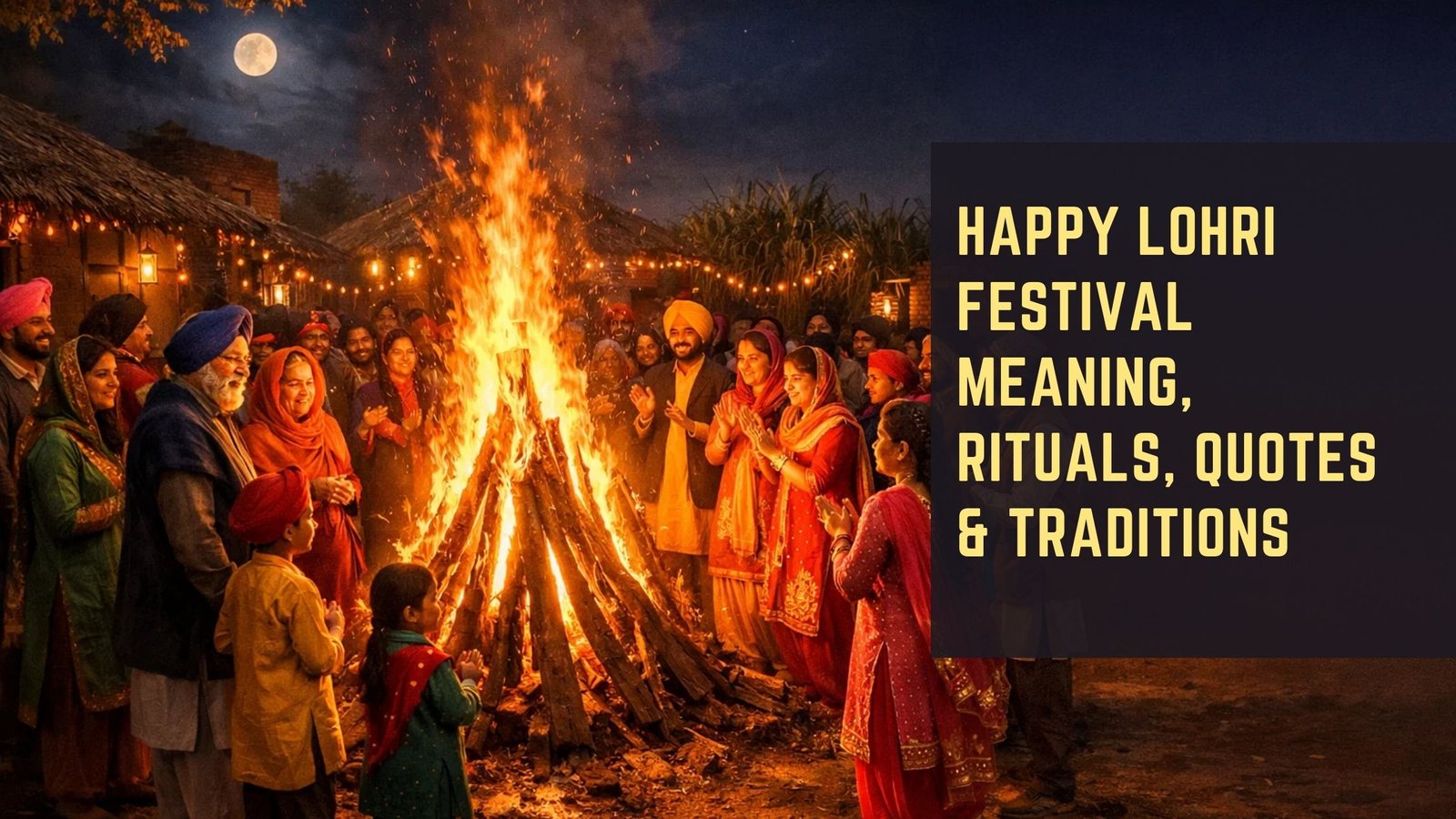
On a cold winter night, when flames rise toward the sky and voices sing in unison, something sacred happens. Lohri is not just a festival it is an emotion, a prayer, and a celebration of life itself.
Celebrated with warmth, fire, folk songs, and gratitude, Happy Lohri marks the end of harsh winters and the arrival of longer, brighter days. It reminds us that after every cold phase of life, warmth always returns.
Lohri is the festival where fire listens to prayers, where grains thank the earth, and where families gather not around screens, but around flames.
Table of Contents
Key Takeaways
- Lohri celebrates harvest, hope, and human connection
- The bonfire represents renewal, gratitude, and divine energy
- Lohri is deeply linked with nature, farmers, and abundance
- Folk songs and rituals preserve Punjabi cultural wisdom
- Lohri teaches life lessons of sharing, unity, and optimism
What Is Happy Lohri? Understanding the Essence of the Festival
Happy Lohri is a popular winter folk festival primarily celebrated in Punjab, Haryana, Himachal Pradesh, and North India. It usually falls on January 13, marking the end of the winter solstice and the sun’s northward journey (Uttarayan).
At its heart, Happy Lohri is a festival of:
- Gratitude to nature
- Celebration of harvest
- Community bonding
- Hope for prosperity
It is especially significant for farmers, newlyweds, and families with newborns, symbolizing fresh beginnings.
Why Is Happy Lohri Celebrated? The Deeper Meaning
Lohri is celebrated to thank Agni (Fire), Surya (Sun), and Prakriti (Nature) for sustaining life.
Spiritual Meaning of Lohri
- Fire symbolizes purification and transformation
- Offering grains reflects surrender and gratitude
- Dancing around the fire represents the cycle of life
“When humans honor nature, nature blesses humanity.”
The Sacred Lohri Bonfire
The Lohri bonfire is the soul of the celebration.
What the Fire Represents
- Burning negativity and old burdens
- Welcoming positivity and abundance
- Spiritual cleansing
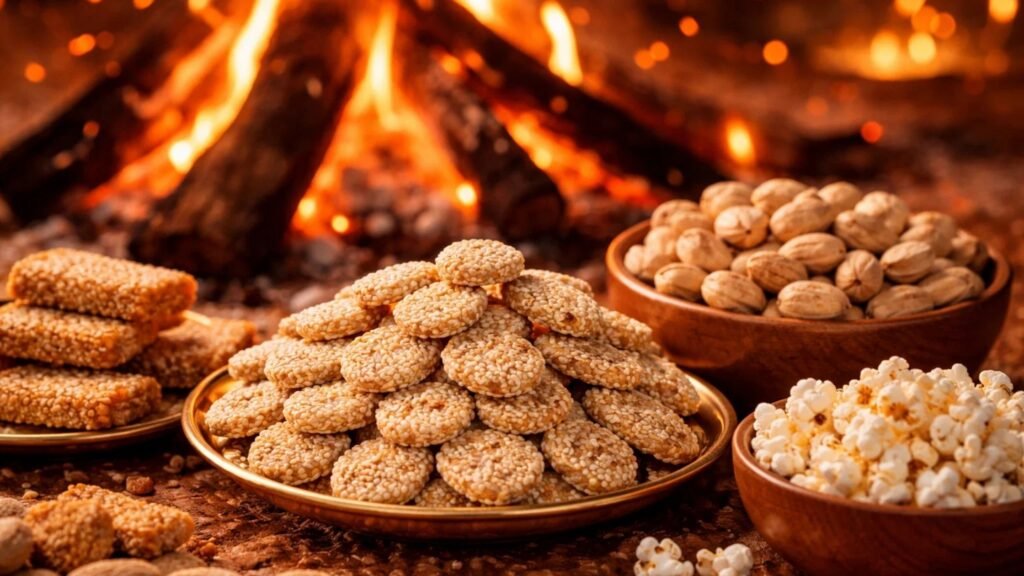
People offer rewri, peanuts, popcorn, sesame seeds, and pray silently.
“As the fire rises, so do our hopes.”
Happy Lohri Rituals and Traditions
1. Lighting the Bonfire
The fire is lit after sunset, symbolizing the victory of warmth over cold.
2. Offering to Fire
People circle the fire (parikrama) and offer harvest items.
3. Singing Folk Songs
Songs narrate folklore, gratitude, and blessings.
4. Bhangra & Gidda
Dance expresses joy, strength, and cultural pride.
5. Sharing Prasad
Food is shared, reinforcing unity and equality.
Traditional Happy Lohri Foods and Their Significance
| Food Item | Symbolic Meaning |
|---|---|
| Rewri | Sweetness in relationships |
| Gajak | Stability and nourishment |
| Peanuts | Hard work rewarded |
| Popcorn | Growth and expansion |
| Sarson da Saag | Earth’s abundance |
| Makki di Roti | Simplicity and grounding |
Happy Lohri Quotes
Cultural & Spiritual Quotes
“Lohri teaches us that gratitude warms even the coldest days.”
“Fire does not destroy it transforms.”
“Where there is community, there is celebration.”
Emotional Lohri Quotes
“Lohri is not about fire outside, but warmth inside hearts.”
“The best harvest is happiness shared.”
Short Lohri Blessings
“May this Lohri burn your worries and light your dreams.”
Life Lessons We Learn from Happy Lohri
1. Gratitude Is Power
Lohri reminds us to thank before we ask.
2. Community Creates Strength
Celebration multiplies when shared.
3. Nature Is Our Provider
Respecting nature ensures abundance.
4. Every Season Changes
No winter lasts forever hope always arrives.
Lohri and Farmers
For farmers, Happy Lohri is sacred. It celebrates the harvest of sugarcane and rabi crops, acknowledging months of patience, effort, and faith.
“The hands that feed the world deserve festivals of gratitude.”
Lohri honors not wealth, but work, soil, and perseverance.
Modern Relevance of Lohri in Today’s World
In a fast-paced digital age, Lohri reminds us to:
- Pause and connect
- Celebrate roots and traditions
- Value human presence over virtual presence
Lohri is a festival without ego—everyone gathers equally around the fire.
How Lohri Is Celebrated Today
- In homes and societies
- In schools and offices
- Across global Punjabi communities
- Through eco-friendly celebrations
Modern Lohri blends tradition with conscious living.
Happy Lohri Wishes
- May your life glow with warmth like the Lohri fire
- May abundance enter your home with every flame
- May joy, health, and unity stay forever
Lohri and the Spirit of Togetherness
Lohri beautifully reminds us that happiness grows when shared. Families, neighbors, and even strangers gather around the bonfire, creating a circle where differences fade and unity shines. In that sacred space, laughter replaces distance, and warmth replaces isolation. The festival gently teaches that togetherness is not about grand arrangements, but about simple human presence.
In a world increasingly driven by individual routines, Lohri becomes a powerful symbol of reconnecting with people and emotions. Standing side by side near the fire encourages conversations, shared memories, and collective joy. This spirit of unity is what makes Lohri timeless and deeply meaningful across generations.
Lohri as a Celebration of Inner Renewal
Beyond rituals and traditions, Lohri reflects an inner journey of renewal. Just as the fire consumes dry wood, it symbolically burns away emotional fatigue, fear, and past disappointments. The festival arrives at a time when nature itself begins to change, reminding us that transformation is always possible, even after the coldest phase.
This inner renewal encourages people to let go of heaviness and welcome clarity. Lohri gently invites us to realign with hope, patience, and trust in life’s rhythm. It is a reminder that renewal does not require dramatic change sometimes, it begins with gratitude and quiet faith.
Why Lohri Still Touches the Heart Today
Even in modern times, Lohri continues to touch hearts because it speaks a universal language warmth, gratitude, and hope. It does not demand perfection or excess; it simply asks people to pause, reflect, and celebrate what they already have. This simplicity makes Lohri relevant in every era.
As lifestyles evolve, the emotional essence of Lohri remains unchanged. The crackling fire, shared smiles, and silent prayers still evoke a sense of belonging. That emotional connection is why Lohri is not just remembered it is felt, lived, and passed on with love.
FAQs
Q1. Why is Lohri celebrated on January 13?
Because it marks the end of winter solstice and the sun’s transition toward longer days.
Q2. Is Lohri only a Punjabi festival?
While rooted in Punjab, Lohri is celebrated across North India and globally.
Q3. What does the Lohri fire symbolize?
It symbolizes purification, gratitude, and renewal.
Q4. Can Lohri be celebrated eco-friendly?
Yes, by using small bonfires, organic offerings, and avoiding waste.
Q5. What is the message of Lohri?
Gratitude, unity, hope, and respect for nature.
Conclusion
Happy Lohri is not just a date on the calendar it is a reminder that life is cyclical, warmth follows cold, and togetherness heals everything.
When flames rise on Lohri night, they carry prayers, dreams, and gratitude into the universe. The festival teaches us that true prosperity lies not in possessions, but in connection, humility, and hope.
May this Lohri light not just fires but faith, joy, and inner warmth in your life.
Discover the deeper meaning behind festivals, traditions, and timeless wisdom that connect life, nature, and the soul only on TheGita.in.