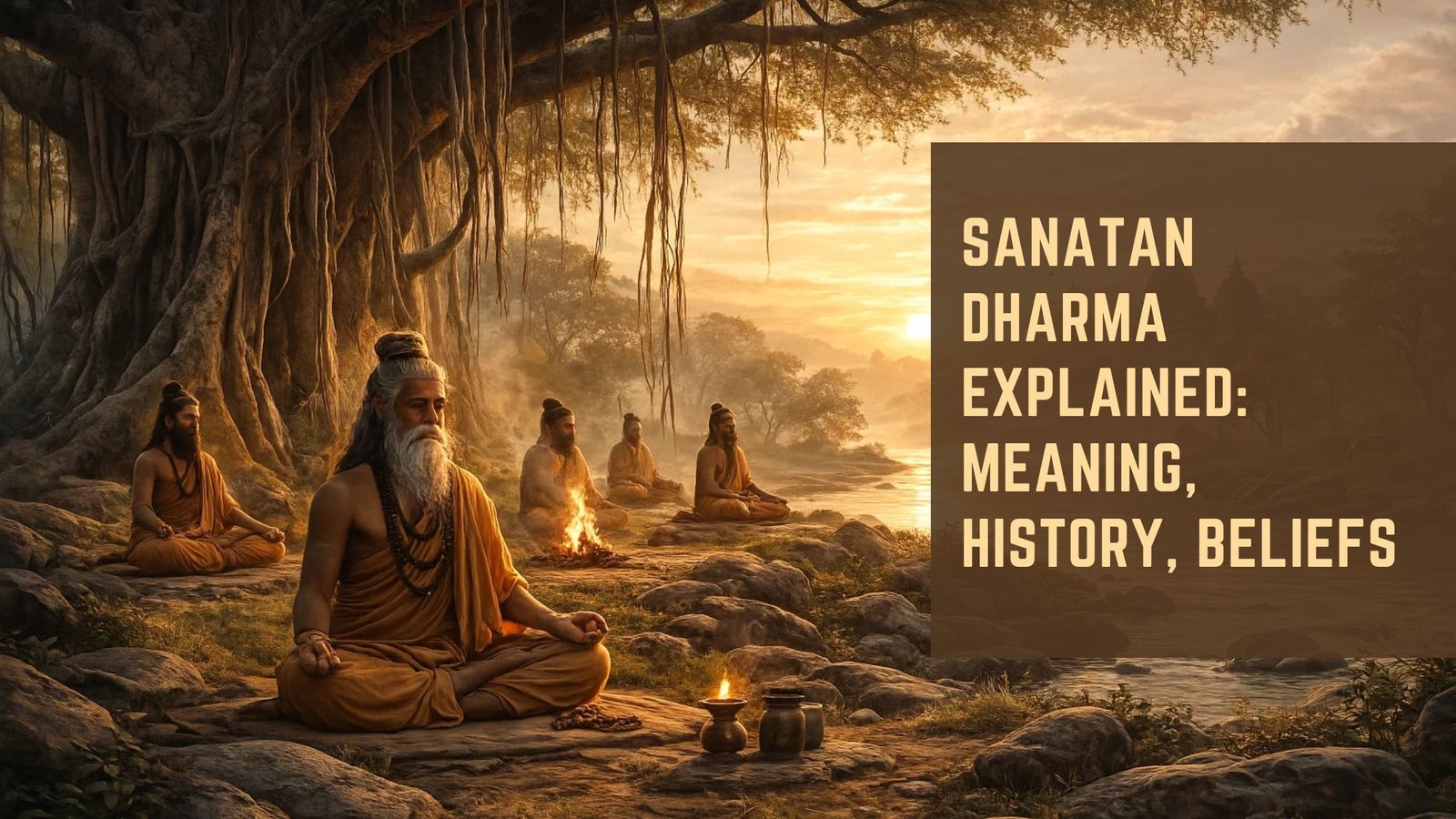
Sanatan Dharma is not merely a religion—it is a way of life, a universal spiritual path, and an eternal truth that has guided humanity for thousands of years. The term Sanatan Dharma refers to principles that are timeless, universal, and applicable to all beings, regardless of culture, geography, or era. Rooted deeply in Indian civilization, Sanatan Dharma offers profound wisdom on life, duty, morality, spirituality, and self-realization.
In an age of confusion, anxiety, and constant change, Sanatan Dharma provides clarity, balance, and inner peace by aligning human life with cosmic order.
“Sanatan Dharma is the eternal law that sustains the universe.”
Table of Contents
What Is Sanatan Dharma?
The word Sanatan means eternal, timeless, or everlasting, and Dharma means righteous duty, moral law, or the natural order. Together, Sanatan Dharma signifies the eternal principles that govern life and the universe.
Unlike organized religions with a fixed founder or a single holy book, Sanatan evolved organically through realization, experience, and wisdom passed down by sages (Rishis).
“Dharma is that which upholds life.”
— Mahabharata
Origin and History of Sanatan
Sanatan has no single founder and no definite starting date. Its roots lie in the Vedas, which are considered apaurusheya—not created by humans but revealed to enlightened sages during deep meditation.
Key Historical Phases:
- Vedic Period – Foundation of rituals, cosmic order (Rta), and spiritual inquiry
- Upanishadic Period – Focus on self-knowledge and Brahman
- Epic Period – Moral teachings through Ramayana and Mahabharata
- Puranic Period – Devotional stories and symbolism
This continuity makes Dharma a living tradition, not a rigid doctrine.
Core Beliefs of Sanatan Dharma
Sanatan embraces diversity of thought while maintaining unity of truth. Some of its core beliefs include:
1. Dharma (Righteous Living)
Dharma guides individuals to live ethically, responsibly, and harmoniously with society and nature.
“Dharma protects those who protect Dharma.”
2. Karma (Law of Action and Consequence)
Every action—physical, mental, or emotional—creates an impact that shapes one’s future.
“As you sow, so shall you reap.”
3. Samsara (Cycle of Birth and Rebirth)
The soul undergoes repeated births based on karma until liberation is attained.
4. Moksha (Liberation)
The ultimate goal is freedom from the cycle of birth and death through self-realization.
“The soul is neither born nor does it die.”
— Bhagavad Gita
Concept of God in Sanatan
Dharma does not confine God to a single form or name. It recognizes one supreme reality (Brahman) that manifests in many forms.
- Nirguna Brahman – Formless, infinite reality
- Saguna Brahman – God with attributes and forms
This inclusive philosophy allows devotion to various deities such as Vishnu, Shiva, Shakti, Rama, Krishna, and Ganesha, all representing different aspects of the same truth.
“Truth is one, sages call it by many names.”
— Rig Veda
Sacred Scriptures of Sanatan
Dharma is supported by a vast and profound body of literature:
Primary Scriptures
- Vedas – Rig, Yajur, Sama, Atharva
- Upanishads – Spiritual philosophy and self-knowledge
Secondary Scriptures
- Bhagavad Gita – Practical spiritual guide
- Ramayana & Mahabharata – Moral and ethical teachings
- Puranas – Symbolic and devotional narratives
Each scripture addresses life from different dimensions—ritual, philosophy, devotion, and wisdom.
The Four Purusharthas: Goals of Human Life
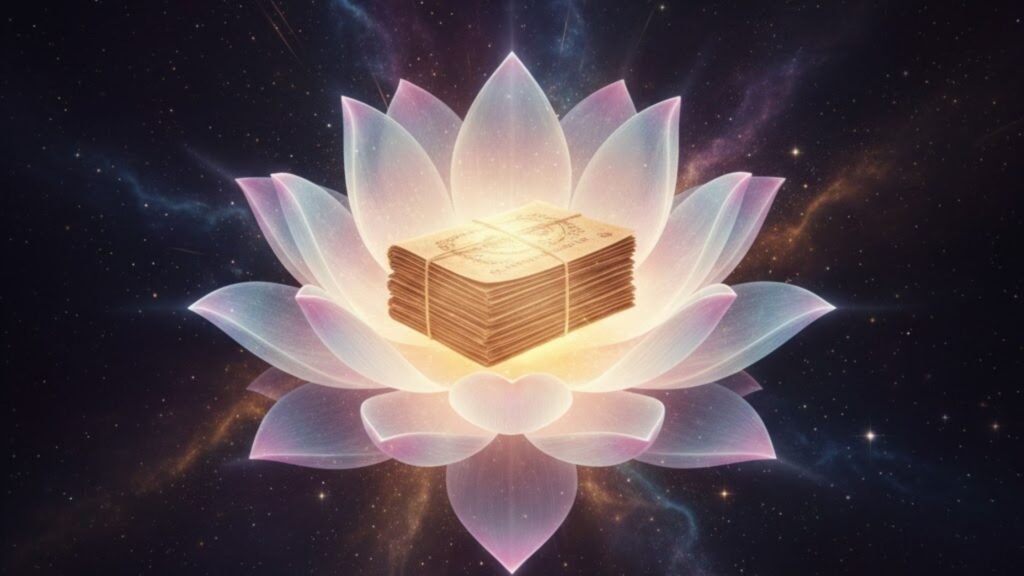
Sanatan defines four balanced goals for a fulfilled life:
- Dharma – Righteous living
- Artha – Material prosperity through ethical means
- Kama – Enjoyment of life within moral limits
- Moksha – Spiritual liberation
This holistic approach ensures neither materialism nor spirituality is neglected.
Ashram System: Stages of Life
Sanatan divides life into four stages (Ashramas):
- Brahmacharya – Student life and discipline
- Grihastha – Householder life and responsibilities
- Vanaprastha – Gradual withdrawal
- Sannyasa – Renunciation and spiritual focus
This system teaches balance between worldly duties and spiritual growth.
Life Lessons from Sanatan Dharma
Sanatan offers timeless lessons relevant even today:
- Live in harmony with nature
- Practice self-discipline and compassion
- Respect diversity and unity
- Seek inner peace, not external validation
- Perform duty without attachment to results
“You have the right to action, not to its fruits.”
— Bhagavad Gita
Sanatan Dharma and Modern Life
In today’s fast-paced world, Sanatan provides tools for mental peace and ethical living:
- Yoga for physical and mental balance
- Meditation for clarity and self-awareness
- Ahimsa (non-violence) for social harmony
- Mindfulness through spiritual awareness
Its principles align naturally with modern psychology, sustainability, and holistic well-being.
Common Misconceptions About Sanatan Dharma
- It is not limited to idol worship
- It is not rigid or dogmatic
- It encourages questioning and inquiry
- It respects all paths to truth
Sanatan adapts without losing its essence.
Symbolism and Deeper Meaning in Spiritual Practices
Rituals, symbols, and ceremonies are often misunderstood as mere traditions, but their deeper purpose is inner transformation. Fire represents purification, light signifies awareness, and sound symbolizes vibration and creation. These symbolic practices help the human mind connect abstract truths with daily life. When understood correctly, symbolism becomes a bridge between the visible and the invisible, encouraging reflection rather than blind belief.
“Symbols guide the mind toward the formless truth.”
Role of Self-Discipline in Inner Growth
Self-discipline is considered a silent form of worship. Control over thoughts, speech, and actions allows individuals to conserve energy and direct it toward meaningful pursuits. Rather than suppression, this discipline nurtures balance and clarity. Through consistency in conduct and mindfulness, one gradually experiences stability, emotional strength, and a deeper connection with inner consciousness.
“Mastery over oneself is greater than victory over others.”
Connection Between Nature and Human Consciousness
Nature is viewed as a living expression of universal intelligence. Mountains inspire stillness, rivers teach flow, and trees symbolize patience and resilience. Living in alignment with natural rhythms cultivates harmony within the human mind. Respect for the environment is not only ecological wisdom but also a spiritual responsibility that reminds humanity of its interconnected existence. The Essence of Sanatan Dharma lies in living truthfully, consciously, and in harmony with the universe.
“The universe reflects the state of the human mind.”
The Path of Wisdom and Compassion
True wisdom expresses itself through compassion. Knowledge without kindness remains incomplete. Understanding life’s impermanence naturally develops empathy, humility, and service-oriented action. When wisdom guides behavior, personal growth aligns with collective well-being. This balanced approach ensures that inner realization contributes positively to society rather than remaining self-centered.
“Where wisdom matures, compassion blooms.”
FAQs
Is Sanatan Dharma the same as Hinduism?
Sanatan is the philosophical and spiritual foundation, while Hinduism is a modern umbrella term that evolved later.
Does Sanatan Dharma believe in one God or many?
It believes in one supreme reality that manifests in many forms.
Is Sanatan Dharma relevant today?
Absolutely. Its teachings are timeless and deeply relevant in modern life.
What is the main goal of Sanatan Dharma?
Self-realization and liberation (Moksha).
Can anyone follow Sanatan Dharma?
Yes, it is universal and open to all seekers of truth.
Conclusion
Sanatan Dharma is not confined to temples, rituals, or scriptures—it lives in right conduct, pure thoughts, self-awareness, and compassion. It teaches humanity how to live meaningfully while staying connected to the eternal truth.
In a world searching for peace and purpose, Sanatan stands as a guiding light—ancient yet modern, simple yet profound.
“When you align with Dharma, life flows effortlessly.”
Sanatan Dharma is eternal because truth never expires. Where ancient wisdom meets modern life — TheGita.in.