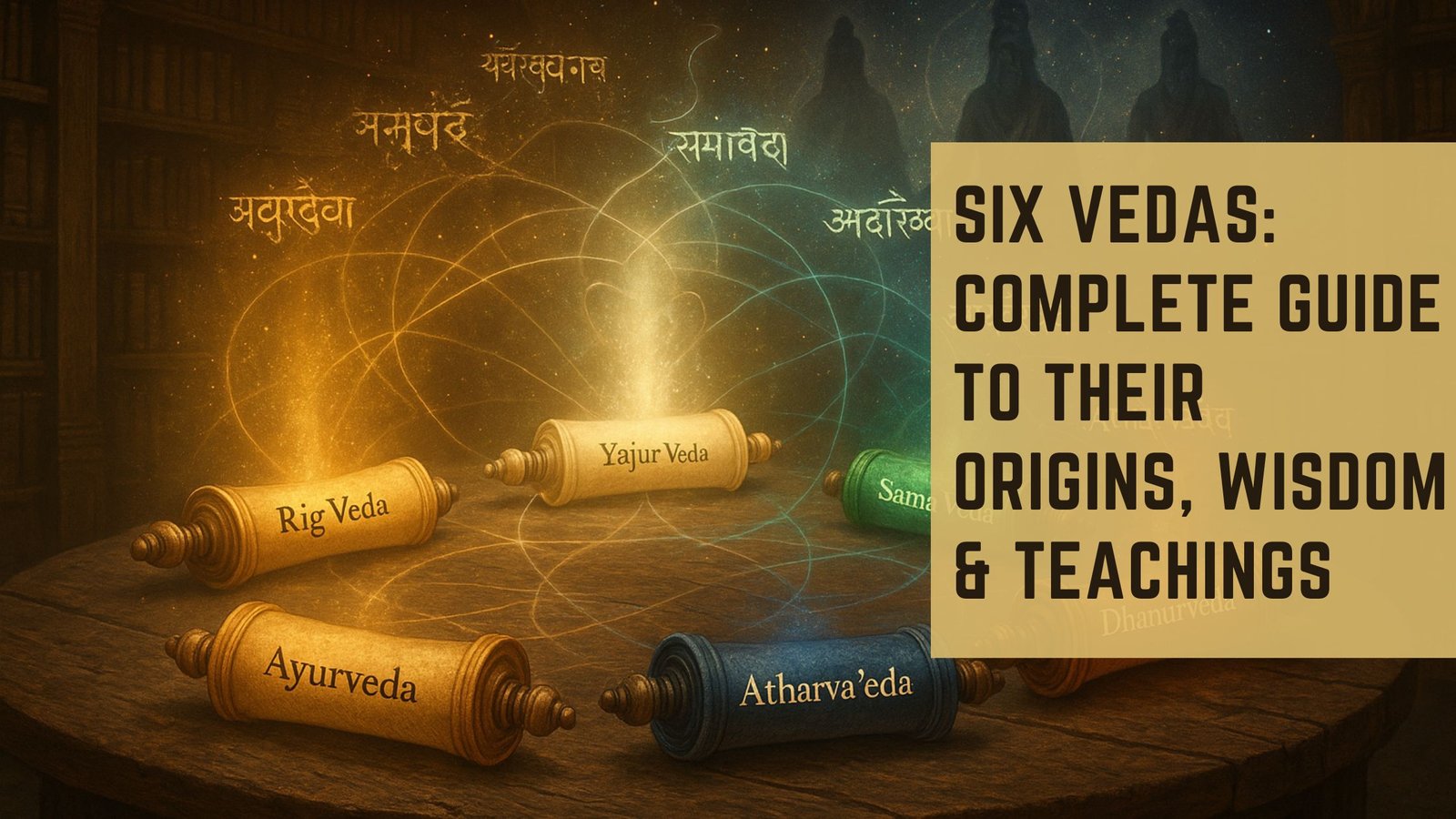
The Vedas are the oldest scriptures of humanity—timeless, divine and eternal. While most people are familiar with the concept of four Vedas, ancient traditions also speak of Six Vedas, expanding the scope of Vedic wisdom into a complete system of spiritual, philosophical, scientific, and ritual knowledge.
In this detailed 2000-word blog, you will understand the origins of the Vedas, their structure, deeper spiritual meanings, and the Vedas and their teachings that shaped ancient Indian civilization.
Table of Contents
What Are the Six Vedas?
Traditionally, knowledge is divided into:
- Rig Veda
- Yajur Veda
- Sama Veda
- Atharva Veda
But ancient scholars include the Ayurveda and Dhanurveda as extensions of Vedic wisdom, completing the “Six Vedas.” These are considered Upa-Vedas, but many lineages refer to these six collectively as the complete Vedic body.
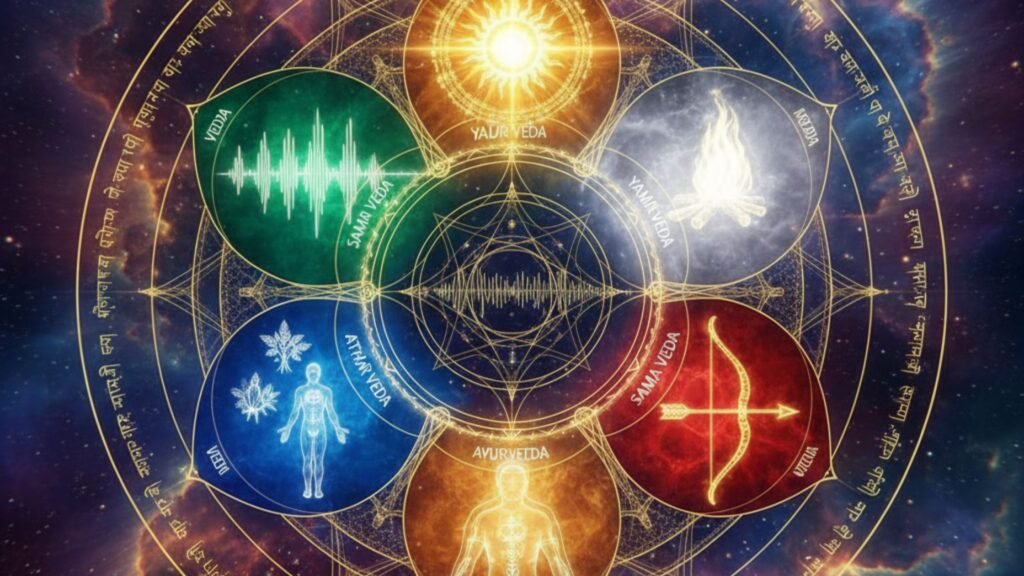
Thus, the Six Vedas are:
- Rig Veda – Knowledge of Hymns
- Yajur Veda – Knowledge of Rituals
- Sama Veda – Knowledge of Chants
- Atharva Veda – Knowledge of Everyday Life
- Ayurveda – Knowledge of Health & Life
- Dhanurveda – Knowledge of Warfare & Self-Protection
Together they shape Six Vedas and their teachings, which guide every aspect of human life—mind, body, spirit, society, health, and duty.
Origin and Purpose of the Six Vedas
The Vedas are considered Apaurushaya—not created by humans. Ancient seers (Rishis) received these revelations in deep meditative states. The Six Vedas were designed to uplift society in all dimensions:
- Rig Veda teaches truth through divine hymns.
- Yajur Veda teaches order through rituals.
- Sama Veda teaches harmony through music.
- Atharva Veda teaches balance through practical wisdom.
- Ayurveda teaches healing and longevity.
- Dhanurveda teaches courage and protection.
This holistic structure forms the foundation of the Six Vedas and their teachings, emphasizing righteousness, harmony, and inner evolution.
1. Rig Veda
Essence
The oldest scripture in the world. It contains over 1,000 hymns dedicated to cosmic forces.
Core Teachings
- Seek truth (Satya).
- Respect cosmic order (Rita).
- Live with gratitude for nature.
Quote
“Truth alone triumphs.” — सत्यमेव जयते
Lessons from Rig Veda
- Life becomes peaceful when aligned with natural laws.
- Awareness leads to enlightenment.
- Gratitude to creation brings inner purity.
2. Yajur Veda
Essence
Focuses on rituals (Yajna), discipline, self-control, and ethical living.
Core Teachings
- Work with intention.
- Discipline creates transformation.
- Sacrifice leads to purity.
Quote
“Yajna purifies both giver and receiver.”
Lessons from Yajur Veda
- Discipline shapes destiny.
- Actions become sacred when performed selflessly.
3. Sama Veda
Essence
Known as the “Veda of melodies.”
Core Teachings
- Sound carries divine vibration.
- Music connects human consciousness to cosmic consciousness.
Quote
“Let your voice sing the song of devotion.”
Lessons from Sama Veda
- A peaceful mind experiences divine harmony.
- Devotion transforms inner chaos into calm.
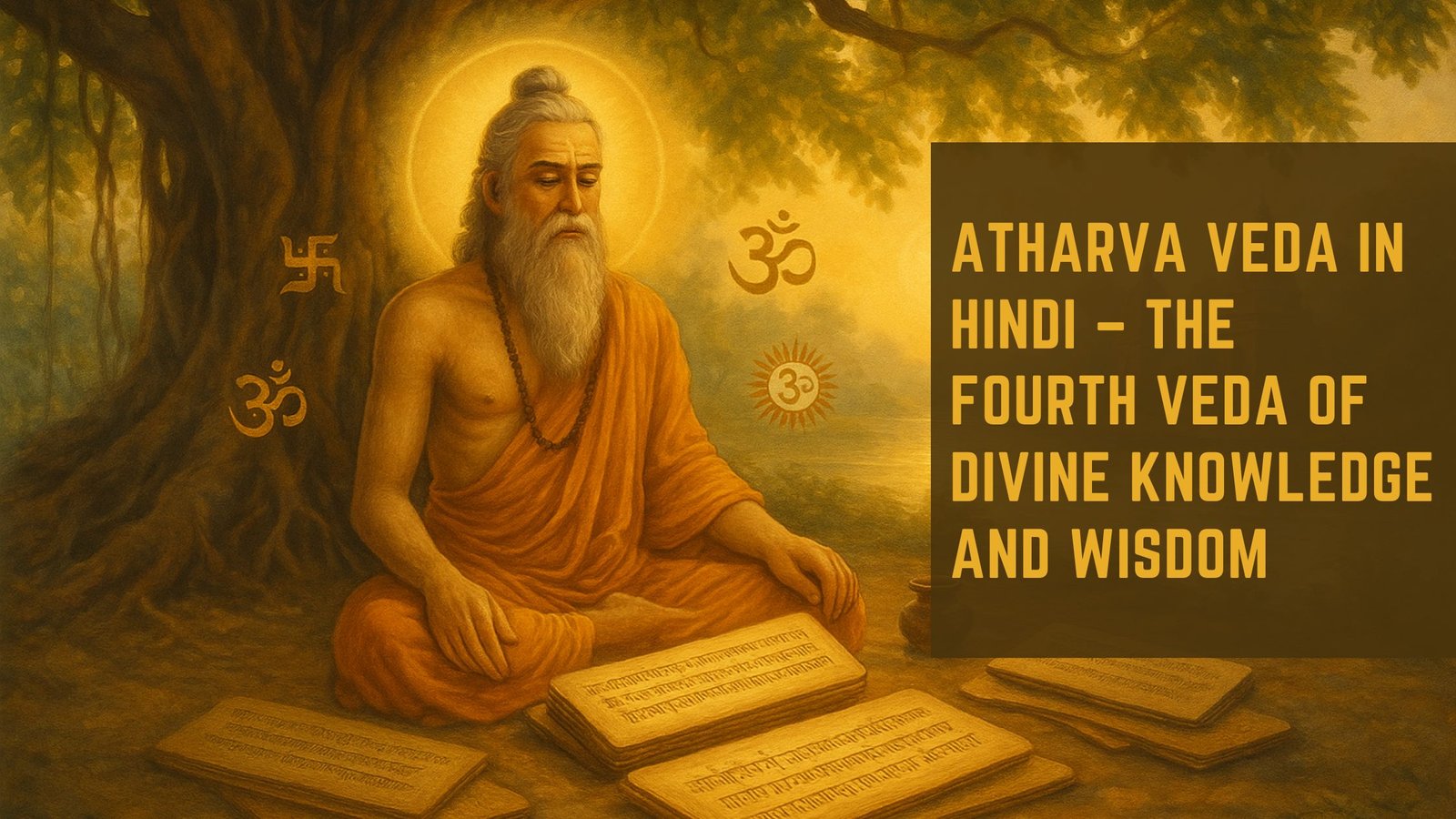
4. Atharva Veda
Essence
Teaches healing, meditation, household duties, and social harmony.
Core Teachings
- Health is wealth.
- Unity is strength.
- Mind is the source of reality.
Quote
“Thoughts shape the world you live in.”
Lessons from Atharva Veda
- Mental clarity brings success.
- Society thrives on cooperation.
5. Ayurveda
Essence
A complete medical system derived from the Atharva Veda.
Core Teachings
- Balance body, mind, and spirit.
- Food is medicine.
- Prevention is better than cure.
Quote
“When diet is wrong, medicine is of no use.”
Lessons from Ayurveda
- Lifestyle determines health.
- Healing begins within.
6. Dhanurveda
Essence
Describes warrior ethics, strategy, archery, and self-defense.
Core Teachings
- Protect the weak.
- Fight only for righteousness (Dharma).
- Discipline and courage build strength.
Quote
“A warrior’s duty is to stand for truth.”
Lessons from Dhanurveda
- Strength and compassion must coexist.
- A disciplined mind is the greatest weapon.
Why the Six Vedas Matter Today
Even in the modern world, the Six Vedas and their teachings remain timeless.
They provide:
- A guide to truth (Rig Veda)
- A guide to discipline (Yajur Veda)
- A guide to devotion (Sama Veda)
- A guide to harmony (Atharva Veda)
- A guide to health (Ayurveda)
- A guide to courage (Dhanurveda)
Their collective wisdom forms a complete system of living.
The Six Vedas and Their Teachings
To understand Six Vedas and their teachings, here is a concise spiritual summary:
| Veda | Key Focus | Core Teaching | Modern Relevance |
|---|---|---|---|
| Rig Veda | Hymns | Truth & cosmic order | Moral foundation |
| Yajur Veda | Rituals | Discipline & sacred action | Better habits |
| Sama Veda | Music | Harmony & devotion | Stress relief |
| Atharva Veda | Practical life | Health, unity, mind control | Mental well-being |
| Ayurveda | Medicine | Balance & holistic health | Lifestyle healing |
| Dhanurveda | Warfare | Duty & protection | Self-defense |
This holistic system shows why Six Vedas and their teachings are a complete blueprint for a meaningful life.
Quotes on the Six Vedas
- “Vedic wisdom is the lamp that removes darkness from the mind.”
- “In the Six Vedas, we find the science of living, loving, healing, and protecting.”
- “The Vedas are not books—they are experiences of truth.”
The Six Vedas as a Complete Lifestyle System
When we look deeply into the Six Vedas and their teachings, it becomes clear that they were never meant to be intellectual theories. They were designed as a complete lifestyle system. The Rig Veda shapes one’s worldview with truth and gratitude, the Yajur Veda trains the body and mind in discipline, the Sama Veda opens the heart through devotion, the Atharva Veda guides everyday living, Ayurveda helps maintain health and vitality, and Dhanurveda builds strength, self-protection, and righteousness.
Relevance of the Six Vedas in Today’s Modern World
In a world filled with stress, anxiety, and confusion, the ancient wisdom of the Six Vedas offers direction. Rig Veda’s emphasis on truth encourages authenticity in digital life. Yajur Veda’s discipline helps improve habits and productivity. Sama Veda’s devotion and music restore emotional balance. Atharva Veda brings practical tools for mental stability and positive thinking. Ayurveda brings holistic healing amid modern health challenges. Dhanurveda inspires self-confidence, courage, and self-defense—crucial in today’s world.
This is why many scholars believe that Six Vedas and their teachings are more relevant today than ever. They offer not only spiritual upliftment but also practical solutions for daily challenges, making ancient wisdom a powerful guide for modern living.
Spiritual Transformation Through the Six Vedas
At the heart of the Six Vedas and their teachings lies one unifying goal—spiritual transformation. Each Veda strengthens a different dimension of the human soul. Rig Veda purifies thoughts, Yajur Veda purifies actions, Sama Veda purifies emotions, Atharva Veda purifies daily living, Ayurveda purifies the body, and Dhanurveda purifies courage and intention. When these six streams of knowledge flow together, an individual becomes aligned with a higher consciousness. . By integrating the wisdom of the Six Vedas into modern life, one can cultivate clarity, stability, inner power, and deep spiritual awakening. “In every verse of the Vedas lives a timeless life lesson that still guides the human soul toward truth and clarity.”
FAQs
1.Are there four Vedas or six?
Traditionally four, but Ayurveda and Dhanurveda are extensions often included, forming the “Six Vedas.”
2.Who wrote the Vedas?
No one. They are divine revelations heard by ancient Rishis.
3.What is the main purpose of the Vedas?
To guide humanity toward truth, discipline, health, prosperity, and spiritual awakening.
4.Why are the Vedas still relevant?
They offer timeless wisdom on health, harmony, ethics, music, and spiritual growth.
5.Which Veda talks about medicine?
Ayurveda, derived from Atharva Veda.
Conclusion
The Six Vedas represent the complete spectrum of human evolution—physical, mental, spiritual, emotional, and social. They are more than scriptures; they are a living science of consciousness. Through understanding the Six Vedas and their teachings, one discovers the eternal principles of truth, harmony, discipline, health, and duty.
The Vedas do not just answer questions—they awaken awareness. They remind us that life is sacred, knowledge is transformative, and truth is the greatest path. Visit our website for more divine wisdom: thegita.in